Free Butterfly Coloring Pages for Kids: 10 Printable Designs
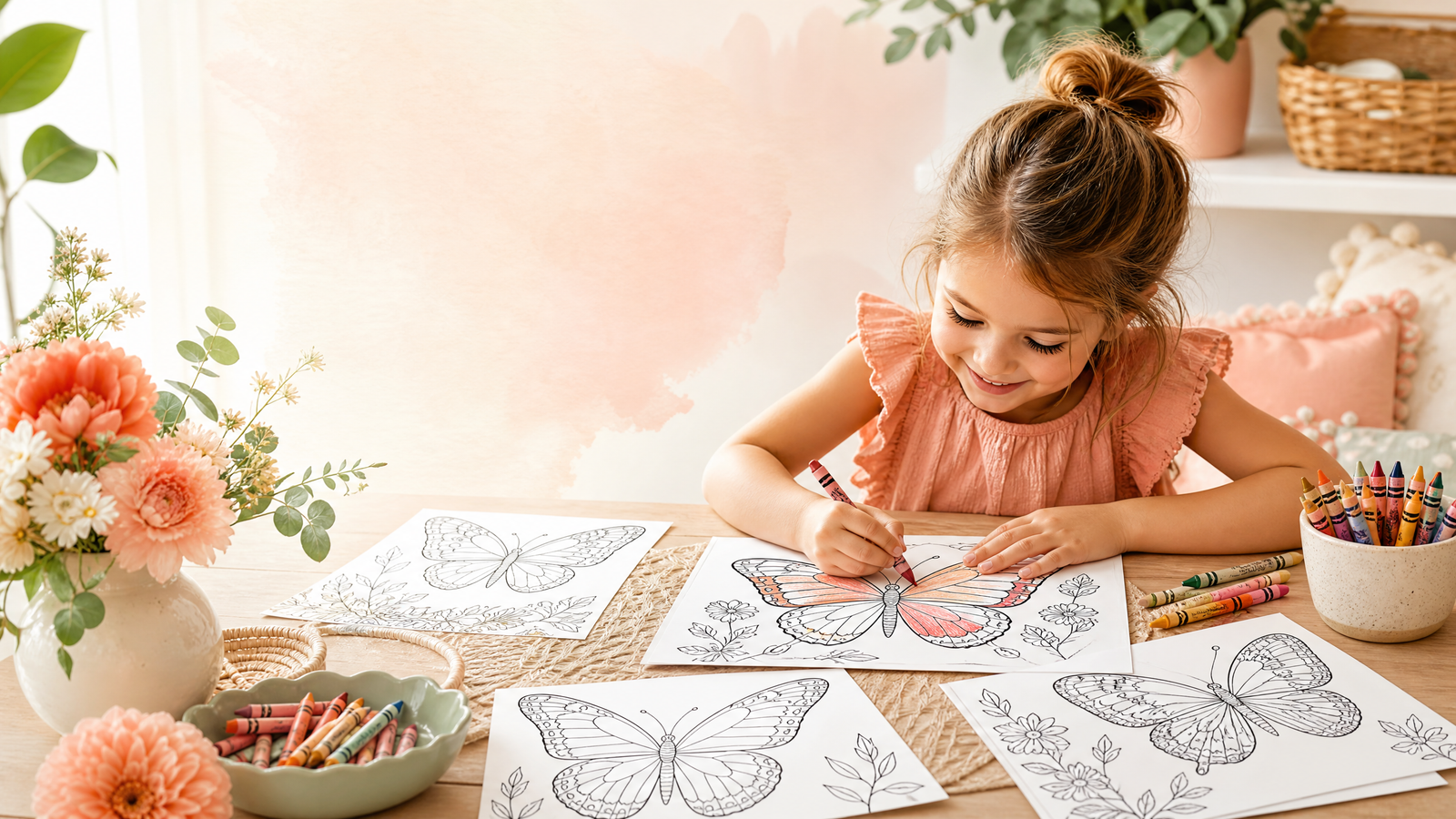
Butterflies are one of those childhood themes that never seem to lose their magic. Their patterned wings, tiny antennae and gentle movement make them wonderful subjects for drawing, storytelling and quiet creative time. If your child enjoys animals, gardens or spring activities, a butterfly coloring page is an easy way to begin.
This collection includes 10 free butterfly coloring pages for kids. Each printable design has been created with clear black outlines and open spaces that are comfortable for crayons, colored pencils or washable markers. You will find friendly butterflies, flowers, gardens, a butterfly life-cycle scene, a rainbow design and a simple butterfly feeder picture.
These pages are useful at home, in preschool, in kindergarten, at a library program or as a calm classroom activity. Print one page for a quick project, or download the complete set for a butterfly-themed learning afternoon.
Printing note: For the cleanest results, print the coloring pages on regular white paper or lightweight cardstock. Adult supervision is recommended when children use scissors, markers or other small craft supplies.
What is included in this Free Butterfly Coloring Pages for Kids Pack?
The printable set contains ten original black-and-white pages. Every design is made for coloring rather than for complicated cutting, so children can focus on choosing colors and adding their own details.
| Page | Design | Best for |
| 1 | Butterfly with flowers, hearts and dots | Creative free coloring |
| 2 | Butterflies over a rainbow | Colors and weather vocabulary |
| 3 | Caterpillar-to-butterfly scene | Life-cycle conversations |
| 4 | Butterfly with a garden, bee and flowers | Insect and garden themes |
| 5 | Butterfly resting on a flower | Nature observation |
| 6 | Butterflies flying through clouds | Imaginative storytelling |
| 7 | Butterfly garden with watering can | Gardening and caring for nature |
| 8 | Butterfly with crown, hearts and stars | Pretend play and self-expression |
| 9 | Butterfly picnic with a ladybug | Outdoor play and story prompts |
| 10 | Butterfly feeder in a garden | Observation and science discussion |
Download the free butterfly coloring pages
To use the pack, download the printable PDF, open it on a computer or tablet and print the pages your child would like to color. You can print the entire set at once or choose individual pages for a specific lesson.
Download: Free Butterfly Coloring Pages PDF
For families who prefer a digital activity, the pages can also be viewed on a tablet with a drawing app. For young children, however, paper and crayons often provide a more tactile and satisfying experience.
1. Butterfly with flowers, hearts and dots

This first butterfly coloring sheet is a friendly all-purpose design. Children can use repeating colors for the wings, make each side match or invent a completely different pattern. Ask your child to choose a “wing theme,” such as a garden, rainbow, night sky or favorite color.
Conversation prompt: What patterns would help this butterfly hide or stand out in a garden?
2. Butterflies and a rainbow

Rainbows and butterflies make a cheerful spring combination. Use this page to practice color names or to talk about weather. Children can color the rainbow in order, choose unusual colors or add raindrops and flowers to the open spaces.
Learning extension: Invite children to name one warm color and one cool color. There is no need to correct their choices; the goal is to build descriptive language.
3. From caterpillar to butterfly

This page gives children a simple visual starting point for learning about metamorphosis. A butterfly’s life cycle includes four stages: egg, caterpillar, chrysalis and adult butterfly. Use the illustration to tell the story in your own words, then invite your child to draw arrows between the stages.
The National Museum of Natural History explains that butterflies and moths undergo complete metamorphosis, meaning the young and adult forms look very different. Preschoolers do not need every scientific detail, but they can enjoy learning the sequence and repeating the vocabulary.
4. Butterfly garden with a bee

A garden scene encourages children to look beyond the butterfly. Ask them to find the flowers, leaves, bee and other small details. You can talk about how gardens provide food and shelter for insects.
Creative idea: After coloring, help your child add a few more insects to the page. They might draw a ladybug, caterpillar, dragonfly or tiny snail.
5. Butterfly resting on a flower

This calm design is suitable for quiet time, early finishers or a nature-study table. Children can color the butterfly and flower in matching shades or use contrasting colors to make the wings stand out.
Take the activity outdoors if possible. Look for flowers and notice which insects visit them. Children should observe gently and avoid touching wild butterflies.
6. Butterflies over the rainbow

This page is ideal for imaginative play. Ask your child where the butterflies are going, what they can see from the sky or what kind of weather they are flying through. You can turn the answers into a short story and write it below the finished coloring page.
Writing connection: Finish the sentence, “The butterfly flew over the rainbow and found…”
7. Butterfly garden and watering can

Gardening themes help children connect insects with living plants. While your child colors, talk about what plants need to grow: light, water, air and care. You can also discuss the difference between plants that provide nectar for adult butterflies and host plants where caterpillars can feed.
A small pot of herbs or flowers can become a real-life companion project. Let your child help water it and keep a simple drawing journal of anything they observe.
8. Butterfly with stars and a crown

This whimsical page invites children to make up a character. Is the butterfly a garden queen, a nighttime explorer or a friendly visitor from a fairy-tale world? Let children choose the name, personality and favorite place for their butterfly.
Story prompt: “The little butterfly wore a crown because…”
9. Butterfly picnic with a ladybug

A picnic scene gives children several objects to identify and color. It can also lead to a conversation about respectful outdoor play. Butterflies and other insects are living creatures, so we can watch them without chasing, grabbing or disturbing them.
After coloring, invite children to design a pretend picnic for their butterfly. What flowers would be nearby? Who else would be invited?
10. Butterfly feeder in a garden

The final page shows a simple butterfly feeder hanging in a garden. It is a good way to connect coloring with observation. Adults can explain that some butterflies are attracted to ripe fruit, while others visit flowers for nectar. Local species and seasons make a difference.
If you create a real feeder, use adult help for holes, string and placement. Keep it clean, remove old fruit and observe from a distance. The Monarch Joint Venture educational resources offer additional information for families and educators who want to learn more about butterflies and habitats.
Five easy ways to use these coloring pages
Make a butterfly learning folder
Print the ten pages and keep them in a folder. Add drawings, new vocabulary and observations from outside. Over time, the folder becomes a small child-created nature journal.
Create a symmetry activity
After coloring a butterfly, fold a separate sheet of paper in half and ask your child to draw matching shapes on both sides. Explain that symmetry means parts of something have a similar arrangement on either side of a center line.
Practice counting
Ask children to count flowers, hearts, dots, leaves or butterflies on each page. Older preschoolers can write the number beside the picture or compare which page has more details.
Turn a page into a story
Choose one finished picture and ask who, what, where and when questions. Write down your child’s answers exactly as they say them. This gives children a meaningful reason to practice storytelling and vocabulary.
Add a simple craft
Glue a finished coloring page to cardstock, cut around the butterfly with adult help and attach a craft stick. The butterfly can become a puppet for retelling the life cycle or acting out a garden story.
What children practice while coloring
Coloring is a relaxing activity, but it also gives children opportunities to develop important early skills. The value does not come from staying inside every line. It comes from holding a tool, making choices, noticing shapes and communicating ideas.
| Skill | How the activity supports it |
| Fine motor control | Crayon and pencil movements build hand strength and control. |
| Visual attention | Children notice patterns, outlines and small details. |
| Color knowledge | Children name, compare and combine colors. |
| Language | Garden and insect pictures invite new vocabulary. |
| Early science | Butterfly pages introduce insects, habitats and life cycles. |
| Creativity | Children decide how their picture should look. |
| Confidence | A finished page gives children something they made themselves. |
The National Association for the Education of Young Children recommends developmentally appropriate, play-based experiences that allow young children to actively explore and express ideas. Coloring works best when adults offer encouragement without turning the page into a test.
Tips for a successful coloring session
Choose thick crayons or washable markers for younger children. If the page feels too detailed, print it on a larger sheet or choose one of the simpler designs. A clipboard, tray or piece of cardboard can make coloring more comfortable away from a table.
Try not to choose the colors for your child. Instead, ask open questions such as “What are you thinking?” or “Tell me about this butterfly.” Display finished pages at child height or send one to a grandparent. The pride children feel when their work is valued is part of the activity.
For classrooms, print several copies of each design and place them in a coloring station. Add plastic butterflies, nature books, magnifying glasses or silk flowers to encourage children to continue exploring the theme after the coloring is complete.
Frequently asked questions
Are these butterfly coloring pages free?
Yes. The printable set is designed as a free resource for families, preschool classrooms and educators. Use the download link in this article to print the ten pages for personal or classroom use.
What ages are these butterfly coloring pages for?
The pages are suitable for preschoolers, kindergarten children and early elementary-age children. Younger children may enjoy the larger simple shapes, while older children can add patterns, labels and stories.
Can I use these pages in a classroom?
Yes, teachers and caregivers can print the pages for non-commercial classroom activities. Do not sell, redistribute or upload the individual artwork as your own. Keep the Oh Simply Mom attribution with the resource.
What should children use to color the pages?
Crayons are usually the easiest choice for preschoolers. Colored pencils and washable markers also work well. If using markers, place a sheet of scrap paper underneath to protect the table.
How can I teach the butterfly life cycle with the coloring pages?
Start with the page showing the caterpillar and butterfly. Explain the four stages in order: egg, caterpillar, chrysalis and adult butterfly. Ask your child to draw a small egg and chrysalis if they want to add more details.
Can toddlers use these butterfly coloring sheets?
Toddlers can enjoy the simpler designs with close adult supervision. Use large, non-toxic crayons and avoid small craft pieces. Choose process and exploration over a finished picture that looks a certain way.
Final thoughts
These free butterfly coloring pages for kids are an easy starting point for creativity, quiet time and early nature learning. Print the set for a spring activity, add it to a preschool insect theme or keep a few pages ready for a rainy afternoon.
There is no right way to color a butterfly. One child may choose realistic colors, another may create purple-and-gold wings and another may fill the entire page with joyful lines. Each version shows imagination at work.
Save this page for later, download the printable PDF and enjoy a simple butterfly moment with your little learner.
For more butterflies activities for your kids, please consult these articles:
Butterfly Life Cycle: The Complete Guide to Metamorphosis
10 Fun Butterfly Activities for Preschool: Easy Crafts and Learning Ideas
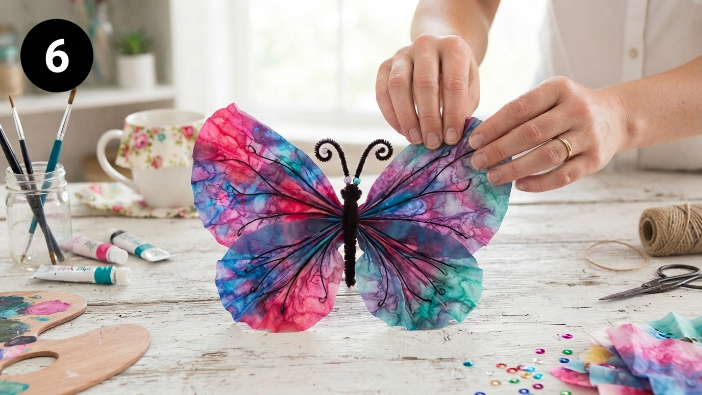
DIY Coffee Filter Butterfly Craft: A Step-by-Step Guide for Kids