
Butterfly Life Cycle: The Complete Guide to Metamorphosis
Metamorphosis: A Biological Marvel
Metamorphosis is one of nature’s most fascinating transformations. It is a biological marvel that turns a slow, leaf-bound caterpillar into a graceful, airborne butterfly. But how exactly does this process work?
This comprehensive, educator-approved guide explores the butterfly life cycle, breaking down each of the four distinct stages of complete metamorphosis. Grounded in scientific research from the Florida Museum of Natural History, this article features custom illustrations and expert tips for spotting these stages in your own backyard.
What is Complete Metamorphosis? (Quick Answer)
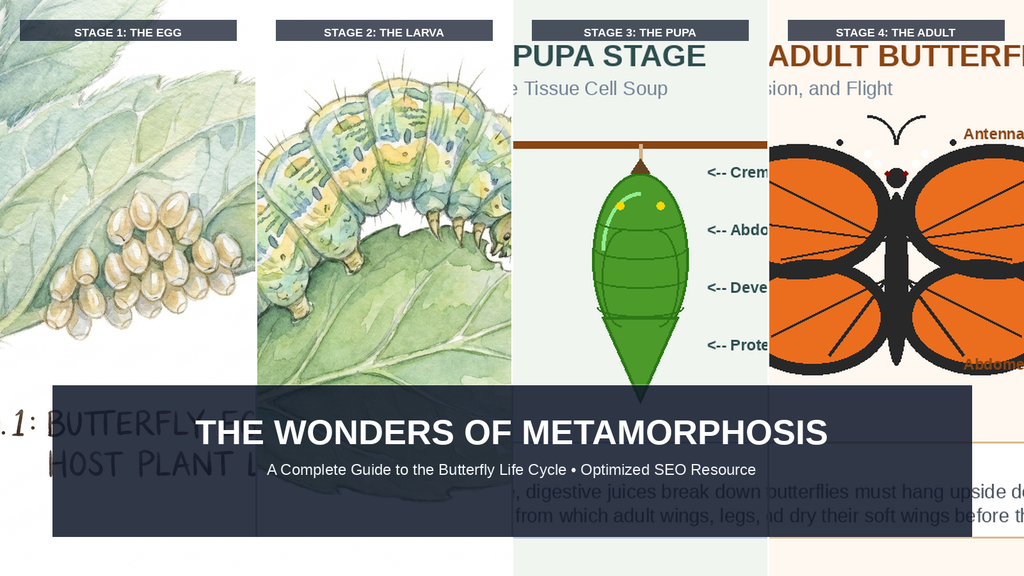
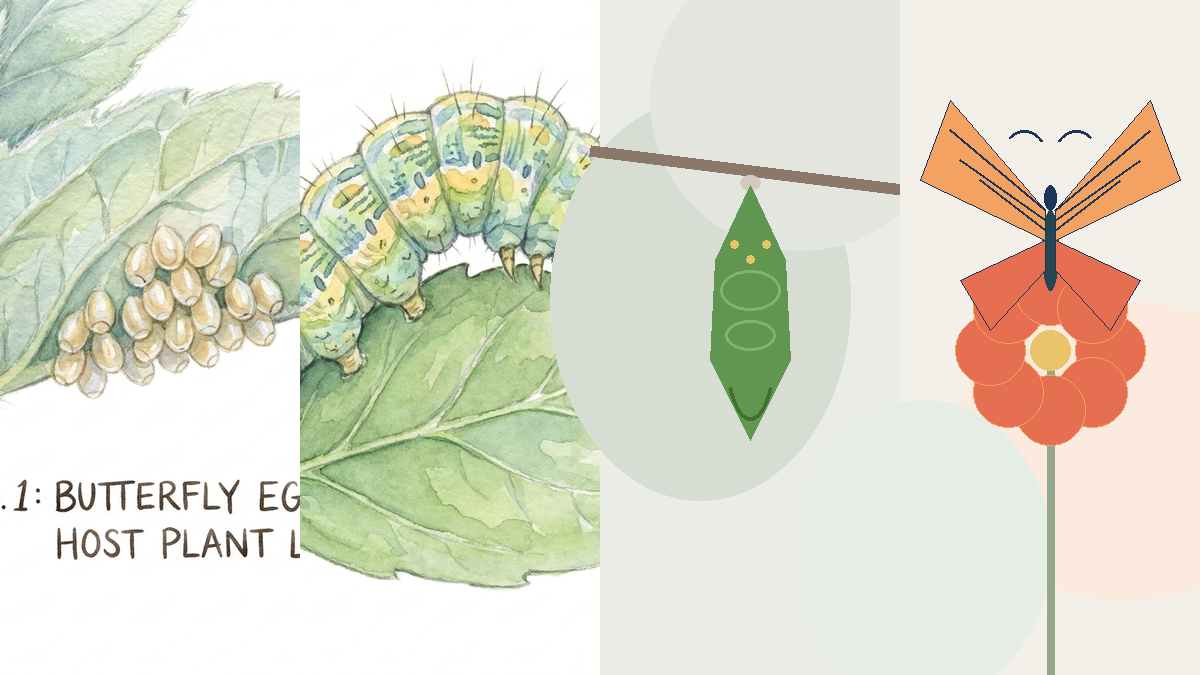
Complete metamorphosis is a biological process in which an insect undergoes a series of major changes in its body form as it moves through its life cycle. For butterflies and moths (insects belonging to the order Lepidoptera), this cycle consists of four separate stages: egg, larva (caterpillar), pupa (chrysalis or cocoon), and adult. Each stage looks completely different, serves a unique ecological purpose, and has its own physical requirements.
Summary of the 4 Butterfly Life Cycle Stages
| Stage | Common Name | Primary Purpose | Key Scientific Feature | Duration in Wild |
|---|---|---|---|---|
| Stage 1 | Egg | Incubation & Host Selection | Laid on host plants; varies in shape | 4 days to 3 weeks |
| Stage 2 | Larva | Feeding & Rapid Growth | Molting (shedding the exoskeleton) | Several weeks |
| Stage 3 | Pupa | Transformation & Rebuilding | “Tissue cell soup” reorganization | Species-dependent |
| Stage 4 | Adult | Reproduction & Dispersal | Flying, mating, feeding, and laying eggs | 2 weeks (average) |
Stage 1: The Egg – A Masterclass in Botanical Selection
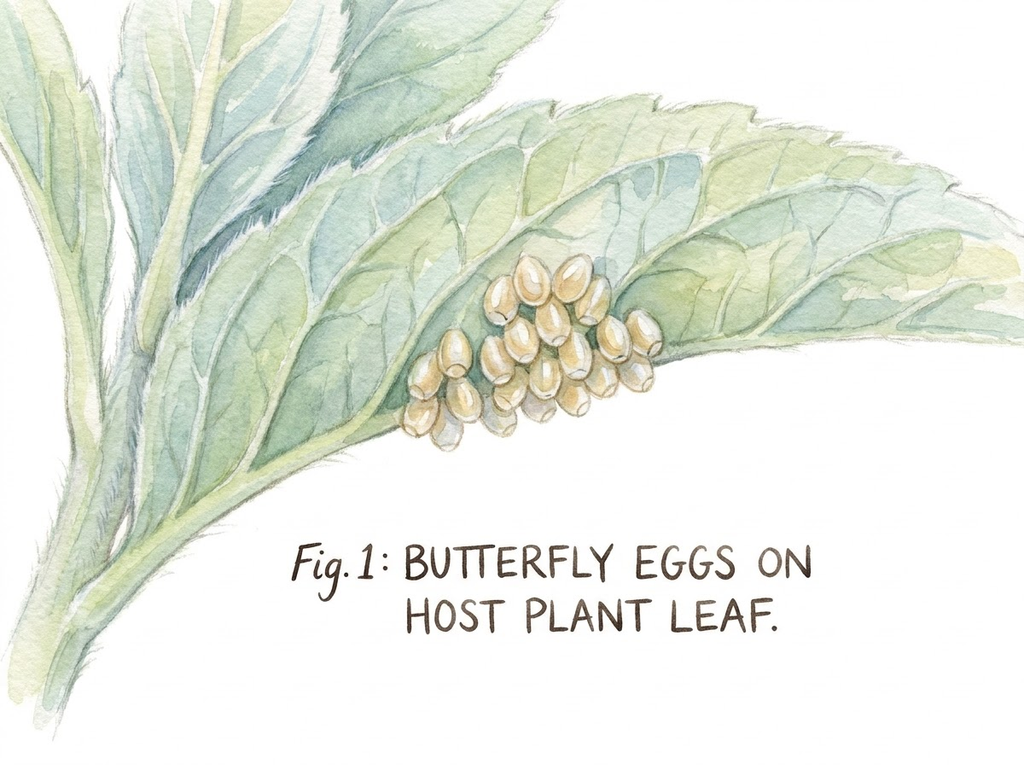
The life cycle of a butterfly begins with a tiny, fragile egg. Female Lepidoptera are highly selective mothers; they often require specific host plants on which to lay their eggs. This botanical specificity ensures that when the offspring hatch, they will immediately have access to the correct food source.
Key Scientific Insights of the Egg Stage:
- Egg Volume: A single female butterfly typically lays between 200 and 500 eggs over her lifespan.
- Morphology: The eggs vary widely in shape and size depending on the specific butterfly species. Some are ribbed, spherical, or oval, appearing as tiny dots on plant tissue.
- Incubation Time: Most butterfly species hatch quickly within four to five days, though some species may take as long as three weeks to emerge.
Stage 2: The Larva (Caterpillar) – The Ultimate Growth Engine
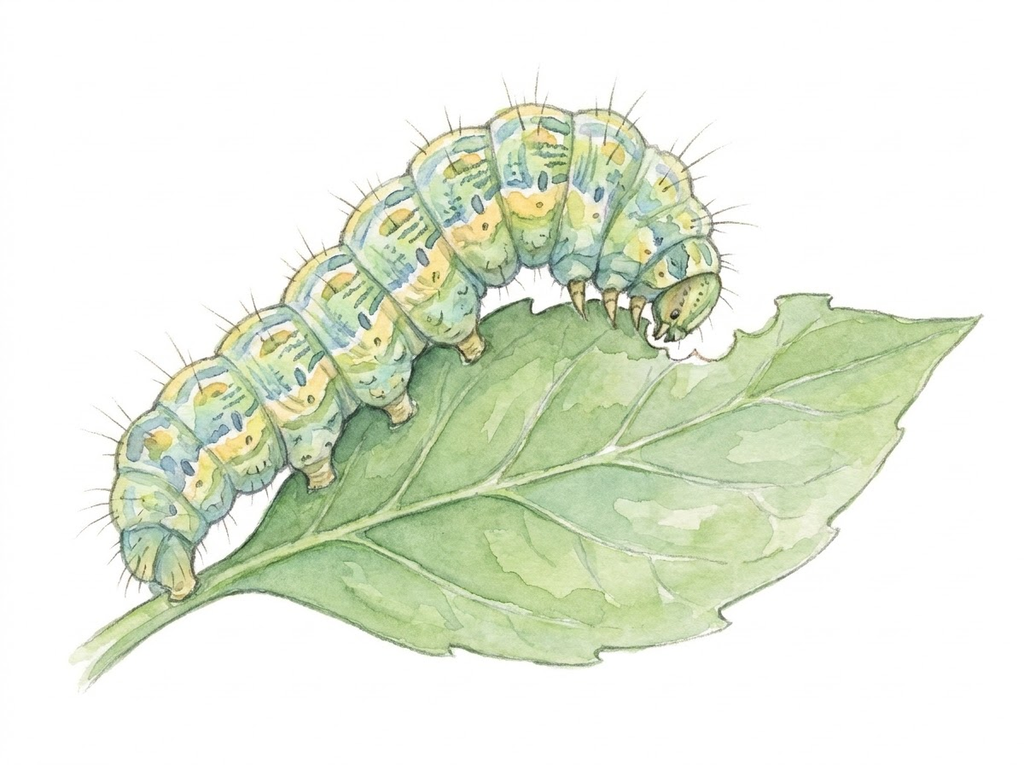
Once the egg incubation period ends, a tiny larva—commonly known as a caterpillar—hatches. The caterpillar has one primary directive: to eat and grow as quickly as possible.
Feeding Behaviors & Host Plant Fidelity: Interestingly, a caterpillar’s very first meal is usually its own nutrient-rich eggshell, which provides critical initial nourishment. Once the eggshell is consumed, it immediately starts feeding on its host plant.
While almost all caterpillars eat leaves, some species are adapted to consume other plant structures, including stems, roots, fruits, seeds, and flowers. A fascinating aspect of caterpillar biology is their strict host plant fidelity. Caterpillars will eat only their specific host plant. If a caterpillar runs out of food, it will not move to an adjacent plant of a different species—even if it faces starvation. This makes the presence of native host plants vital for butterfly conservation.
The Physiology of Caterpillar Molting: As the caterpillar feeds, its body expands at an exponential rate. However, its outer skin—which is actually a rigid exoskeleton with limited stretching capacity—soon becomes too tight. To continue growing, the caterpillar must undergo molting: the tight exoskeleton splits open, the caterpillar sheds this layer, and a new, softer skin underneath is revealed.
Stage 3: The Pupa (Chrysalis) – The Alchemical “Soup” of Rebirth
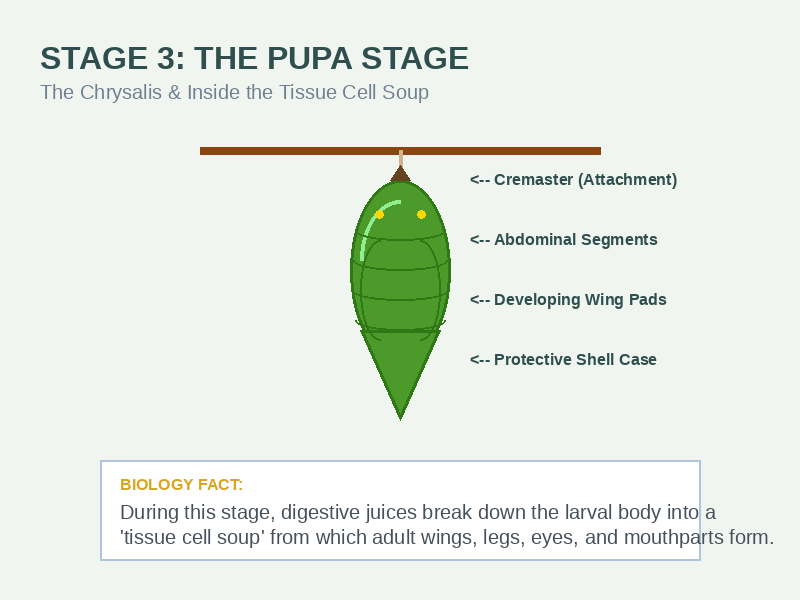
When the caterpillar reaches its full size, it enters the most dramatic phase of complete metamorphosis: the pupa stage.
Chrysalis vs. Cocoon: What’s the Difference?
- Chrysalis (Butterflies): Most butterfly caterpillars form a hard, protective outer encasement called a chrysalis.
- Cocoon (Moths): Most moth caterpillars spin a protective silken cocoon around themselves before pupating.
Inside the “Tissue Cell Soup”: Once sealed inside the pupal casing, the insect undergoes a massive biological restructuring. The caterpillar releases powerful digestive juices that break down almost its entire body. Its organs and muscles dissolve into a nutrient-rich “tissue cell soup.” From this organic “soup,” specialized cells organize and rapidly construct the features of the adult insect, including wings, legs, compound eyes, and specialized mouthparts.
Stage 4: The Adult Butterfly – Taking Flight
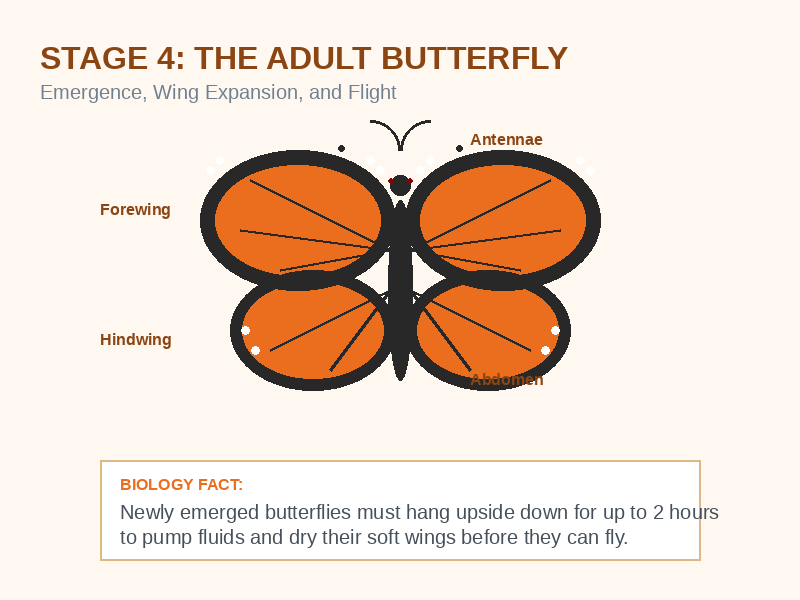
The emergence of the adult butterfly represents the culmination of complete metamorphosis.
The Critical Drying Phase: The fully developed adult splits the protective pupal case open and crawls out. When it first emerges, it is not yet ready to fly. Its wings are extremely soft, wet, and folded. To prepare for flight, the butterfly hangs upside down and pumps hemolymph (fluid) from its body into the veins of its wings to inflate them. The butterfly must remain suspended for up to two hours while its wings dry and harden.
Lifespan, Mating, and Reproduction: Once its wings are dry and strong, the adult butterfly flies off. The primary purpose of this adult phase is reproduction: finding a mate, feeding on nectar, and searching for the correct host plants to lay eggs, thereby restarting the cycle.
E-E-A-T Guide: How to Observe the Butterfly Life Cycle in the Wild
Observing complete metamorphosis in your local ecosystem is a rewarding educational activity. Here is how you can find and observe these stages yourself:
- Identify Local Host Plants: Finding specific host plants is the best way to observe the life cycle. For example, Monarchs rely on milkweed, while Swallowtails prefer plants in the carrot or citrus families.
- Use Citizen Science Tools: Visit websites like iNaturalist.org to search for butterfly sightings in your specific zip code.
- Create a Butterfly Garden: Planting native host and nectar plants in your backyard can attract local butterflies to lay eggs directly in your yard.
Frequently Asked Questions (FAQ)
- What is the purpose of complete metamorphosis? It allows the larva and the adult to occupy different ecological niches, meaning they do not compete for the same food sources.
- How many times does a caterpillar molt? A caterpillar molts several times during its larva stage as it outgrows its exoskeleton.
- How long does a chrysalis stage last? The duration varies widely depending on the species and environmental factors like temperature.
Want a hands-on activity to help kids visualize the magic of butterflies? This interactive paper-folding projects is perfect for young explorers ages 5-8 and takes only 20 to 30 minutes.Also, these butterflies coloring pages are free to download.
Source: Grounded in scientific data provided by the Florida Museum of Natural History’s educational resources.