16 Colorful Rainbow Pumpkin Painting Ideas for Kids
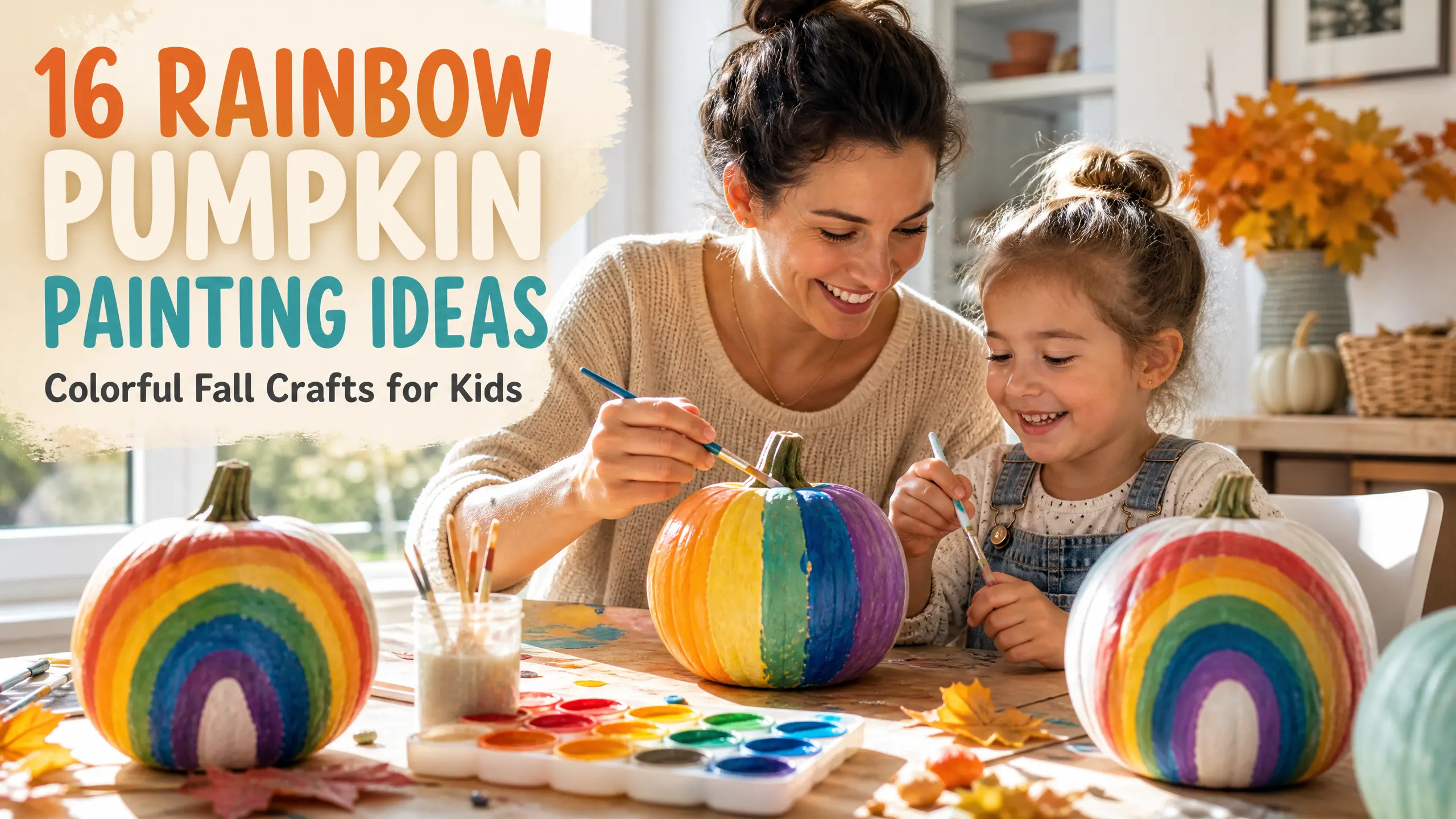
Want a fall craft that is bright, cheerful, and easy for children to personalize? These rainbow pumpkin painting ideas turn small pumpkins into colorful works of art using simple shapes, lines, dots, and patterns. The designs work with real pumpkins or reusable craft pumpkins, so you can choose the option that fits your family, classroom, or homeschool space.
Children can copy a starting idea or create their own color combinations. Some projects are simple enough for preschoolers, while others give older kids an opportunity to practice blending, repeating patterns, and planning a design. Set out washable paint, protect the table, and let the rainbow grow one brushstroke at a time.
What You Need
You can complete most of these ideas with a small selection of supplies:
•Small pumpkins or craft pumpkins
•Washable tempera paint or age-appropriate craft paint
•Paintbrushes in several sizes
•Paper plates or paint palettes
•Water cups and paper towels
•Newspaper, a washable tablecloth, or a craft mat
•Optional cotton swabs, round sponges, leaves, and paint pens
•Black and white paint for outlines and details
For very young children, choose thick-handled brushes and large pumpkins. Use paint pens and acrylic paint only according to the product label and with adult supervision. If you want to keep a craft pumpkin for several years, an adult can add a suitable sealer after all layers have dried.
Why Rainbow Pumpkin Painting Is Great for Kids
Rainbow painting gives children an approachable way to explore color, pattern, and personal choice. A child can follow the order of the rainbow, invent a pastel palette, or decide that their rainbow should include favorite colors instead. There is no single correct finished pumpkin.
The National Association for the Education of Young Children describes process-focused art as open-ended exploration with no right or wrong way to proceed . That approach fits these projects well: examples can provide inspiration without becoming requirements.
Painting also invites children to practice controlled hand movements and describe their choices. Michigan State University Extension notes that art experiences can support fine-motor, cognitive, math, and language practice when children handle tools, compare shapes and colors, and talk about what they are making .
Choose child-appropriate supplies, supervise the activity, and wash hands after cleanup. HealthyChildren.org recommends looking for safer art materials with appropriate labeling, including ASTM D4236 information when available, and avoiding products with hazard warnings .
Quick Overview
| Rainbow pumpkin idea | Suggested age | Difficulty | Approximate time |
| Classic rainbow arches | 3–8 | Easy | 25 minutes |
| Pastel rainbow bands | 3–8 | Easy | 25 minutes |
| Rainbow stripes | 3–9 | Easy | 20 minutes |
| Rainbow polka dots | 2–7 | Very easy | 15 minutes |
| Rainbow swirl | 5–10 | Moderate | 30 minutes |
| Rainbow confetti | 2–7 | Very easy | 20 minutes |
| Rainbow and sunshine | 4–9 | Easy | 30 minutes |
| Rainbow hearts | 3–8 | Easy | 25 minutes |
| Rainbow ombre | 6–10 | Moderate | 35 minutes |
| Rainbow flower | 4–9 | Easy | 30 minutes |
| Rainbow zigzags | 4–10 | Easy | 25 minutes |
| Rainbow clouds | 4–9 | Easy | 30 minutes |
| Rainbow leaf prints | 3–9 | Easy | 30 minutes |
| Rainbow stars | 5–10 | Easy | 30 minutes |
| Rainbow patchwork | 5–10 | Moderate | 35 minutes |
| Rainbow happy face | 3–8 | Easy | 25 minutes |
1. Classic Rainbow Arches
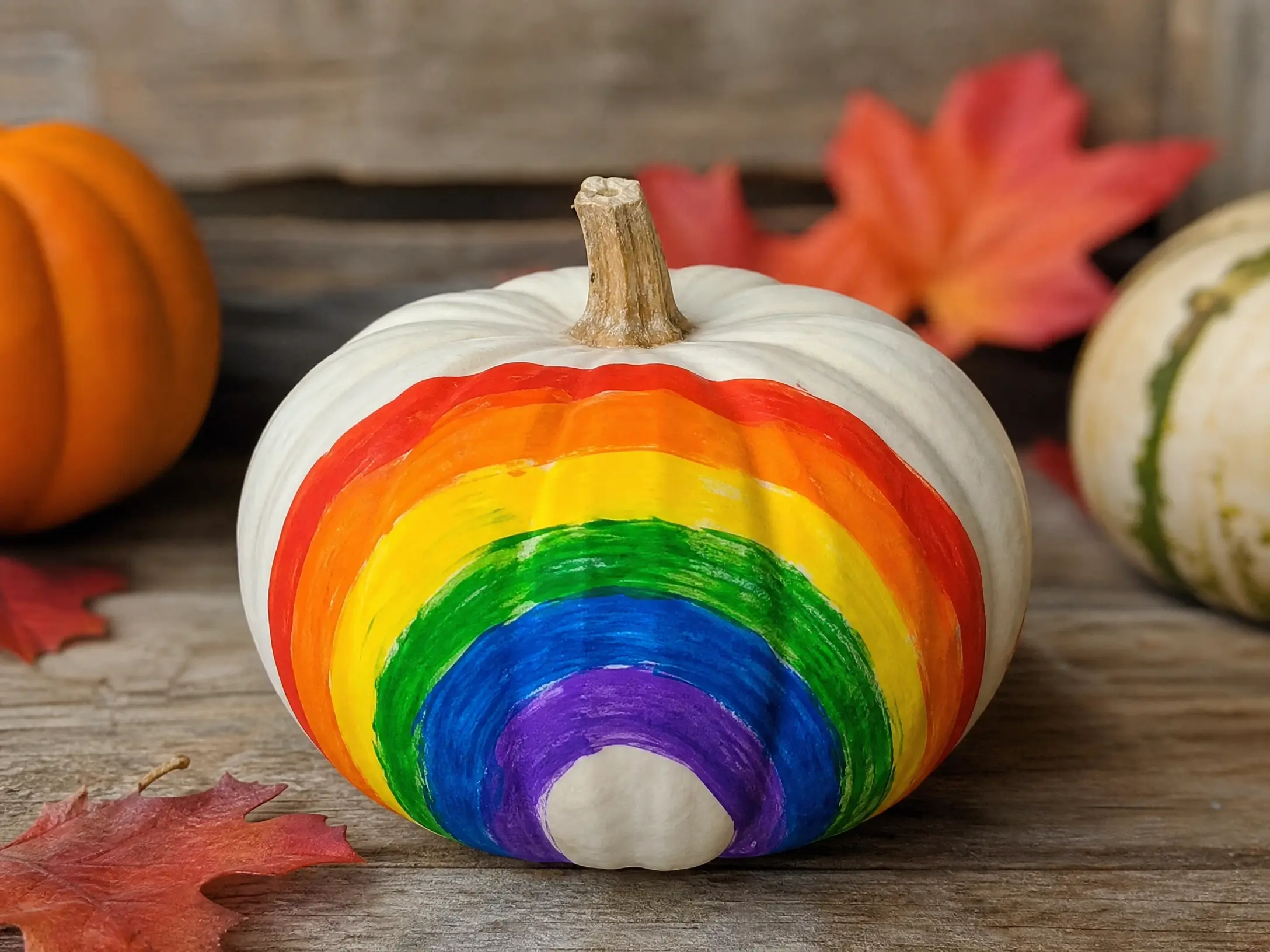
Paint curved bands across a white or orange pumpkin using red, orange, yellow, green, blue, and purple. The pumpkin’s natural ridges can help children guide each arch, but uneven lines make the design feel handmade and special.
Mini activity: Sing a color song while children point to each painted band.
2. Pastel Rainbow Pumpkin
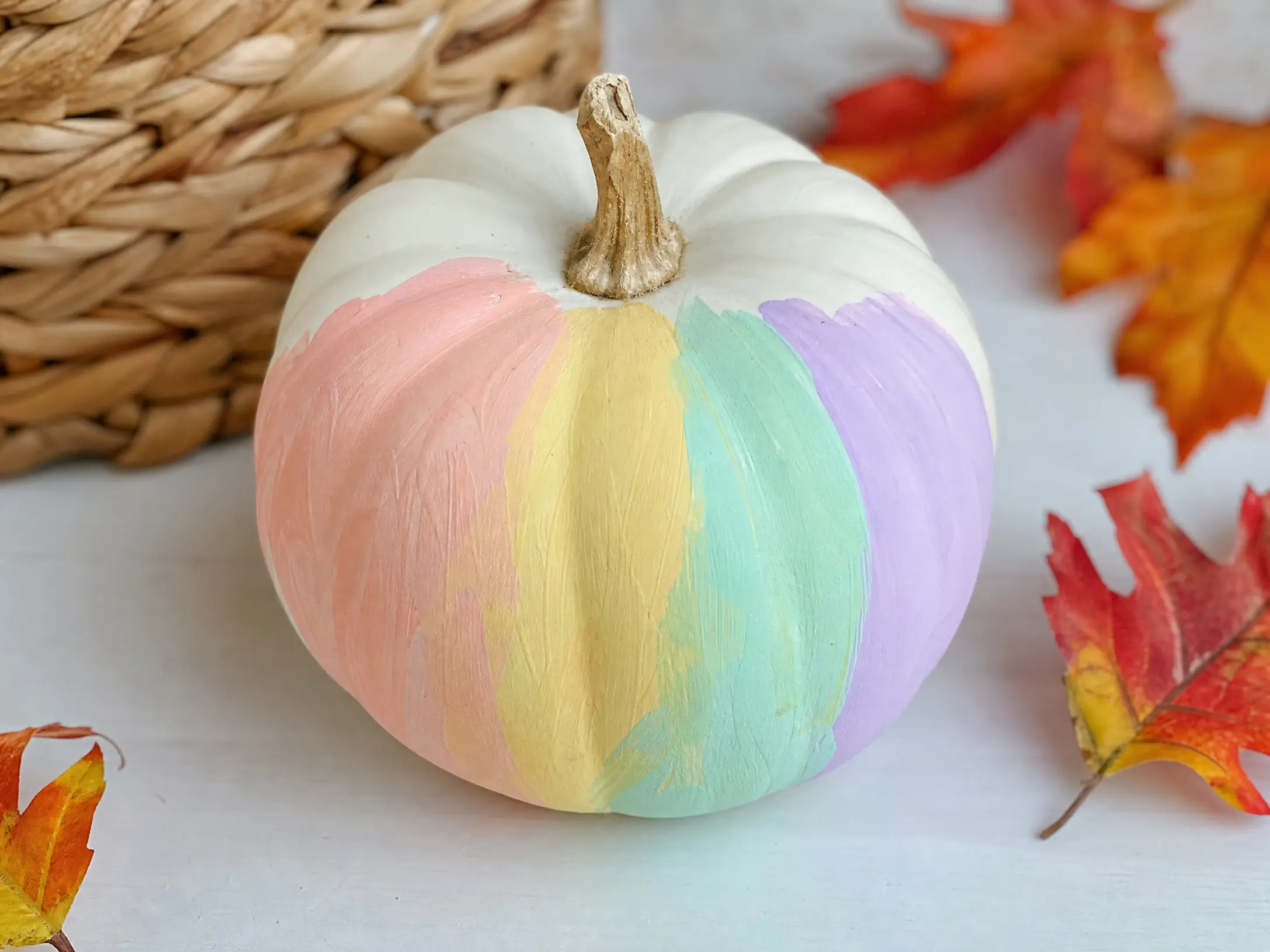
Use pale peach, pink, yellow, mint, and lavender for a soft rainbow that feels calm and gentle. This design works especially well on a white craft pumpkin or a pumpkin with a light base coat.
Mini activity: Ask children to choose a warm color and a cool color, then compare how the two feel.
3. Rainbow Stripe Pumpkin
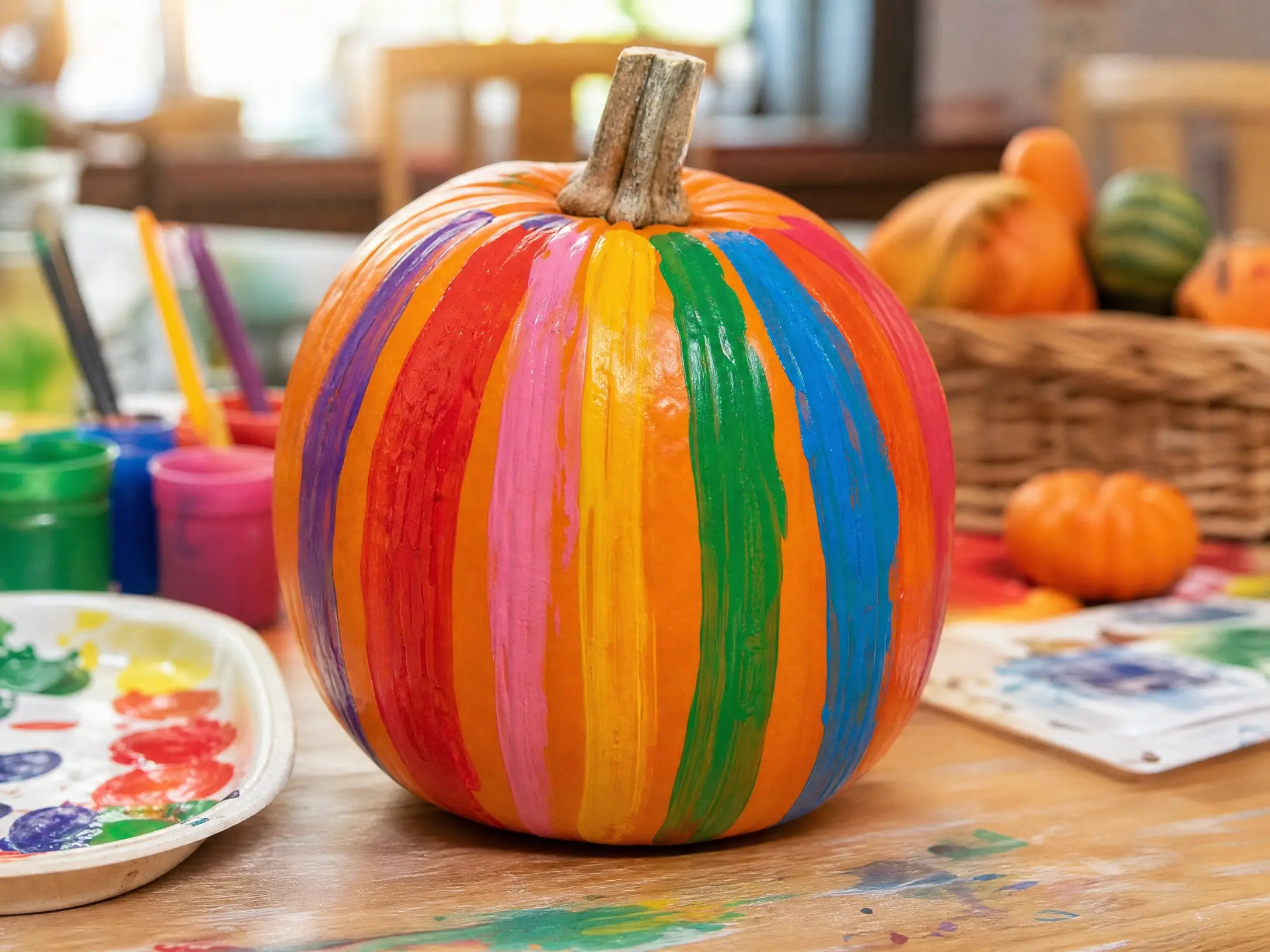
Paint wide vertical stripes around the pumpkin. Children can use the same color order all the way around or repeat a favorite two- or three-color pattern.
Mini activity: Count how many stripes fit around the pumpkin and compare the widest stripe with the narrowest one.
4. Rainbow Polka-Dot Pumpkin
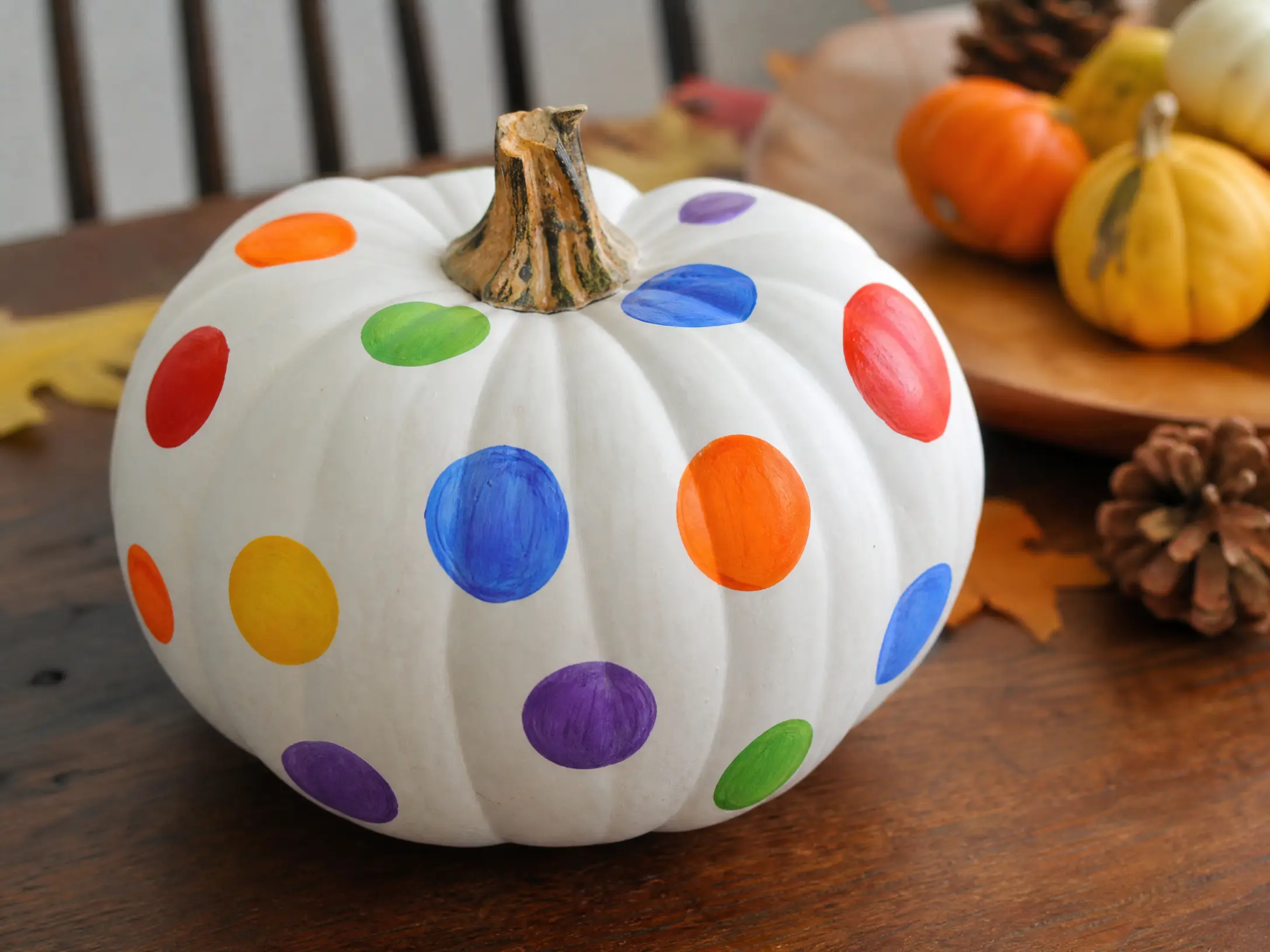
Make rainbow dots with cotton swabs, sponge daubers, or the rounded end of a paintbrush. Varying the dot sizes makes the pumpkin look lively without requiring detailed painting skills.
Mini activity: Sort the dots by color or count how many dots are larger than a child’s fingertip.
5. Rainbow Swirl Pumpkin
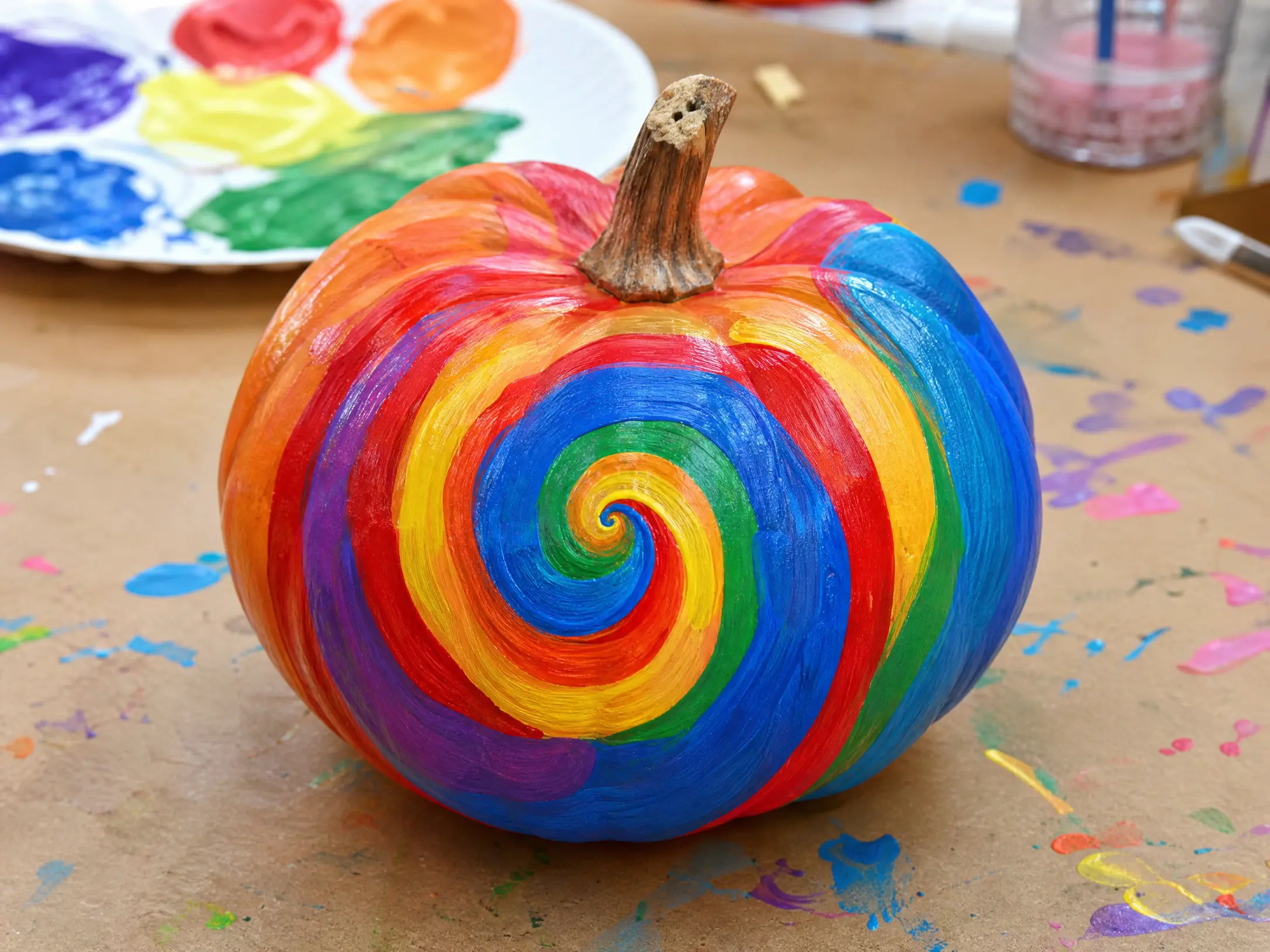
Paint a large spiral that winds from the stem toward the base. Older children can blend the edges of neighboring colors, while younger children can make a simple multicolor wavy line.
Mini activity: Practice drawing spirals on scrap paper before painting the pumpkin.
6. Rainbow Confetti Pumpkin
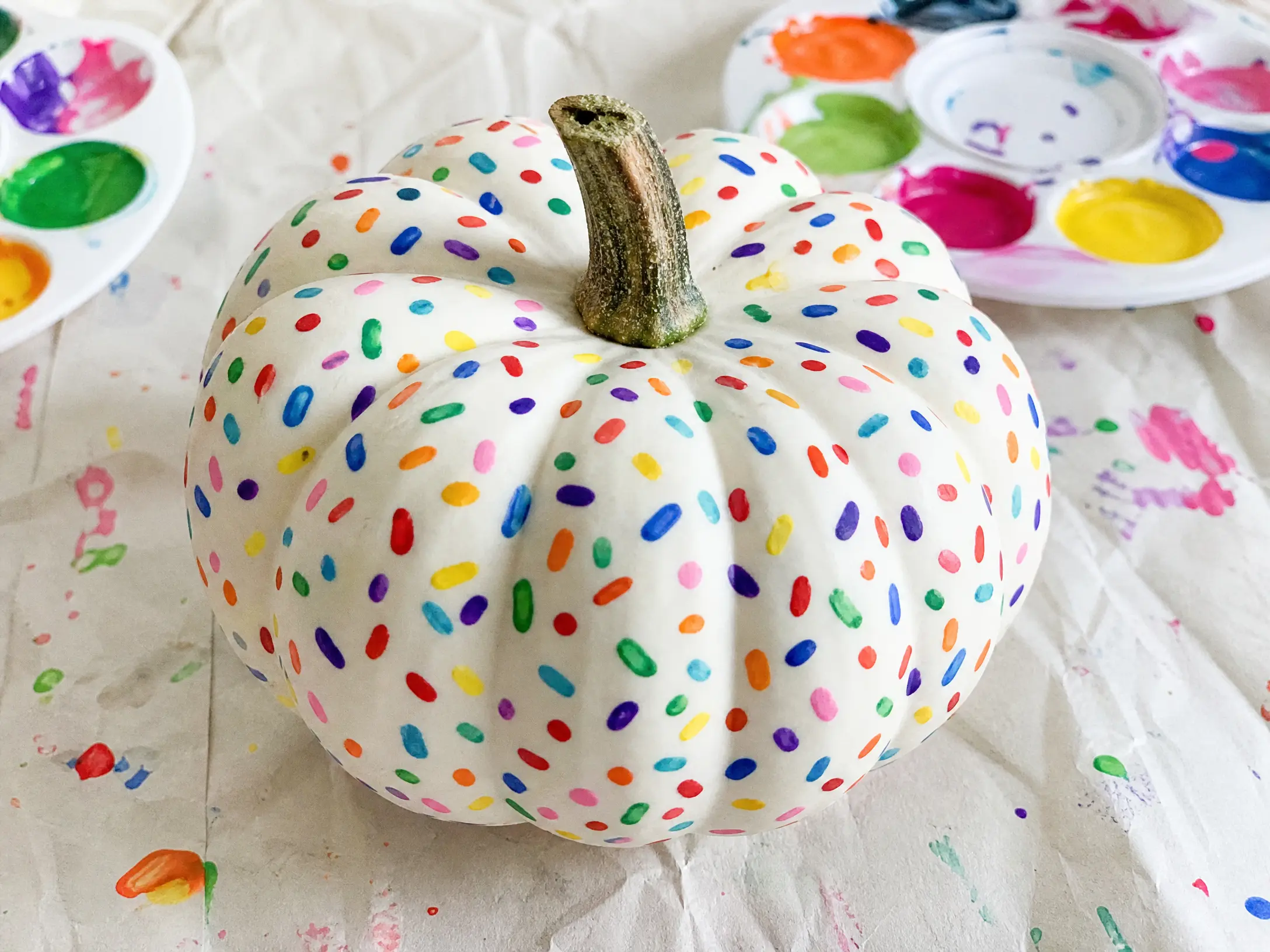
Add short dashes, tiny lines, dots, and brush marks in several bright colors. This is an excellent process-art option because children can keep adding marks without worrying about staying inside a shape.
Mini activity: Start with three colors and invite children to choose three more after the first layer dries.
7. Rainbow and Sunshine Pumpkin
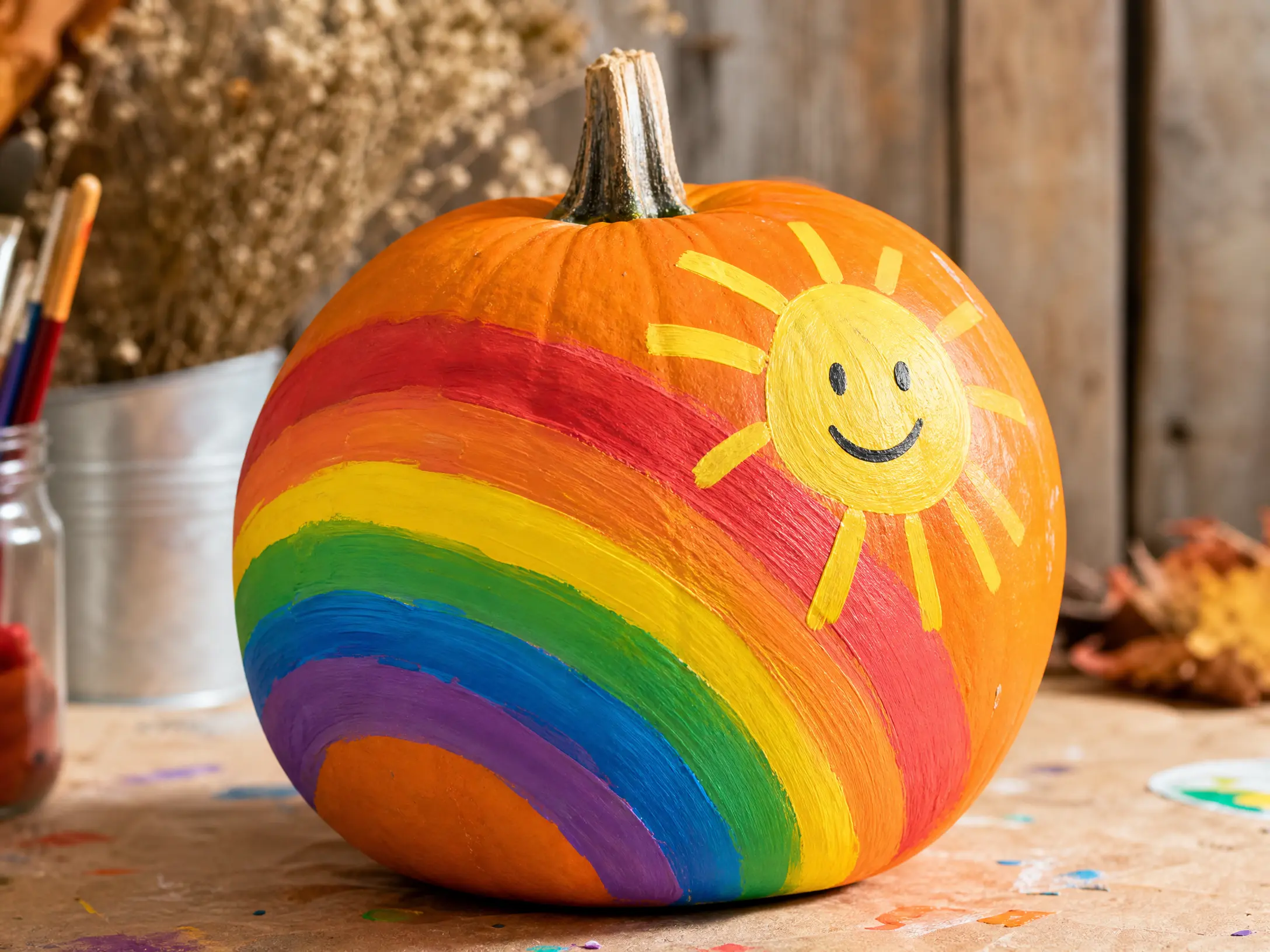
Paint a rainbow on one side of the pumpkin and a sunny yellow circle on the other. Add simple rays, clouds, or a green patch of grass at the bottom.
Mini activity: Ask children what kind of weather would make their rainbow appear.
8. Rainbow Hearts Pumpkin
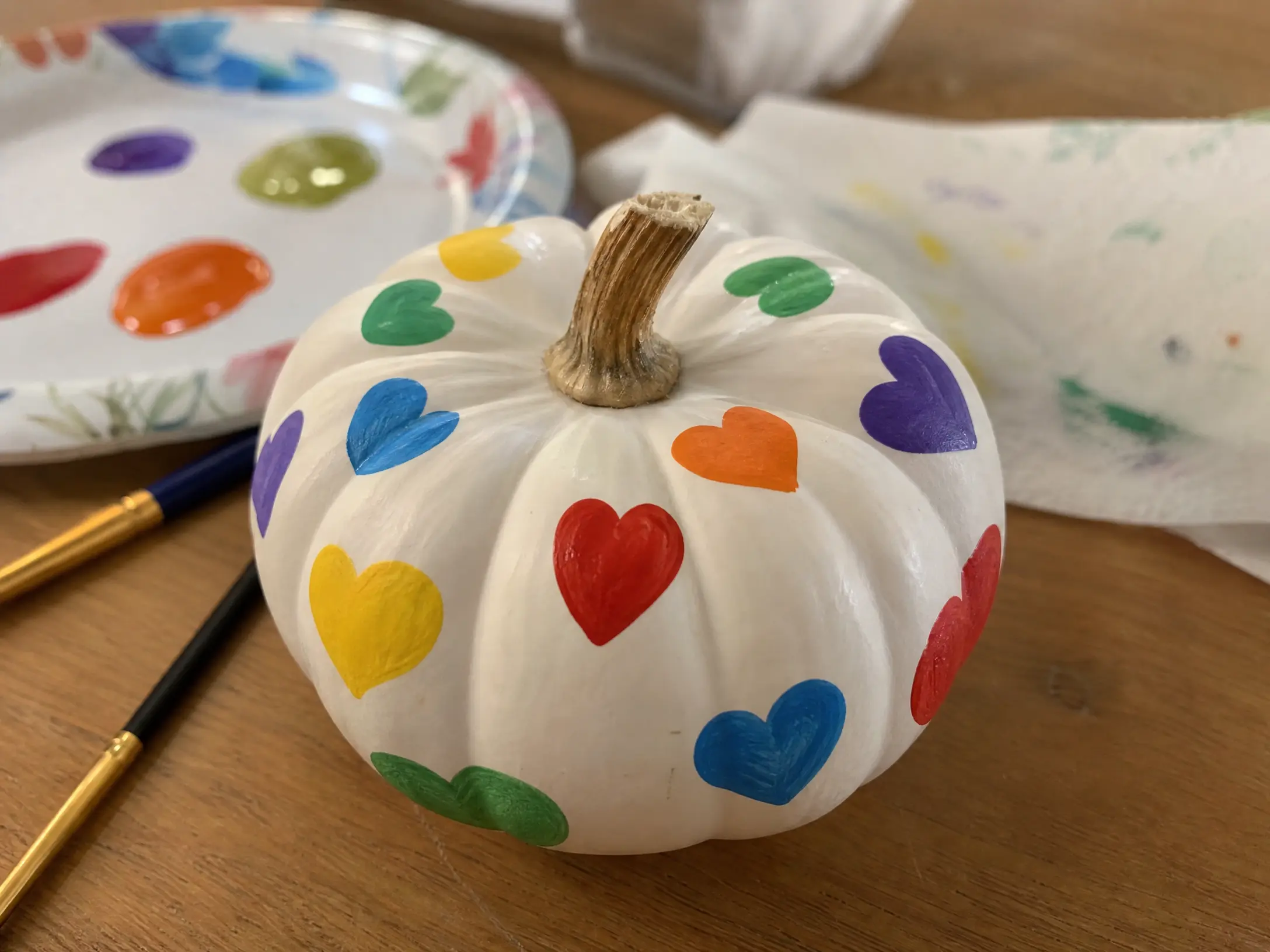
Paint hearts in rainbow colors around the pumpkin or arrange them in a single colorful row. This design makes a sweet decoration for a family table or classroom shelf.
Mini activity: Invite children to name one person, pet, place, or activity represented by each heart.
9. Rainbow Ombre Pumpkin
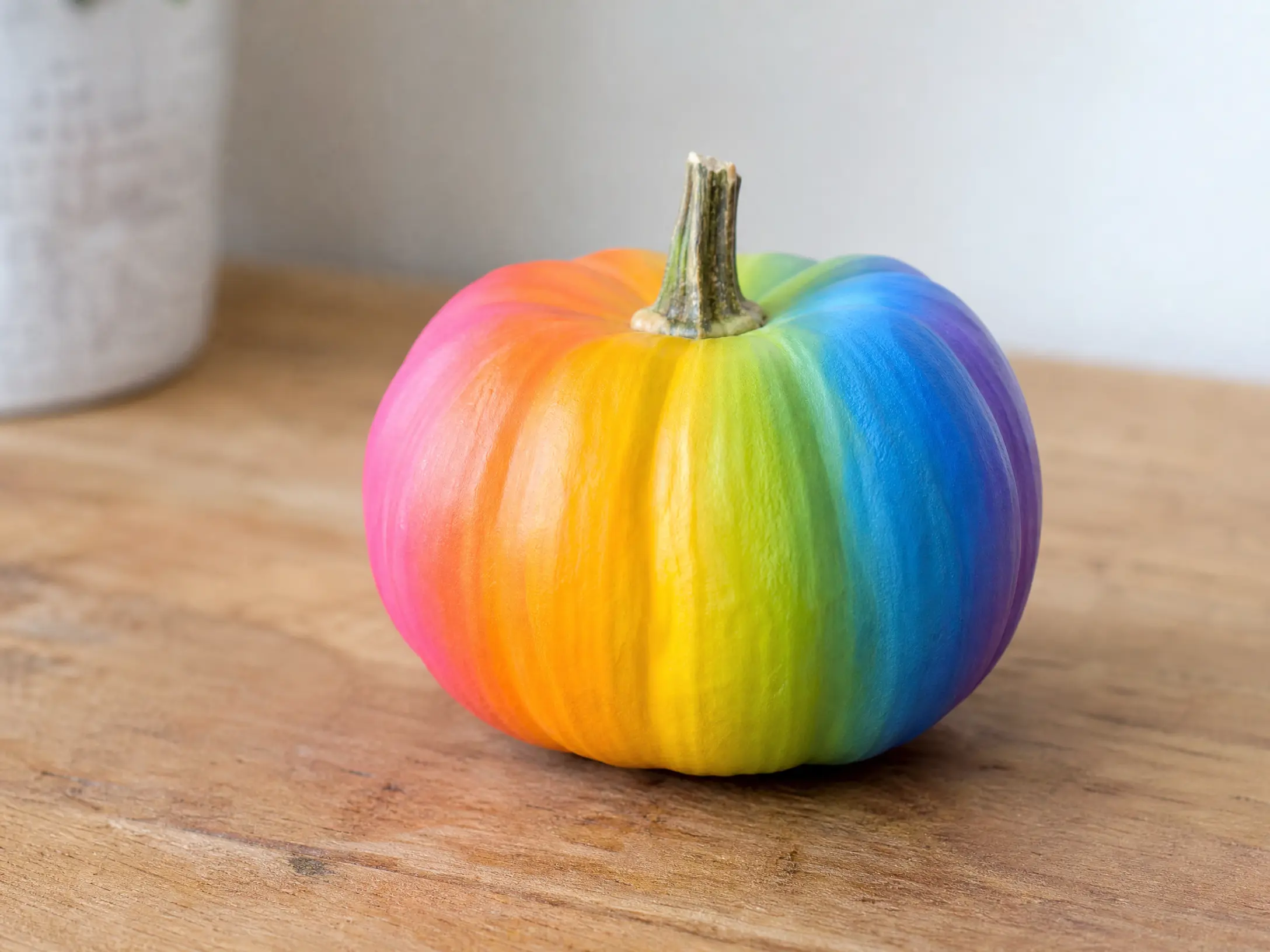
Create a gradual color transition from pink to orange, yellow, green, blue, and purple. Use thin layers and blend while the paint is damp, or keep each color in a clear band for an easier version.
Mini activity: Make a color strip on paper first so older children can plan the order of their shades.
10. Rainbow Flower Pumpkin
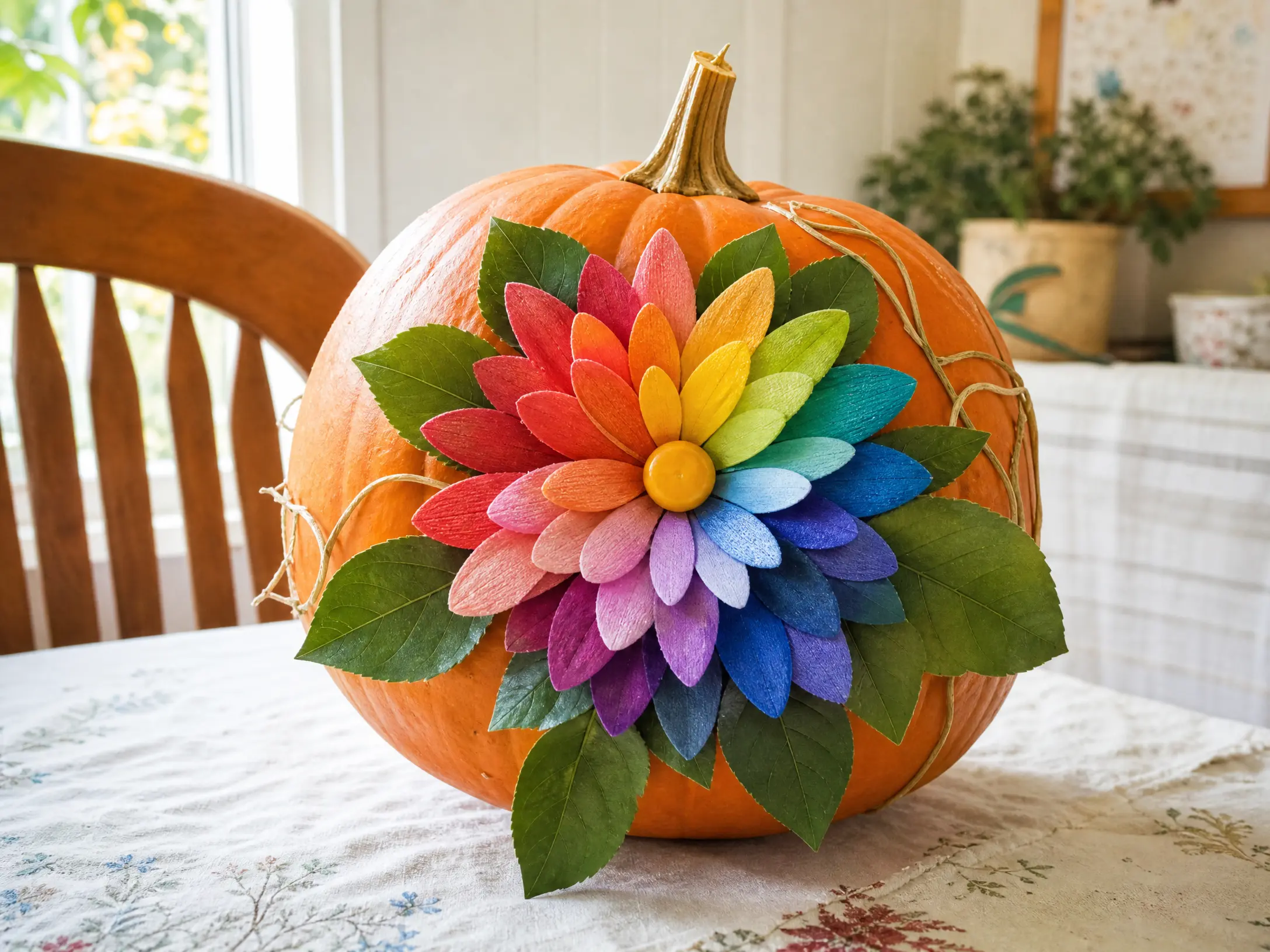
Paint a large flower with petals in different rainbow colors. Add a bright center and green leaves, or use a sponge to stamp round petals for a simpler preschool version.
Mini activity: Count the petals and create a repeating color pattern around the flower.
11. Rainbow Zigzag Pumpkin
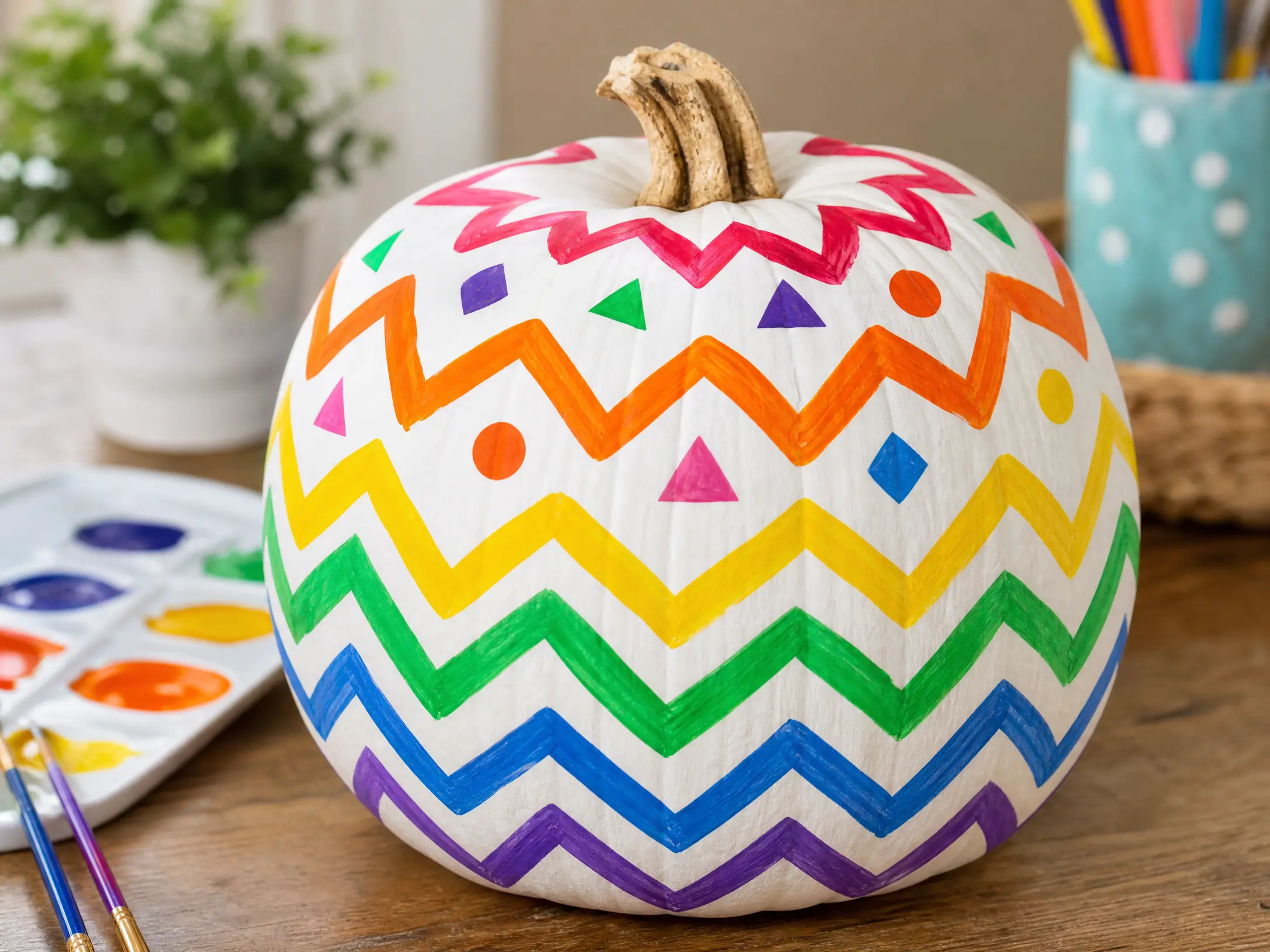
Cover the pumpkin with zigzags, triangles, and simple geometric shapes. The ridges of the pumpkin create interesting changes in the lines as children paint around the surface.
Mini activity: Draw one zigzag, one wavy line, and one straight line on paper before beginning.
12. Rainbow Clouds Pumpkin
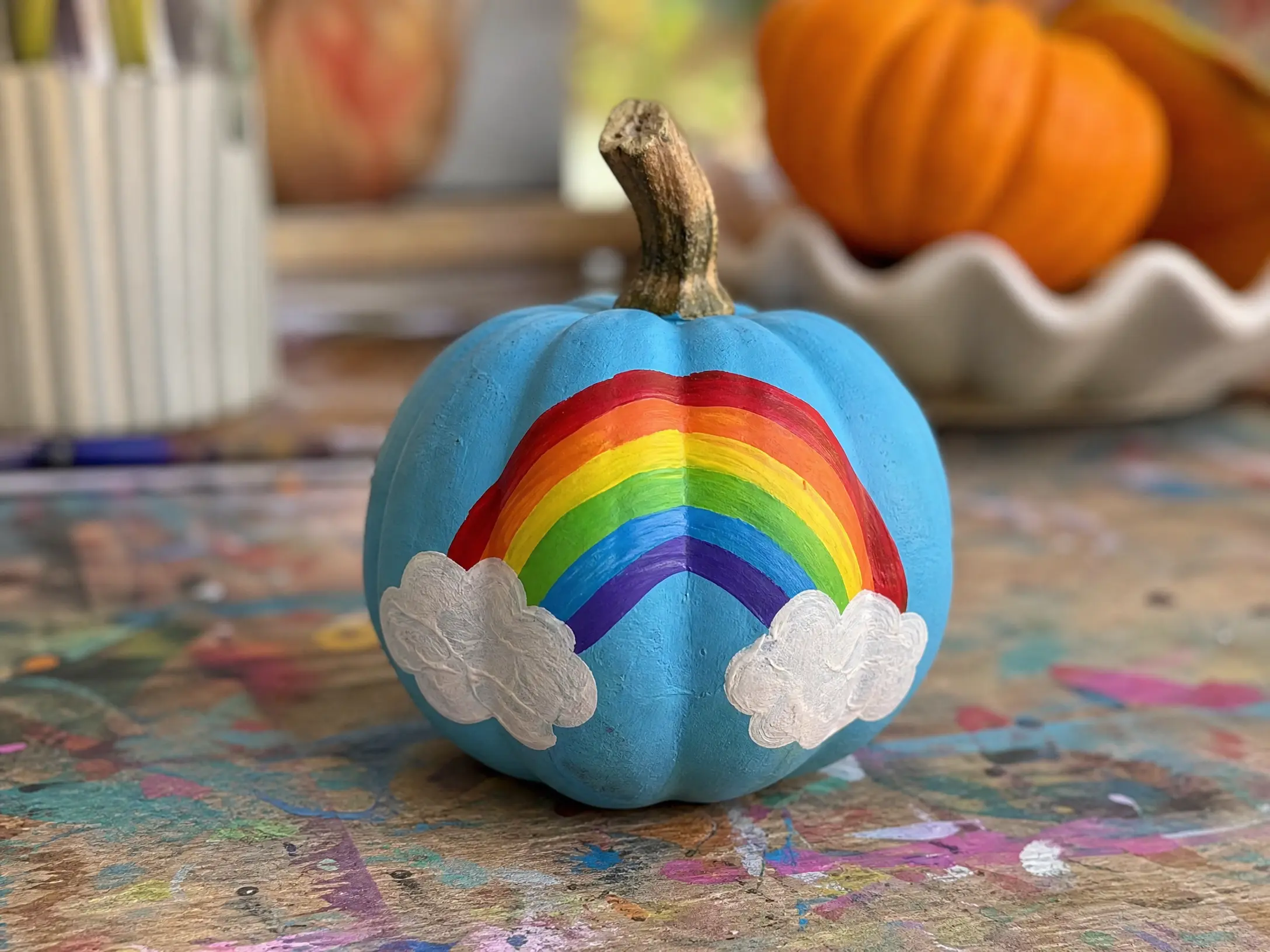
Use a blue base coat or paint blue sky sections between the ridges. Add a rainbow, white clouds, and a little sun for a cheerful sky scene.
Mini activity: Talk about what colors appear in the sky before and after rain.
13. Rainbow Leaf-Print Pumpkin
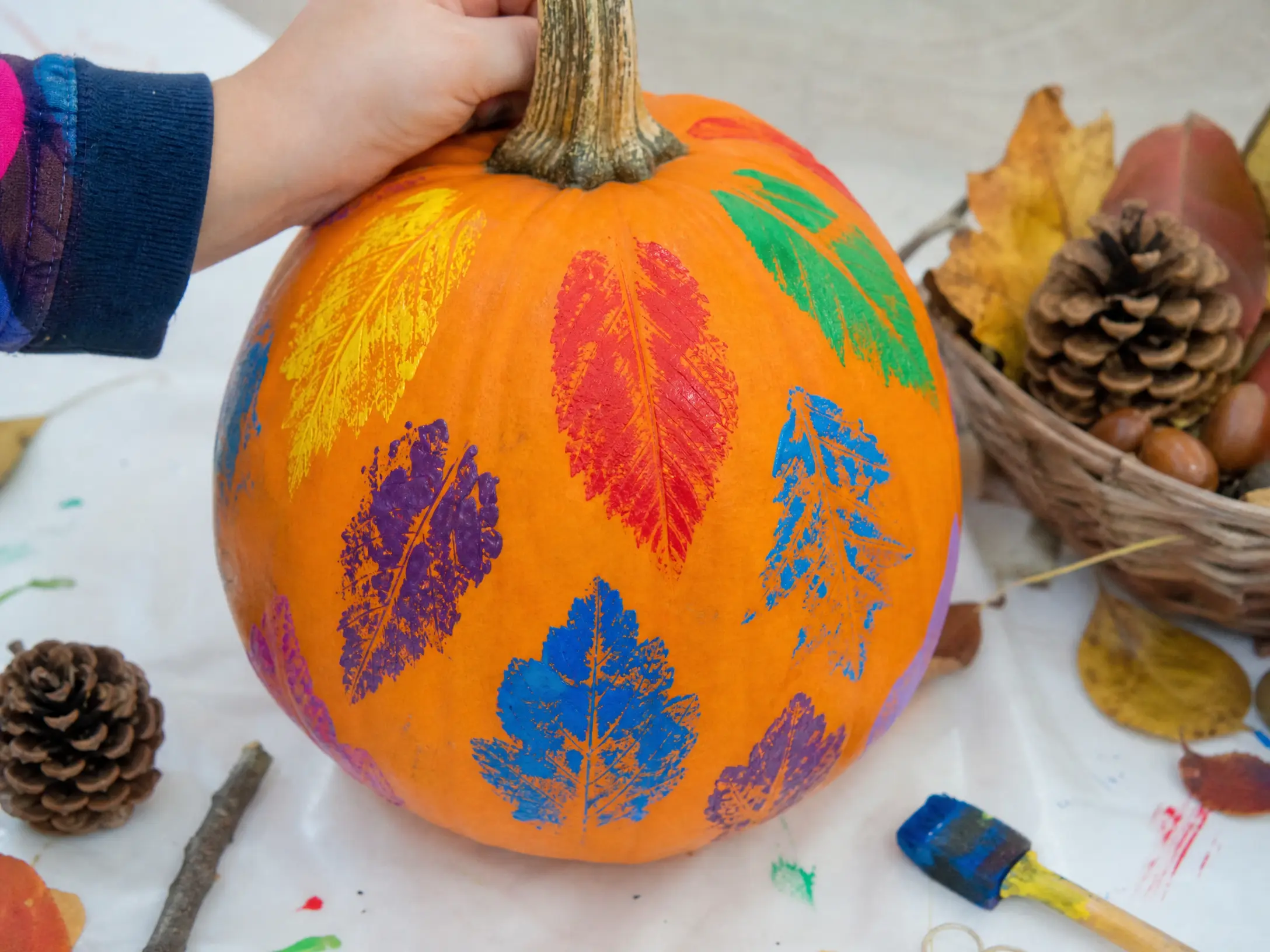
Brush a different bright color onto clean leaves and press them gently onto the pumpkin. The leaf veins add natural texture to the rainbow pattern.
Mini activity: Compare the leaves by size, shape, edge, and number of visible veins.
14. Rainbow Stars Pumpkin
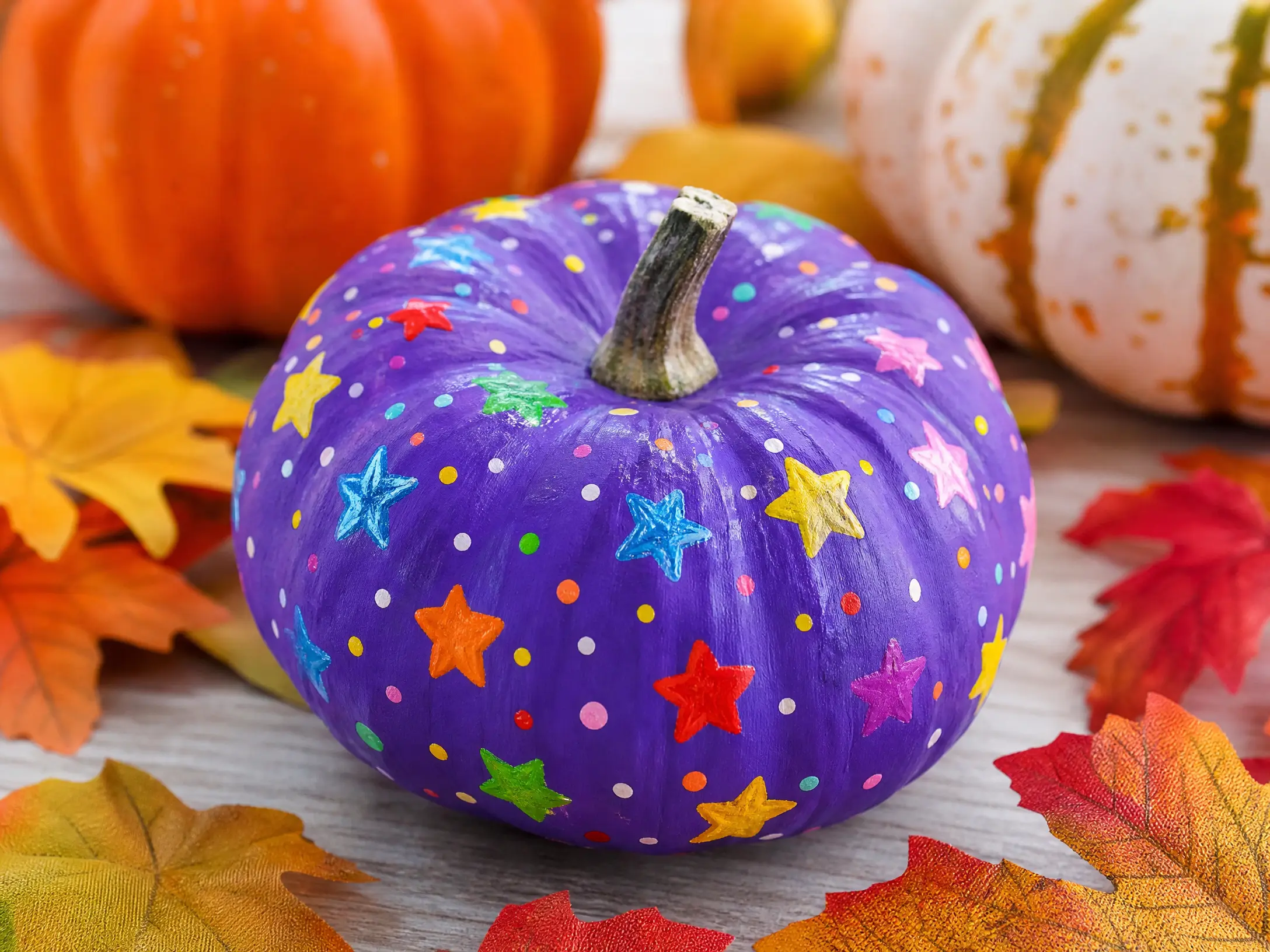
Paint a purple or navy base, then add stars in rainbow colors after it dries. Children can make large five-pointed stars, simple dots, or star-like bursts.
Mini activity: Count the stars and invent a story about a pumpkin floating through a colorful night sky.
15. Rainbow Patchwork Pumpkin
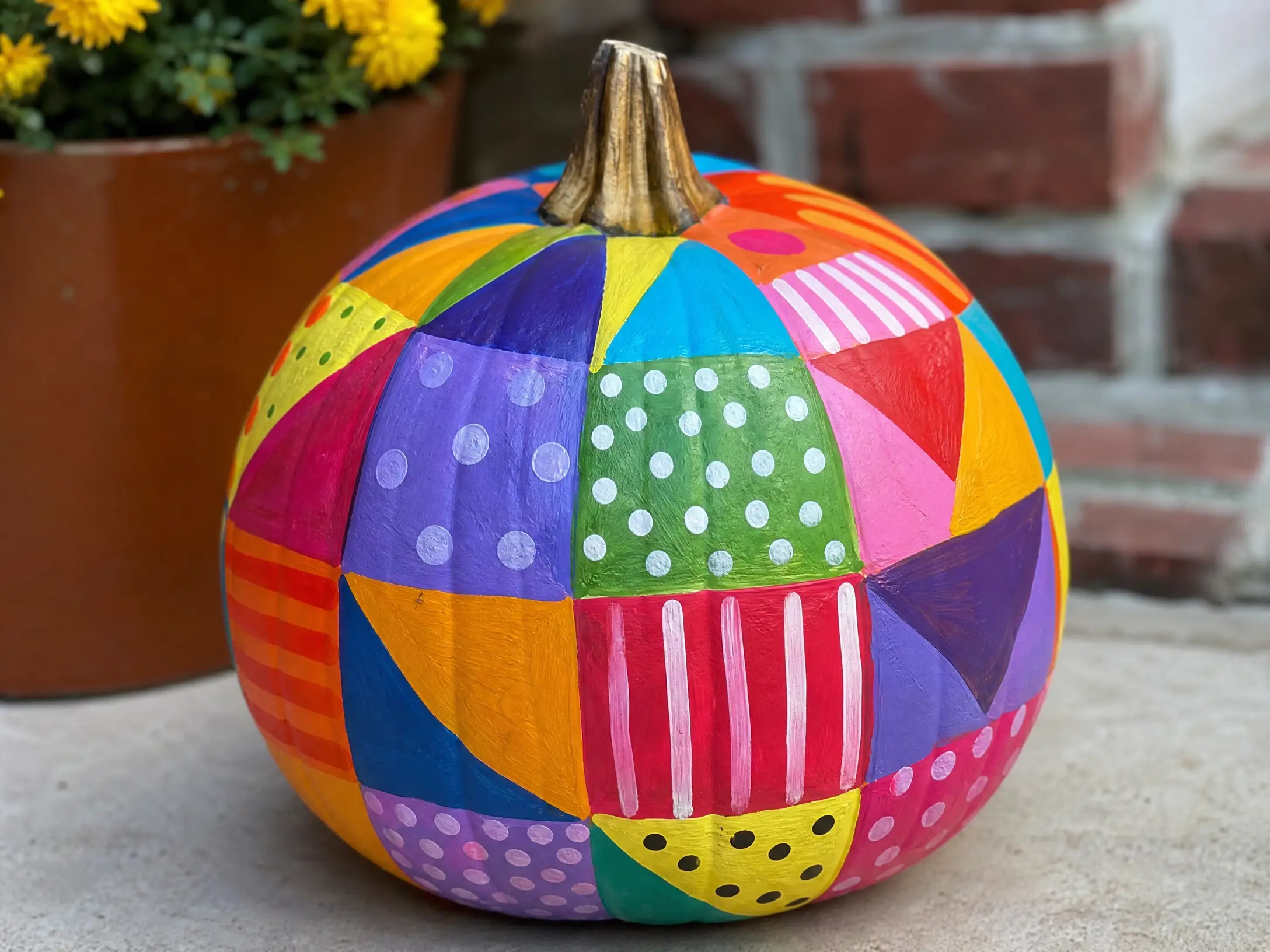
Divide the pumpkin into sections and fill each one with a different color or pattern. Combine dots, checks, stripes, triangles, and small arches for a playful patchwork look.
Mini activity: Challenge older children to repeat one pattern at least twice around the pumpkin.
16. Rainbow Happy-Face Pumpkin
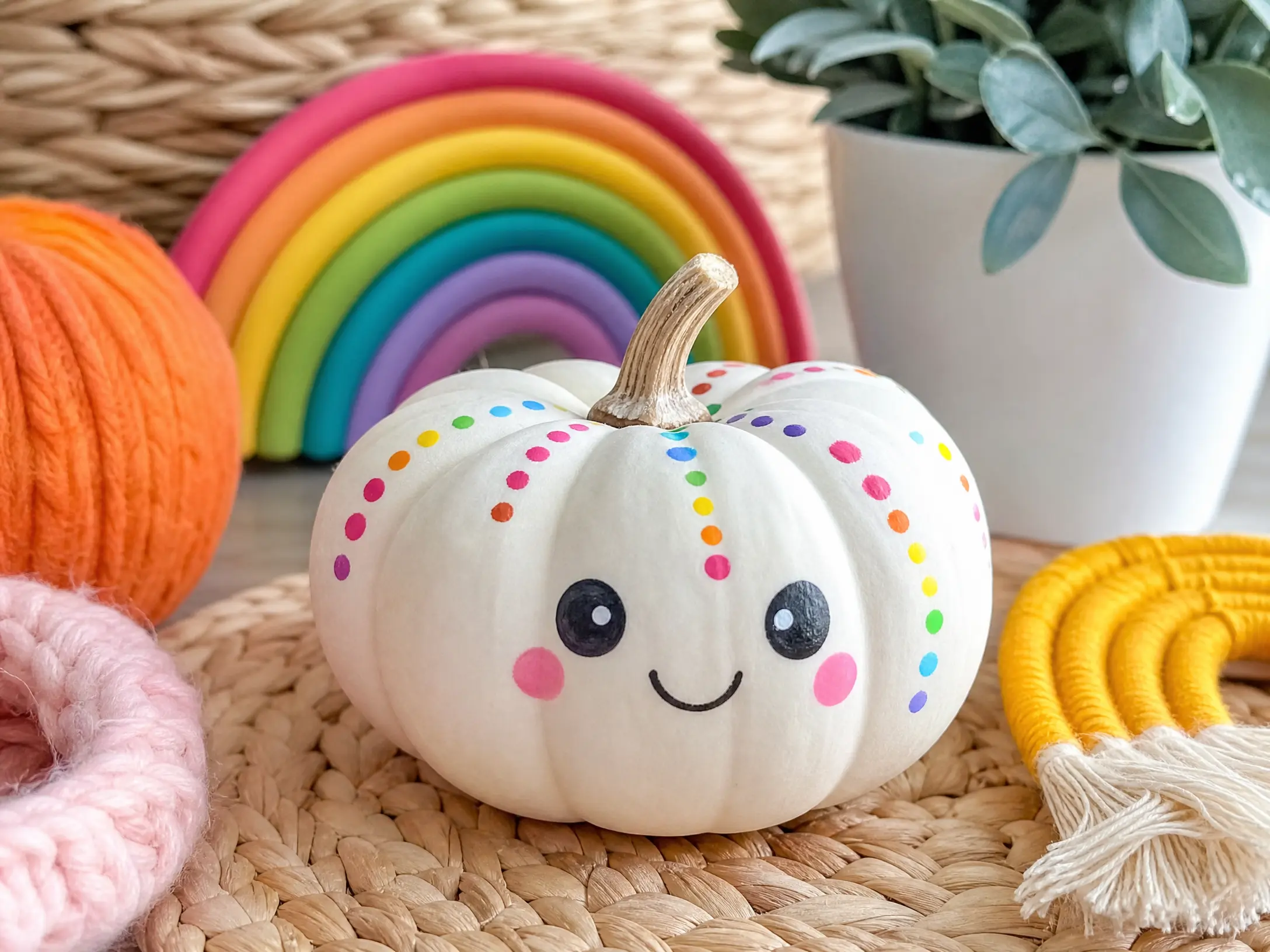
Paint a simple happy face, then surround it with rainbow dots, rays, curls, or tiny hearts. Children can give the pumpkin glasses, freckles, eyelashes, or a colorful bow.
Mini activity: Ask the child to name the pumpkin and dictate one sentence about its personality.
Easy Ways to Use Rainbow Pumpkins
At home
Set up a small painting station after school or on a weekend. Choose one project for a short activity or place several pumpkins on the table so children can explore different designs.
In the classroom
Use rainbow pumpkins as an open-ended art center, early-finisher activity, or seasonal display. Place the examples nearby as invitations, not patterns every child must copy. For another seasonal resource, link to the 20 cute pumpkin painting ideas for kids.
For homeschool
Rainbow painting connects naturally with color science, patterning, counting, descriptive writing, and weather. After painting, children can label the colors, make a color wheel, or write a short paragraph about their design.
For preschoolers
Choose dots, stripes, hearts, confetti, or a sponge-printed flower. Offer a limited number of colors and let children work one section at a time.
For a rainbow-themed party
Use craft pumpkins as a low-prep activity table. Provide name cards, paint palettes, and a drying area so each child can take home a personalized decoration.
As decorations or gifts
Display the finished pumpkins on a shelf, porch, classroom table, or fall centerpiece. Craft pumpkins are especially useful when you want to store the rainbow designs and reuse them next year.
Variations by Age
Toddlers: Offer large pumpkins, thick brushes, and two or three washable colors. Focus on broad marks and color exploration. Keep small decorations and paint supplies away from children who may mouth objects.
Preschoolers: Use simple shapes such as dots, stripes, hearts, and arches. Name colors together and invite children to describe what they see.
Kindergarteners: Add repeating patterns, counting, labels, and simple color mixing. Let children plan their design with crayons before painting.
Older kids: Encourage gradients, symmetry, detailed scenes, color wheels, and written descriptions. Older children can also help prepare the materials and clean the workspace.
Tips for Painting Rainbow Pumpkins
•Clean and dry the pumpkin before painting.
•Use a light base coat when bright colors need a clean background.
•Allow each layer to dry before adding small details.
•Use a limited palette for younger artists and a wider palette for older children.
•Keep a separate paintbrush or water cup for each color family when possible.
•Protect the table and clothing with washable coverings.
•Choose child-appropriate supplies and supervise painting and cleanup.
•Wash hands after the activity and store supplies in labeled containers.
•Let children choose their own color order instead of requiring a perfect rainbow sequence.
•If using real pumpkins, keep them in a cool, dry place and check them for soft spots.
Frequently Asked Questions
What paint is best for rainbow pumpkin painting?
Washable tempera paint is a practical choice for many children’s projects. Older children may use acrylic craft paint on craft pumpkins when the label allows it and an adult provides supervision. Protect clothing and surfaces because even washable paint may stain porous materials.
Can preschoolers paint rainbow pumpkins?
Yes. Dots, broad stripes, sponge prints, and simple arches are accessible choices for preschoolers. Offer thick brushes, a protected table, and only a few colors at a time.
Should I paint a white base coat first?
A white base coat can make pastel and bright rainbow colors stand out. It is optional for orange pumpkins, especially when children are making dots, stripes, or bold patterns directly on the surface.
How can children learn while painting pumpkins?
Children can practice color names, sorting, counting, patterning, comparing, describing, and making predictions about color mixing. Keep the conversation playful rather than turning the craft into a test.
Can I use these ideas on paper pumpkins?
Yes. Draw or print a pumpkin outline on cardstock and let children paint the same designs on paper. This option works well for classrooms, younger children, and homes that do not have real pumpkins available.
How do I keep painted pumpkins from smearing?
Let each layer dry completely before adding another color. Move finished pumpkins to a safe drying area and avoid stacking them. An adult can use a suitable sealer on craft pumpkins if the product instructions permit it.
What other pumpkin activity should we try?
Start with the full 20 cute pumpkin painting ideas for kids collection for additional ghosts, monsters, flowers, patterns, and seasonal designs.
Related Ideas from Oh Simply Mom
•20 Cute Pumpkin Painting Ideas for Kids includes more painted pumpkin designs for fall and Halloween.
•10 Fun Butterfly Activities for Preschool combines crafts with early science, language, and hands-on learning.
•All About Me Poster for Kids offers a flexible drawing and writing activity for preschool, classroom, and homeschool use.
•Oh Simply Mom has more seasonal printables, crafts, and family activity ideas.
Save This Idea on Pinterest
Save this 16 colorful rainbow pumpkin painting ideas collection for a fall craft afternoon, preschool art center, classroom activity, or rainbow-themed party. Suggested Pinterest title: 16 Rainbow Pumpkin Painting Ideas for Kids. Suggested description: Brighten up fall with colorful rainbow pumpkin painting ideas for kids! Try stripes, arches, dots, hearts, stars, flowers, and more easy crafts for home or school.
Final Thoughts
Rainbow pumpkins make fall decorating feel joyful, creative, and completely personal. Children can paint careful arches, bold stripes, tiny dots, or a design that follows no plan at all. Set out a few colors, invite them to explore, and celebrate the choices they make. These projects work for preschoolers, elementary-age artists, family craft time, classrooms, homeschool lessons, and seasonal parties. Save this collection for the next time you want a bright, low-prep fall activity that ends with a cheerful decoration.
References
[3] Choosing Safe Art & Craft Supplies for Children — HealthyChildren.org