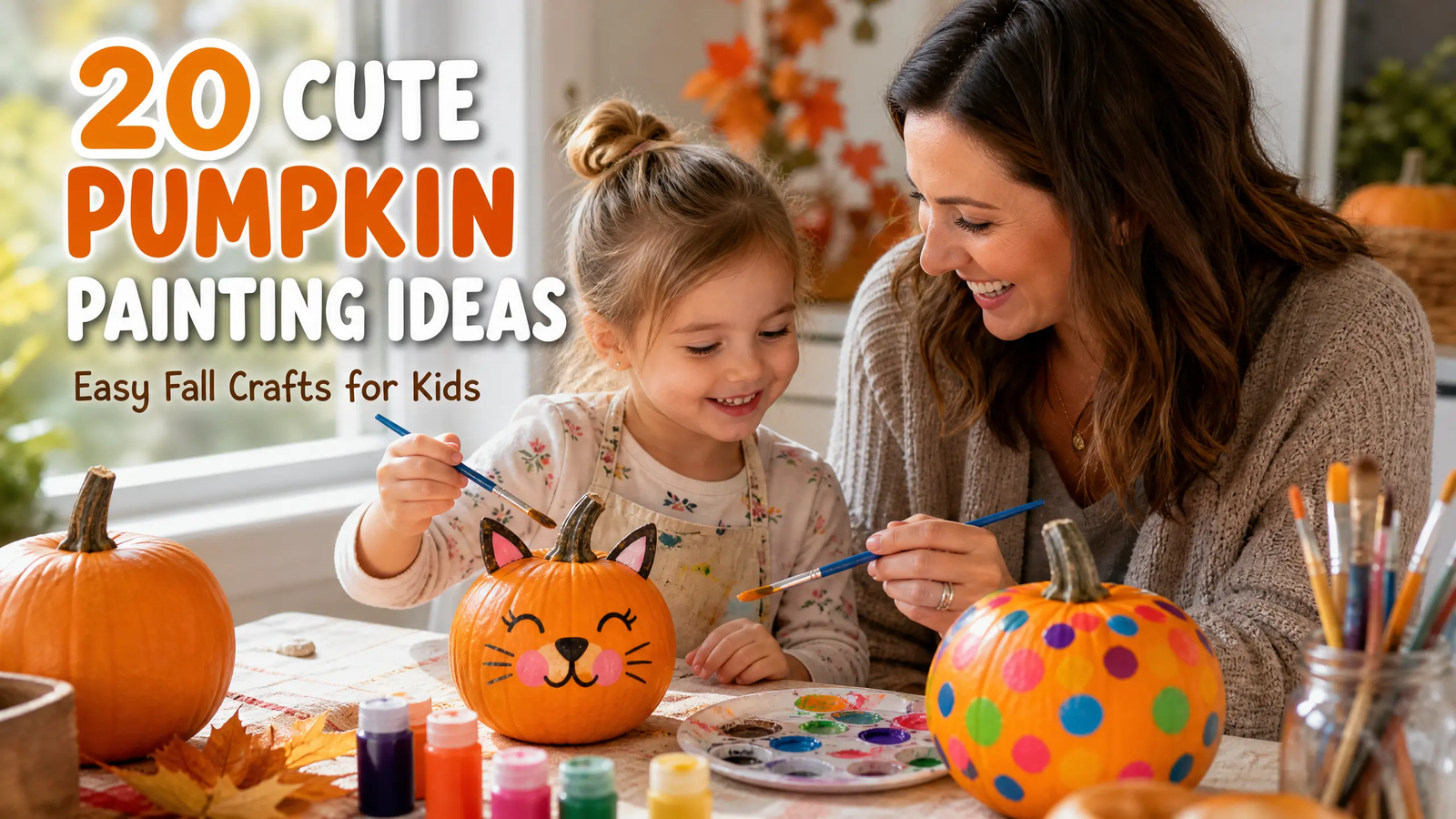
20 Cute Pumpkin Painting Ideas for Kids: Easy Fall Crafts
Looking for pumpkin painting ideas for kids that are cute, simple, and not too difficult to prepare? These 20 painted pumpkin ideas are perfect for a fall afternoon at home, a preschool art center, a classroom party, or a Halloween craft table. Children can use small real pumpkins, craft pumpkins, or even paper pumpkin shapes, depending on what you have available.
Most of these ideas use washable paint, a few paintbrushes, and ordinary craft supplies. The goal is not to make every pumpkin look the same. Let children choose their colors, experiment with marks, and add their own details. A wobbly line or surprising color combination is part of the fun.
What You Need
You do not need every supply for every idea. Set out a small selection and let children choose.
•Small pumpkins or craft foam pumpkins
•Washable tempera or acrylic craft paint, chosen for the child’s age and the surface
•Paintbrushes in several sizes
•Paper plates or paint palettes
•Water cups and paper towels
•Black and white paint for faces and details
•Paint pens for older children, used with adult supervision
•Optional: cotton swabs, sponges, leaves, stickers, and paint-splatter tools
•Newspaper, a washable tablecloth, or a craft mat
For younger children, use larger pumpkins and wide-handled brushes. If the pumpkin will be handled often or displayed outdoors, an adult can add an appropriate sealer after the paint has fully dried.
Why Kids Love Painting Pumpkins
Pumpkin painting is an open-ended art invitation. Children can make a plan, change their minds, compare colors, and discover what happens when a brush is loaded with more or less paint. The National Association for the Education of Young Children describes process-focused art as an experience with no single right answer, where children explore tools and materials in their own way .
Painting also gives children practice with controlled hand movements, visual choices, language, and simple problem-solving. Michigan State University Extension notes that using tools such as paintbrushes can support fine-motor practice, while talking about artwork can encourage language development . These are general learning opportunities, not a reason to pressure children to produce a perfect finished pumpkin.
For safety, choose products labeled for children and look for art materials that conform to ASTM D4236 when possible. The American Academy of Pediatrics also recommends supervision, handwashing, proper storage, and avoiding materials with cautionary or hazard labels .
Quick Overview
| Pumpkin painting idea | Suggested age | Difficulty | Approximate time |
| Rainbow stripes | 3–8 | Easy | 20 minutes |
| Polka dots | 2–6 | Very easy | 15 minutes |
| Friendly ghost | 4–8 | Easy | 25 minutes |
| Sunflower | 5–9 | Easy | 30 minutes |
| Silly monster | 4–9 | Easy | 25 minutes |
| Confetti marks | 2–7 | Very easy | 20 minutes |
| Leaf prints | 3–8 | Easy | 25 minutes |
| Ombre pumpkin | 6–10 | Moderate | 30 minutes |
| Happy face | 3–8 | Easy | 20 minutes |
| Stars and moon | 5–10 | Easy | 30 minutes |
| Cactus | 5–10 | Easy | 30 minutes |
| Rainbow arches | 3–8 | Easy | 25 minutes |
| Bumblebee | 5–9 | Easy | 30 minutes |
| Watercolor washes | 4–9 | Easy | 25 minutes |
| Pumpkin patch | 5–10 | Moderate | 35 minutes |
| Paint splatters | 3–9 | Easy | 20 minutes |
| Friendly bat | 5–10 | Easy | 30 minutes |
| Patchwork pattern | 5–10 | Moderate | 35 minutes |
| Thankful hearts | 3–8 | Easy | 25 minutes |
| Woodland fox | 5–10 | Moderate | 35 minutes |
1. Rainbow Stripe Pumpkin
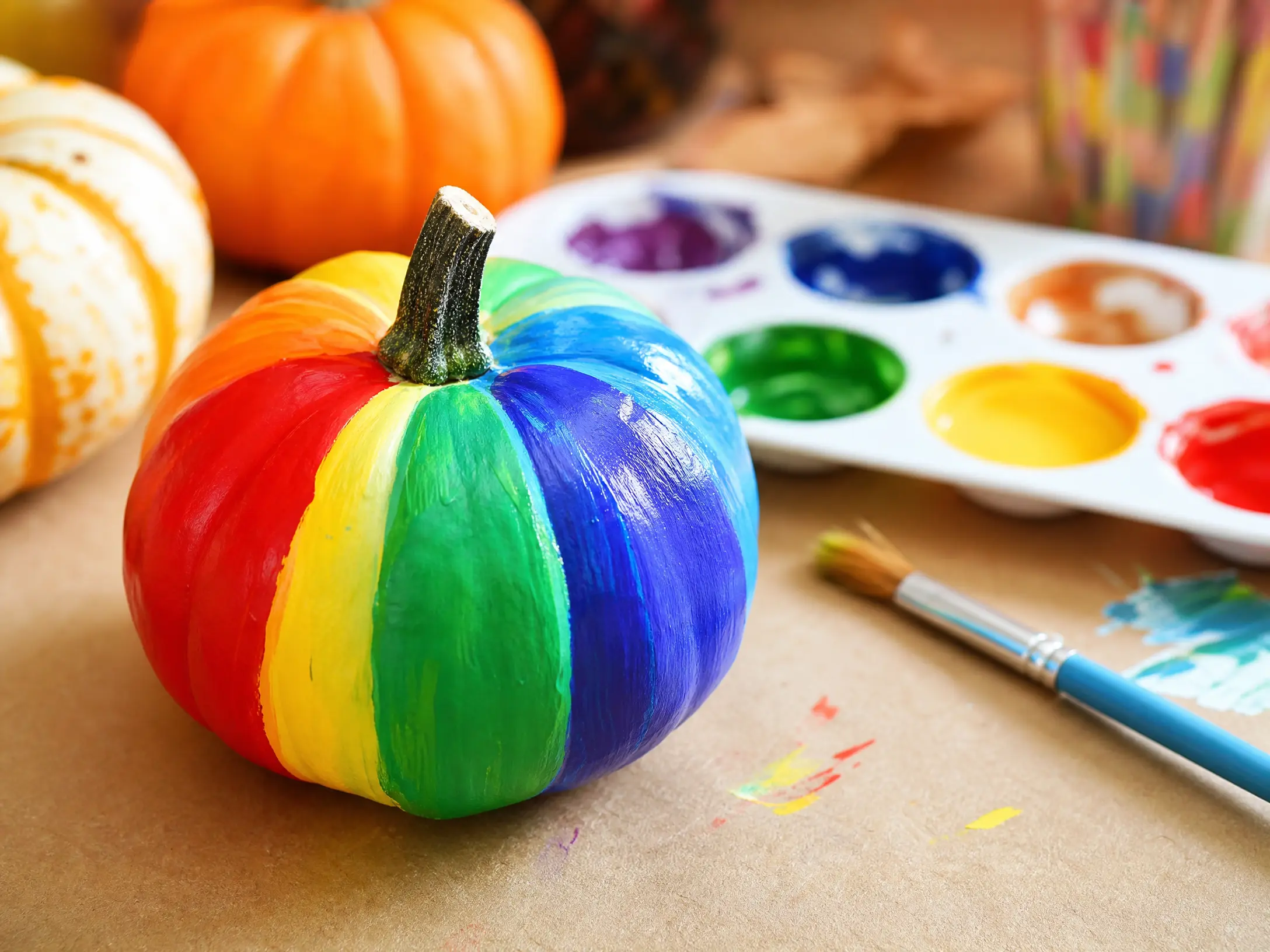
Paint broad stripes around a white or orange pumpkin using cheerful rainbow colors. Children can follow the pumpkin’s natural ridges or make the stripes uneven and freeform.
Mini activity: Ask children to put the colors in a repeating pattern or name the colors from lightest to darkest.
2. Polka-Dot Pumpkin
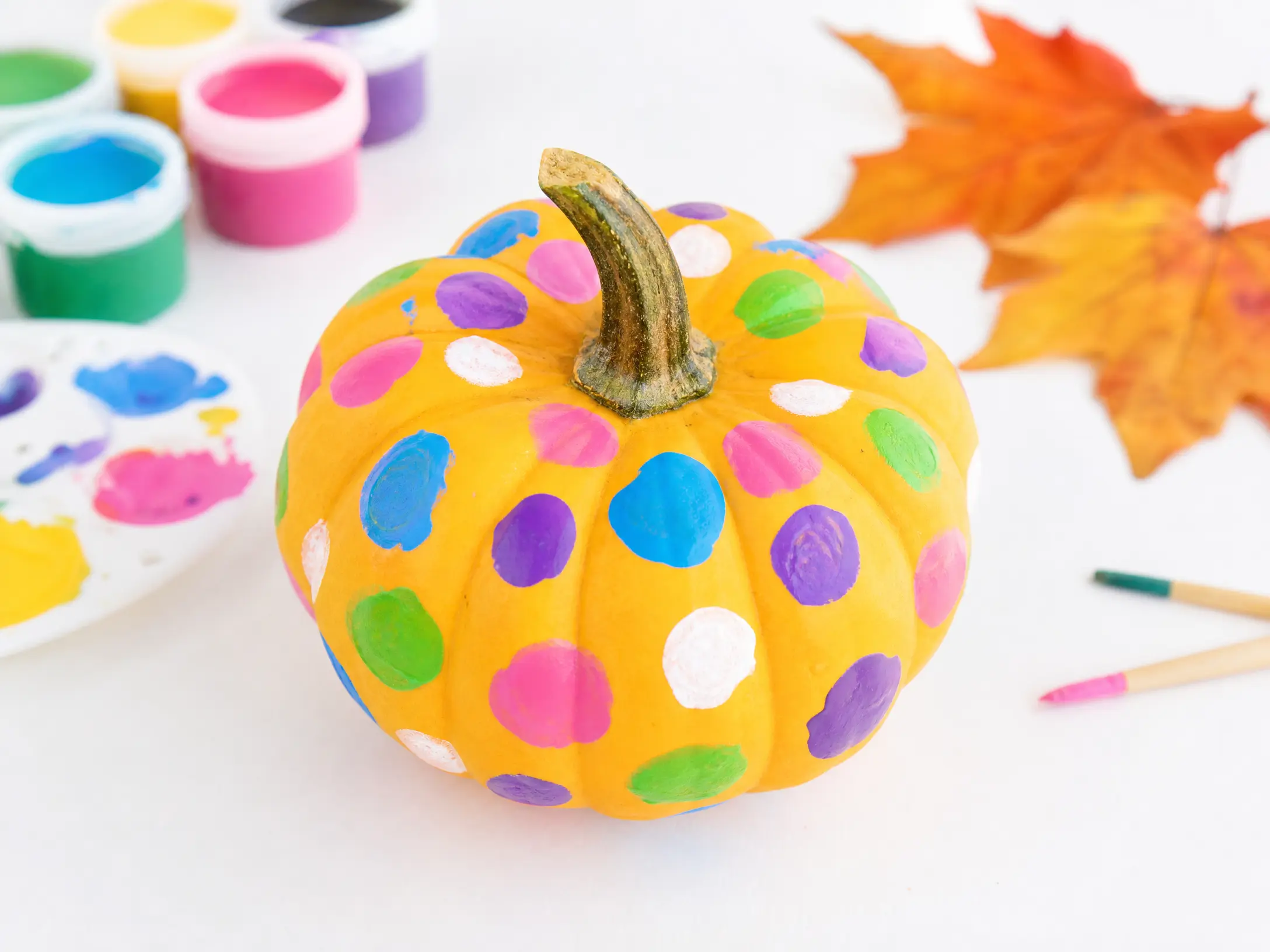
Polka dots are one of the easiest pumpkin painting ideas for toddlers and preschoolers. Use the end of a cotton swab, a round sponge, or a paintbrush handle to create dots in different sizes.
Mini activity: Count the dots in one color, then compare which color has the most.
3. Friendly Ghost Pumpkin
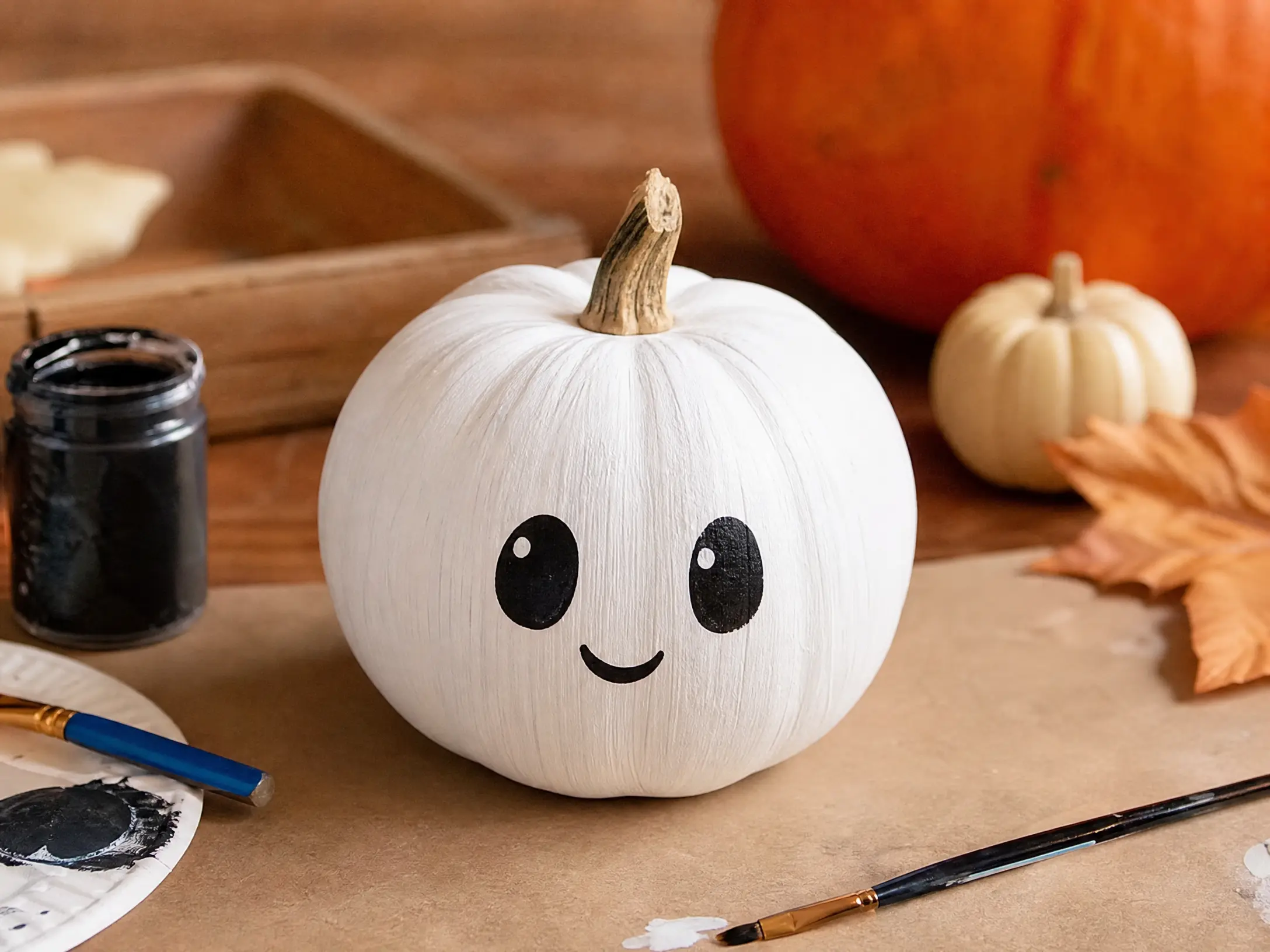
Cover a small pumpkin with white paint, then add simple black eyes and a tiny smile when it dries. This no-carve Halloween craft is cute without being spooky.
Mini activity: Invite children to give the ghost a name and dictate one sentence about where it likes to play.
4. Sunflower Pumpkin
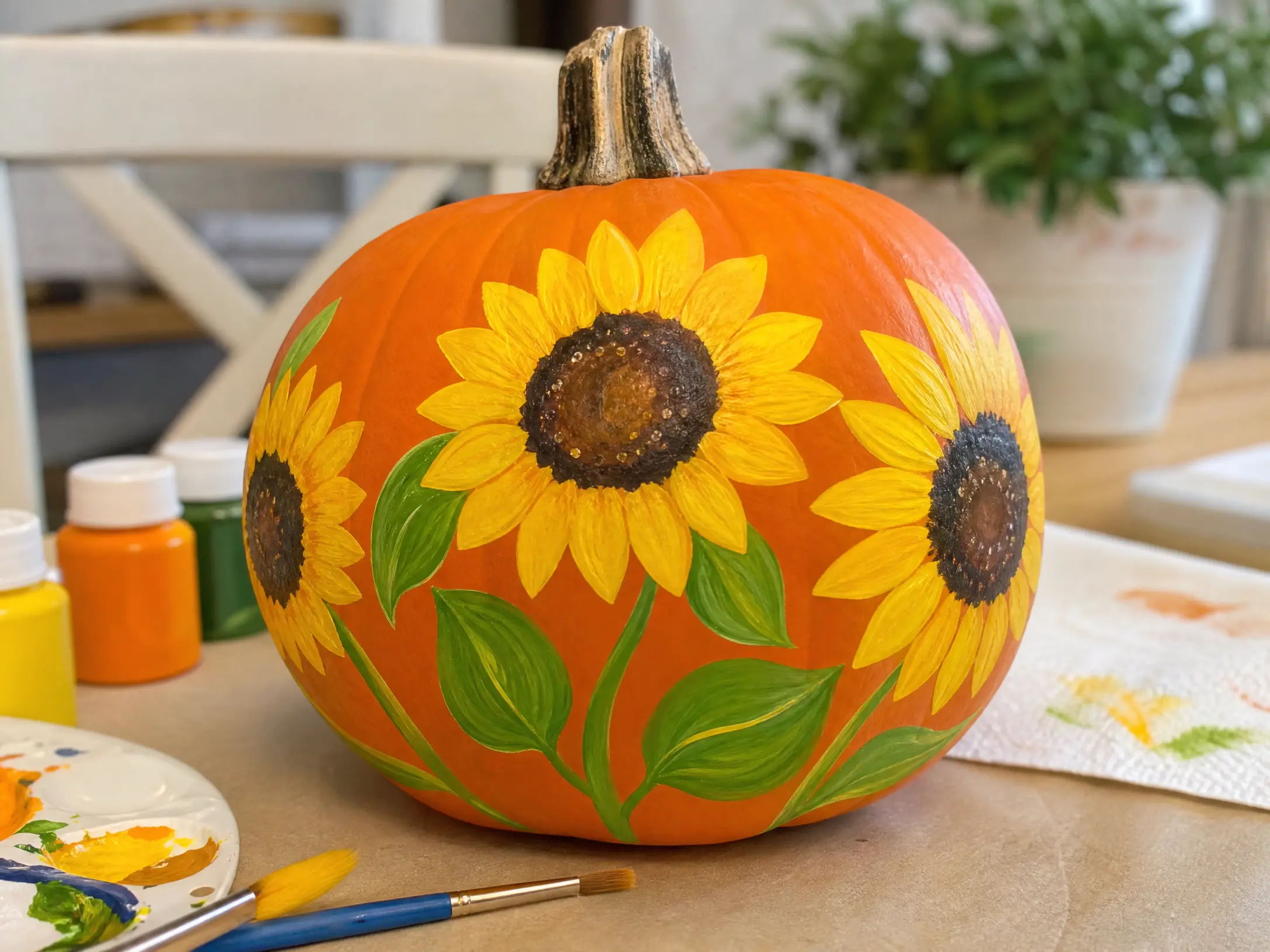
Paint yellow petals around the front of an orange pumpkin and add a brown center with green leaves. Younger children can stamp the petals with a sponge instead of painting each one.
Mini activity: Look at a real sunflower or photograph and talk about its shape, colors, and seeds.
5. Silly Monster Pumpkin
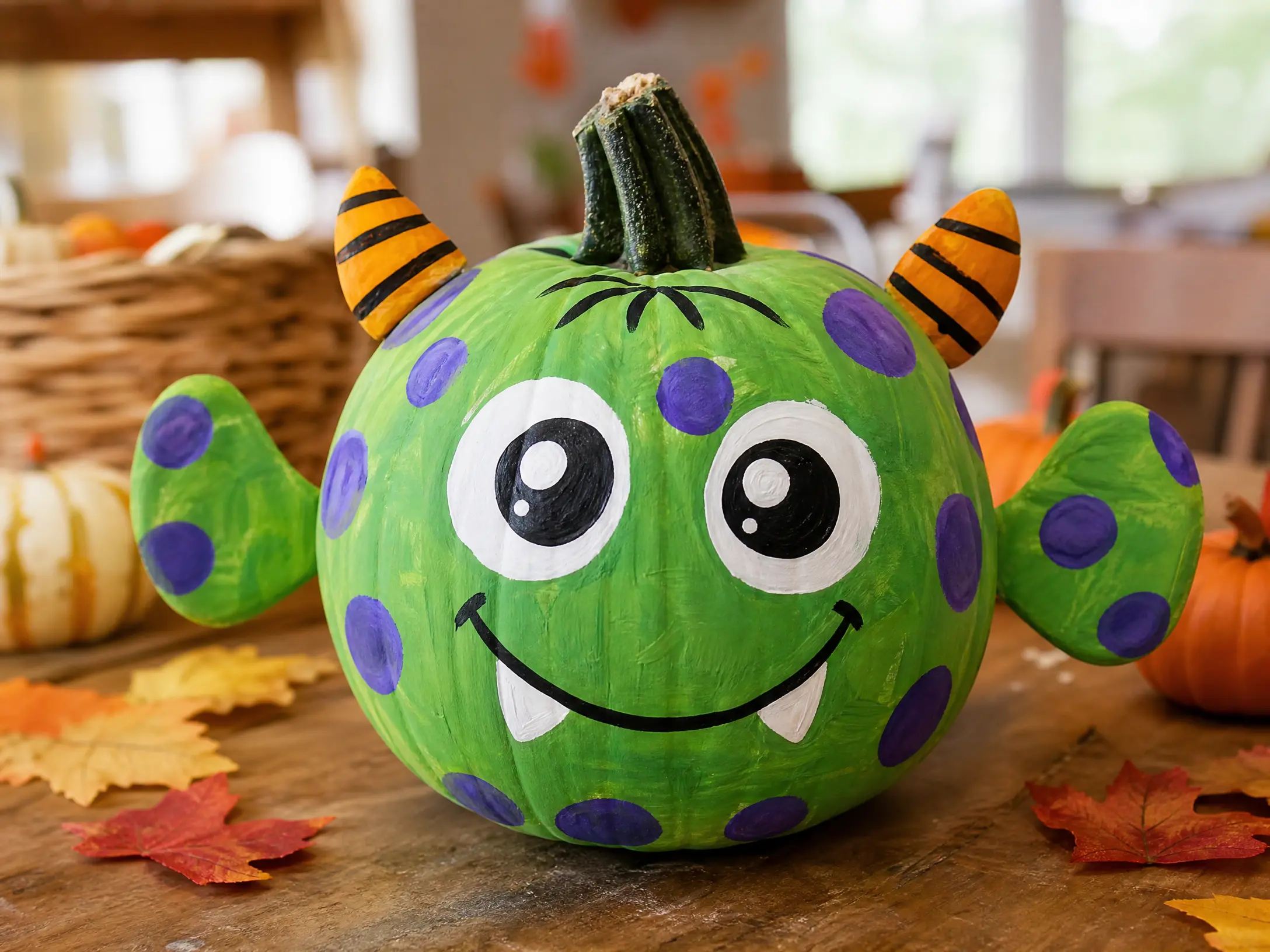
Let children paint a green, purple, blue, or orange monster with spots, horns, hair, or three eyes. Keep the features friendly and let each child invent a different personality.
Mini activity: Ask, “What does your monster like to eat?” Write the answer on a small card beside the pumpkin.
6. Rainbow Confetti Pumpkin
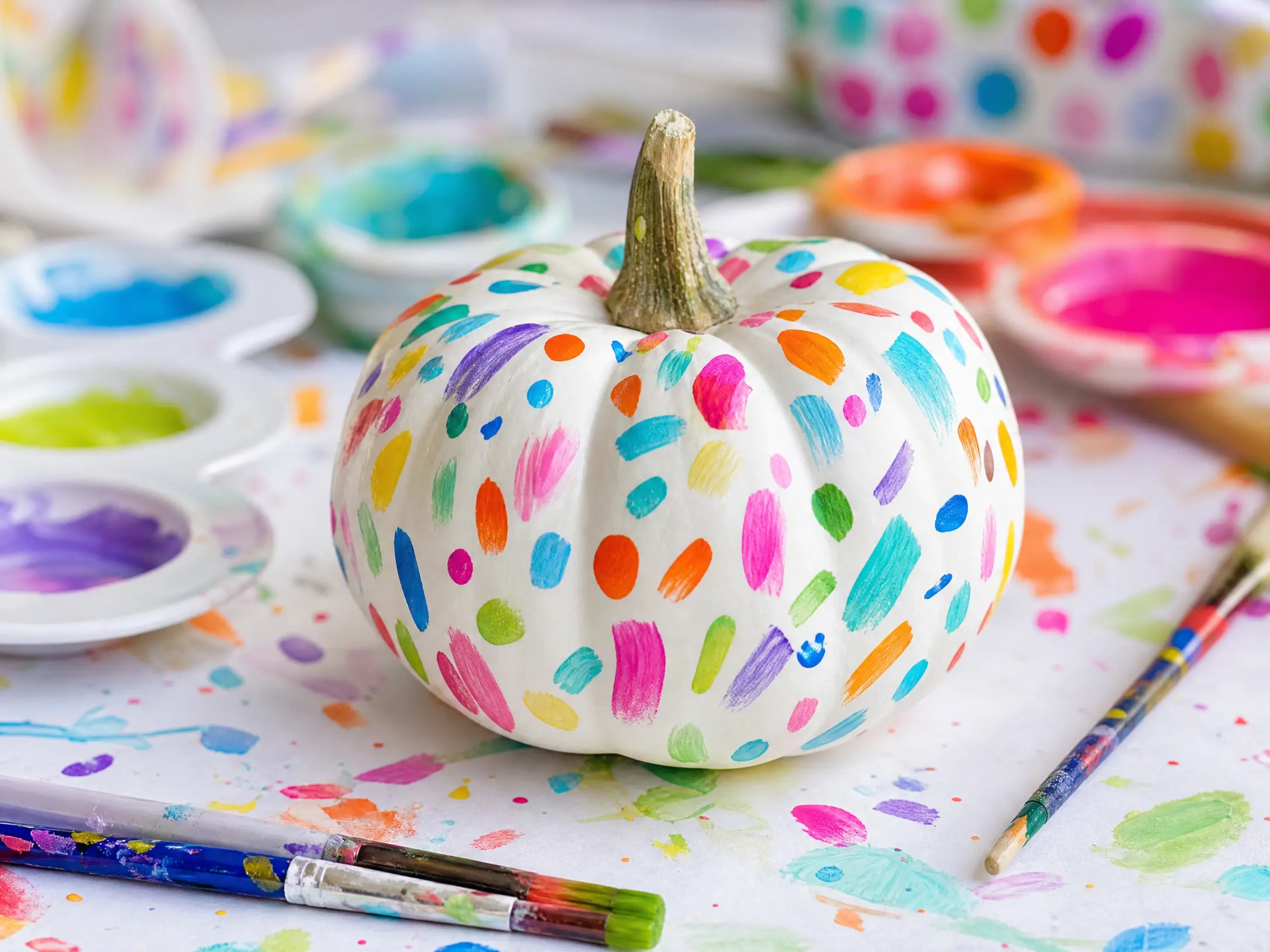
This process-art idea uses short dashes, tiny lines, and dots instead of a detailed picture. It is a good choice when children want to paint independently without following a model.
Mini activity: Offer three colors at first, then invite children to choose two more colors after they see the first layer.
7. Leaf-Print Pumpkin
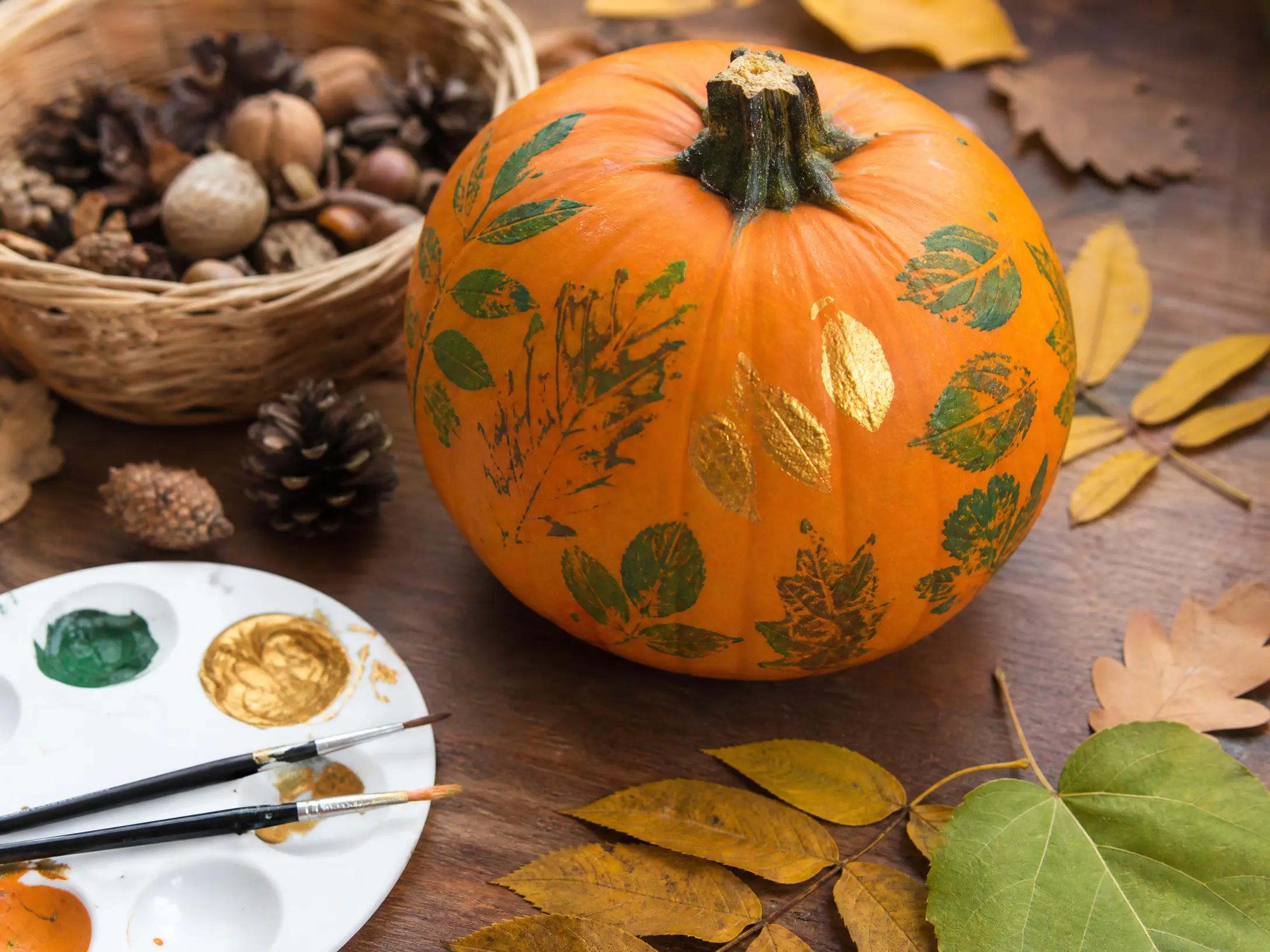
Brush paint onto the veined side of a clean leaf and press it gently onto the pumpkin. Use several leaf shapes for a natural fall design.
Mini activity: Compare the leaves by size, edge, and number of visible veins.
8. Ombre Pumpkin
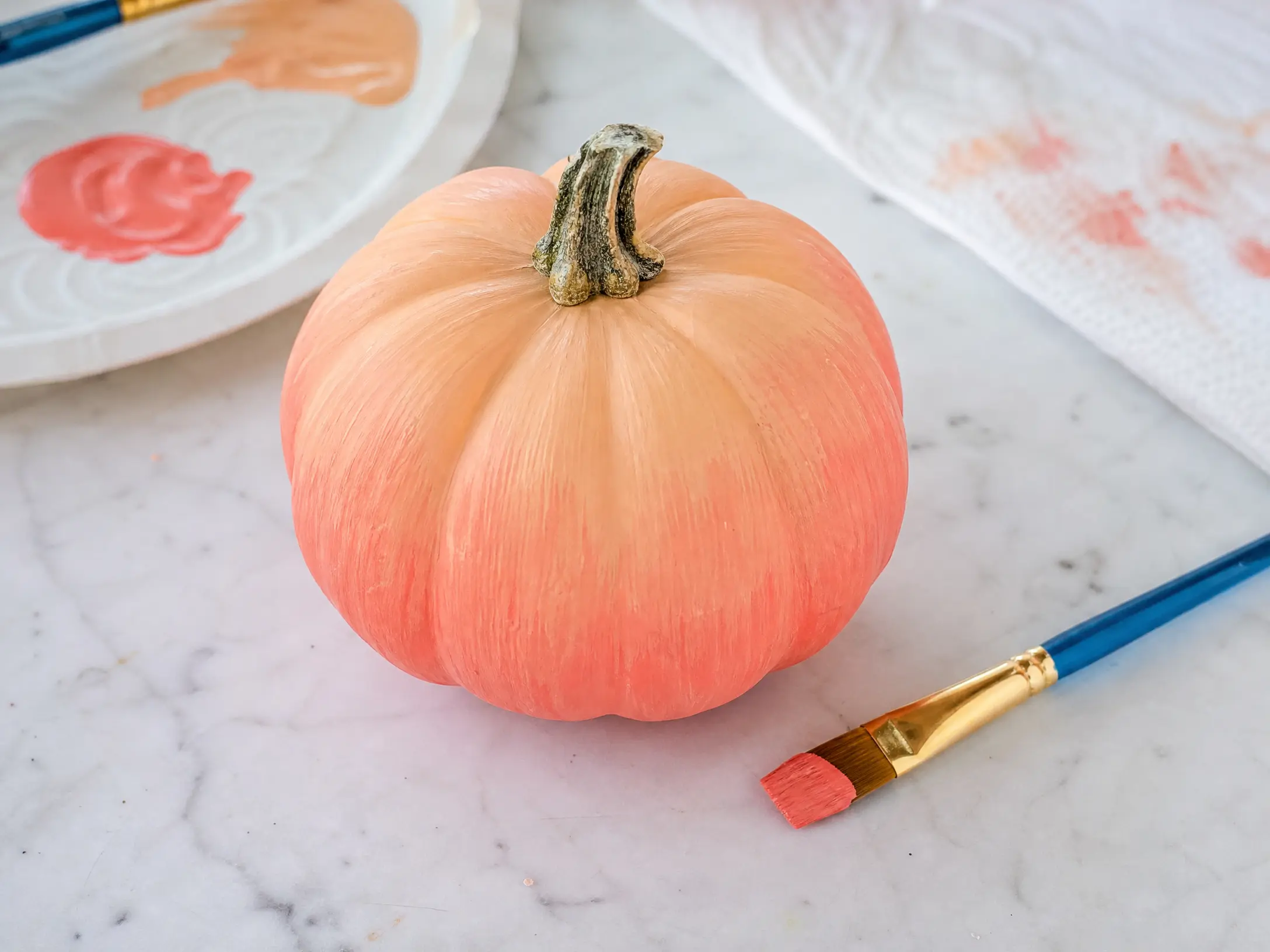
Choose two or three colors that sit close together, such as pale peach, coral, and orange. Paint them in bands and gently blend the edges while the paint is still wet.
Mini activity: Have older children create a color strip on paper before they paint the pumpkin.
9. Happy Face Pumpkin
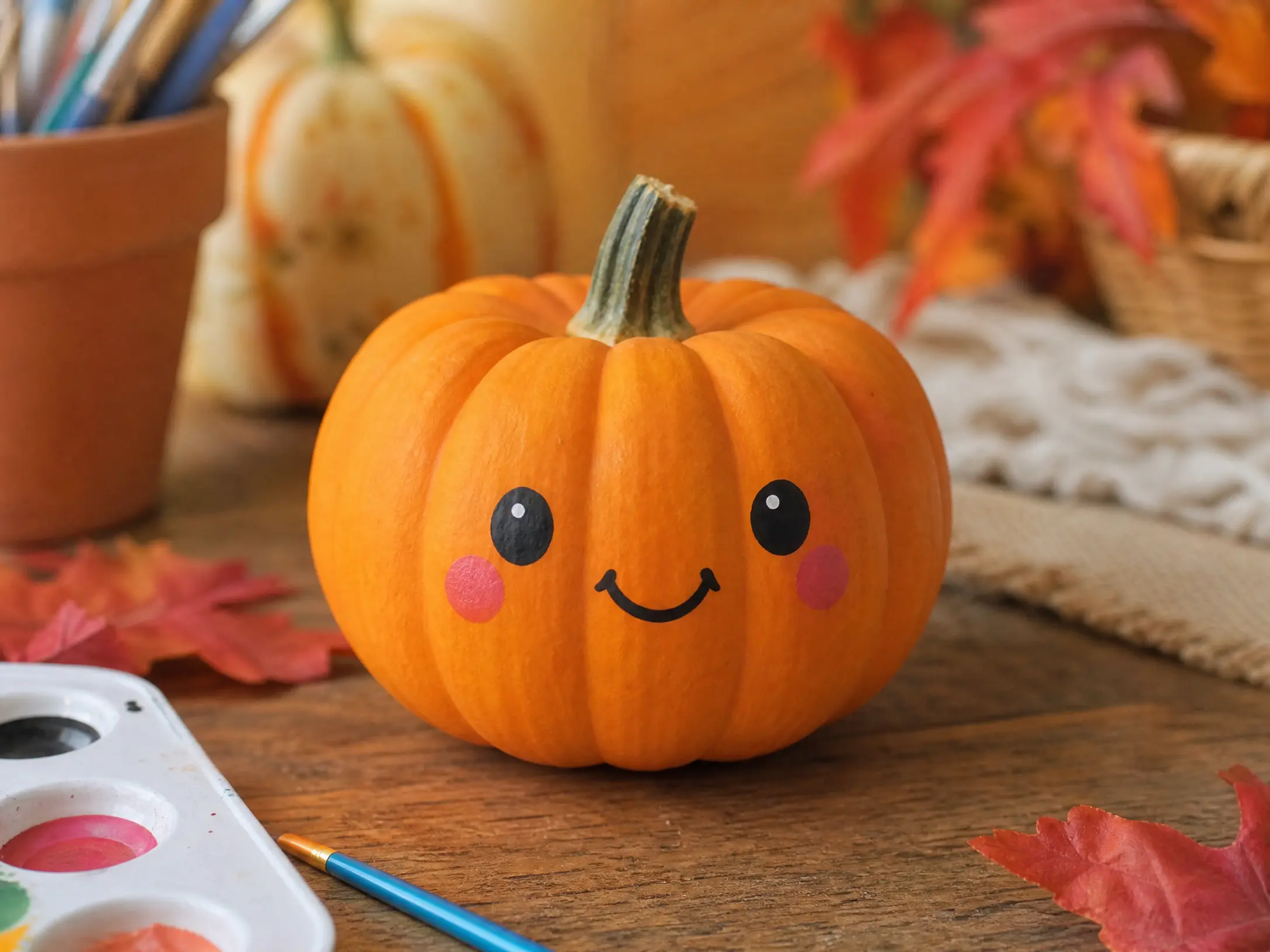
Paint a simple face with closed eyes, rosy cheeks, freckles, glasses, or a tiny bow. This project works well with craft pumpkins that can be displayed year after year.
Mini activity: Make several emotion faces on paper and ask the child to choose which face matches their pumpkin.
10. Stars-and-Moon Pumpkin
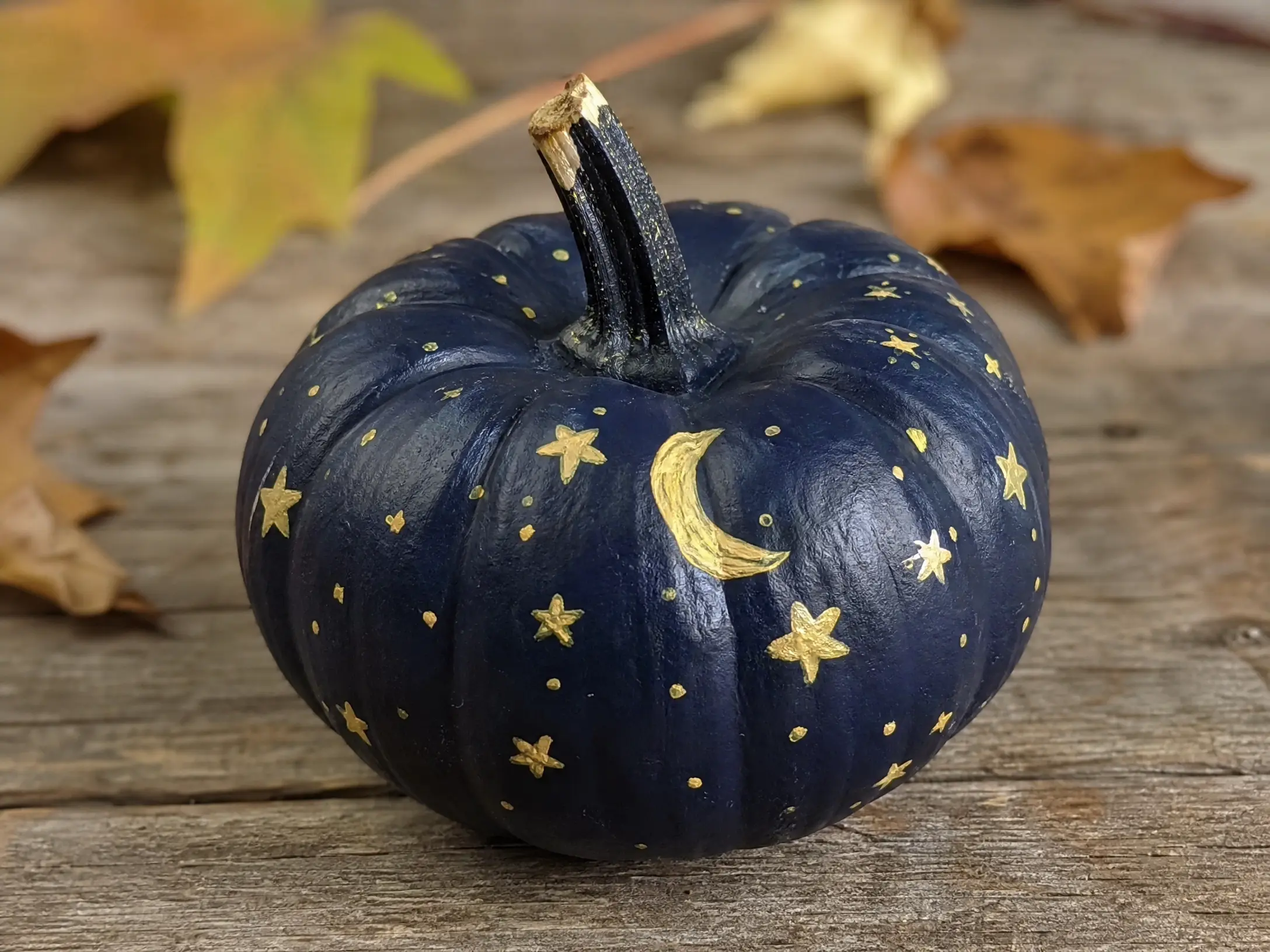
Paint the pumpkin navy, purple, or black, then add gold or yellow stars after the base coat dries. A crescent moon turns it into a gentle night-sky design.
Mini activity: Count the stars and invent a bedtime story about the pumpkin’s nighttime adventure.
11. Cactus Pumpkin
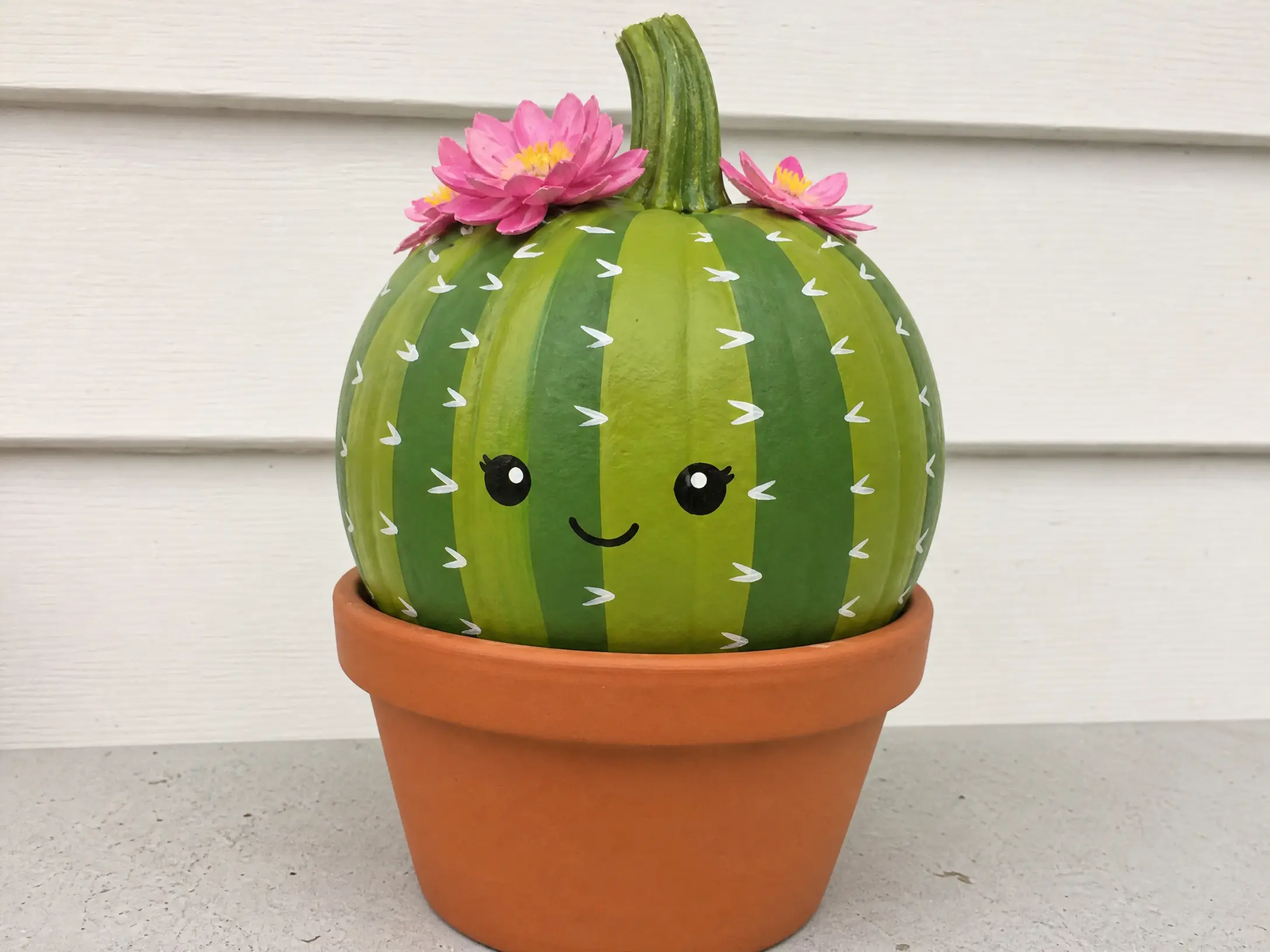
Paint a pumpkin green and add small lines to suggest cactus spines. Finish with pink or yellow flowers for a playful desert-inspired design.
Mini activity: Talk about which plants need lots of water and which plants can live in dry places.
12. Rainbow-Arch Pumpkin
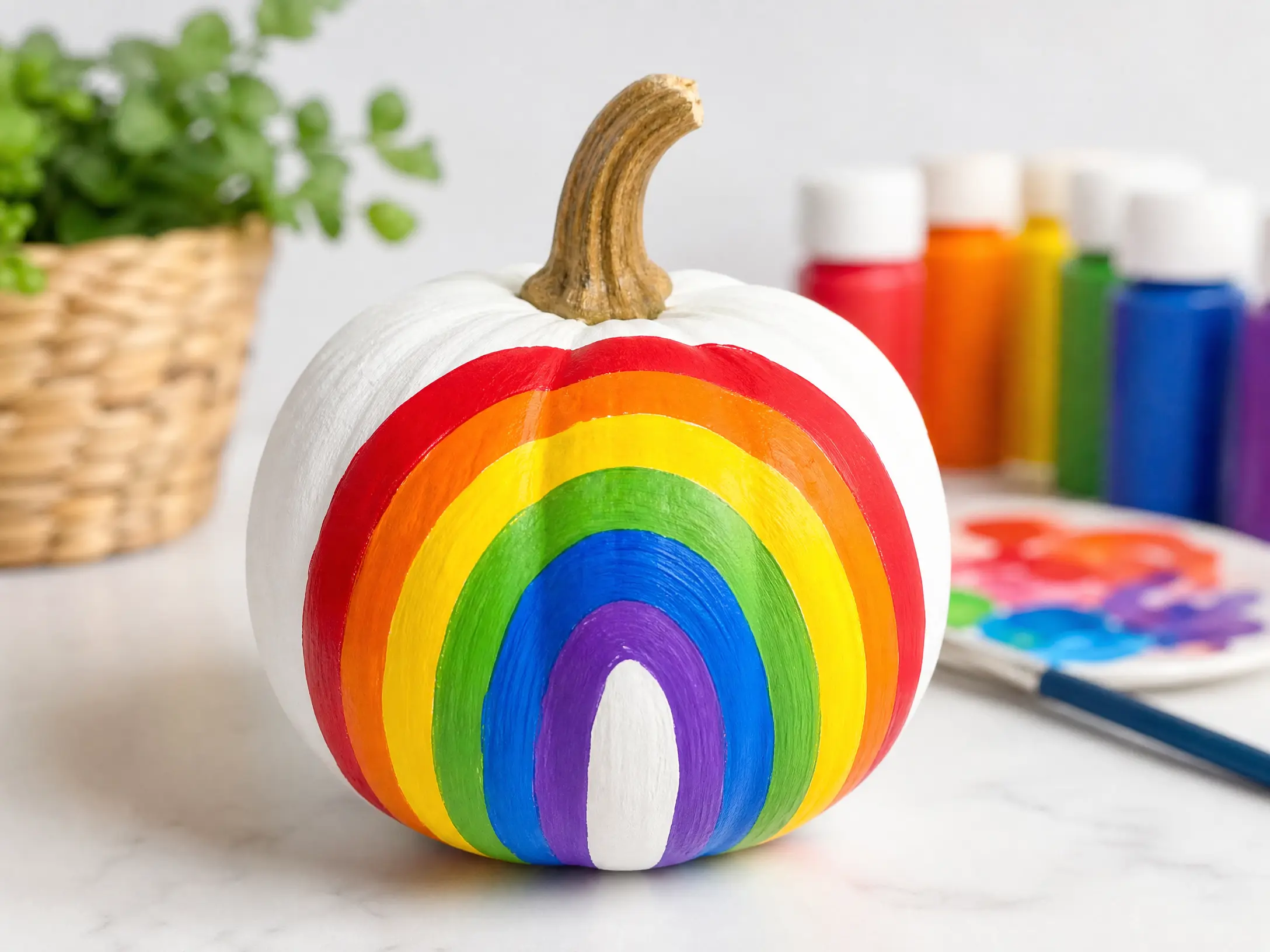
Paint curved arches across the front of a white pumpkin. Children can use the traditional rainbow colors or create a surprising rainbow with their favorite shades.
Mini activity: Practice making curved lines on paper first, then use the pumpkin ridges as guides.
13. Bumblebee Pumpkin
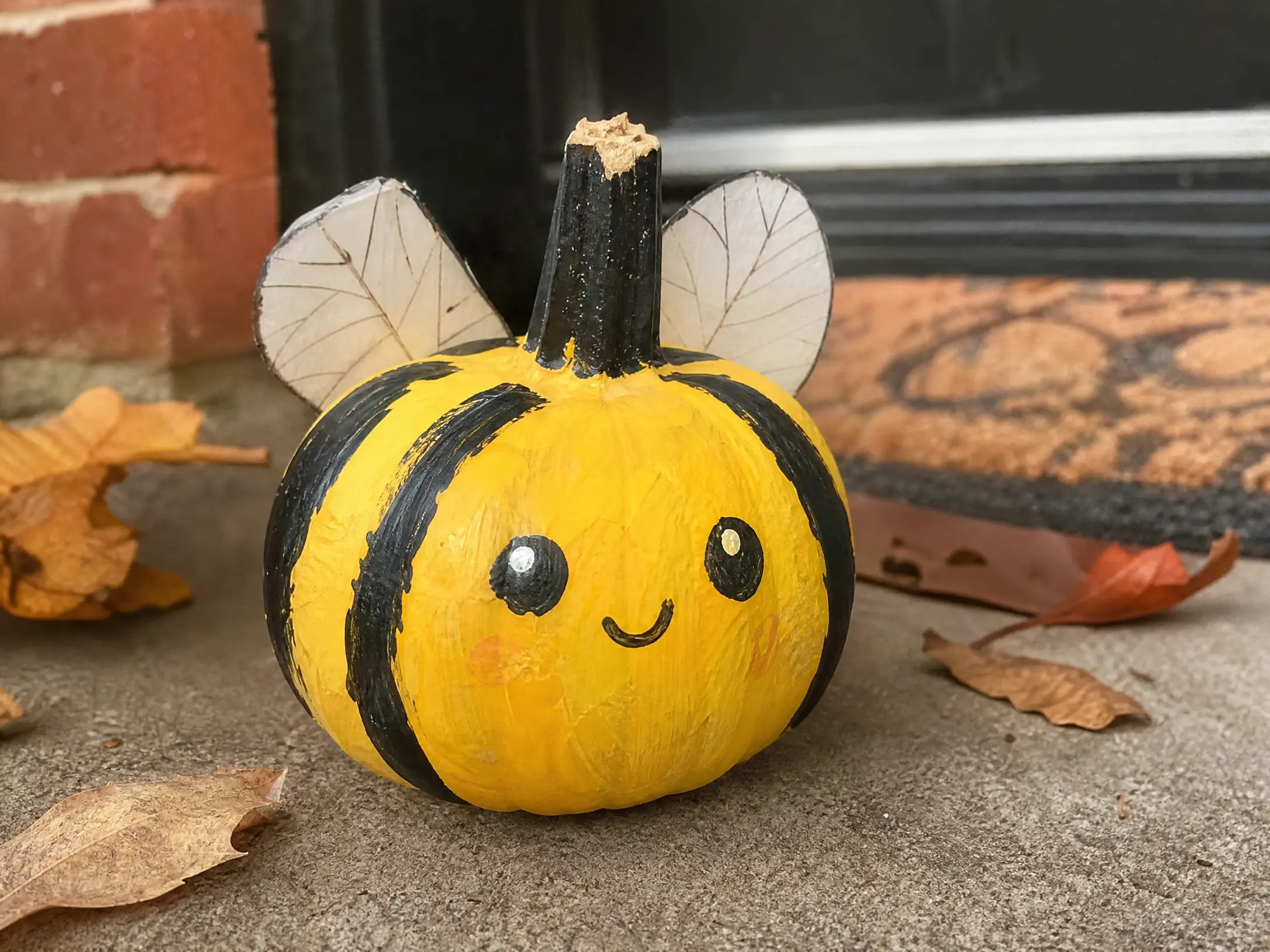
Paint yellow and black stripes around a small pumpkin, then add friendly eyes and simple wings. Keep the details large so they are easier for young artists to paint.
Mini activity: Count the stripes and talk about how bees help flowers and gardens.
14. Watercolor-Wash Pumpkin
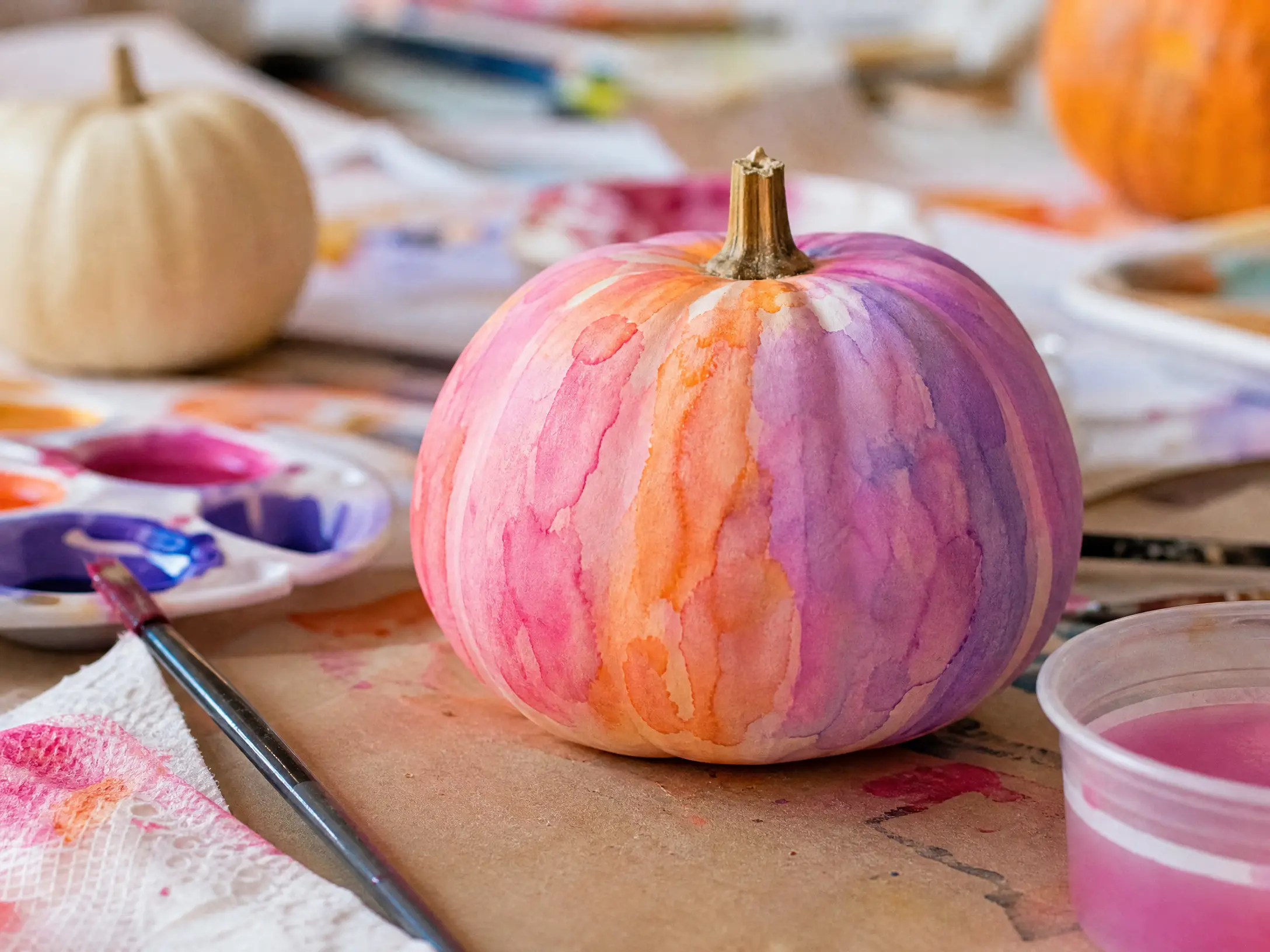
Use thin layers of washable paint to create a soft, watercolor-inspired effect. The colors may overlap and change as they dry, which makes this a lovely open-ended project.
Mini activity: Ask children what new color appears when two painted areas overlap.
15. Pumpkin-Patch Pumpkin
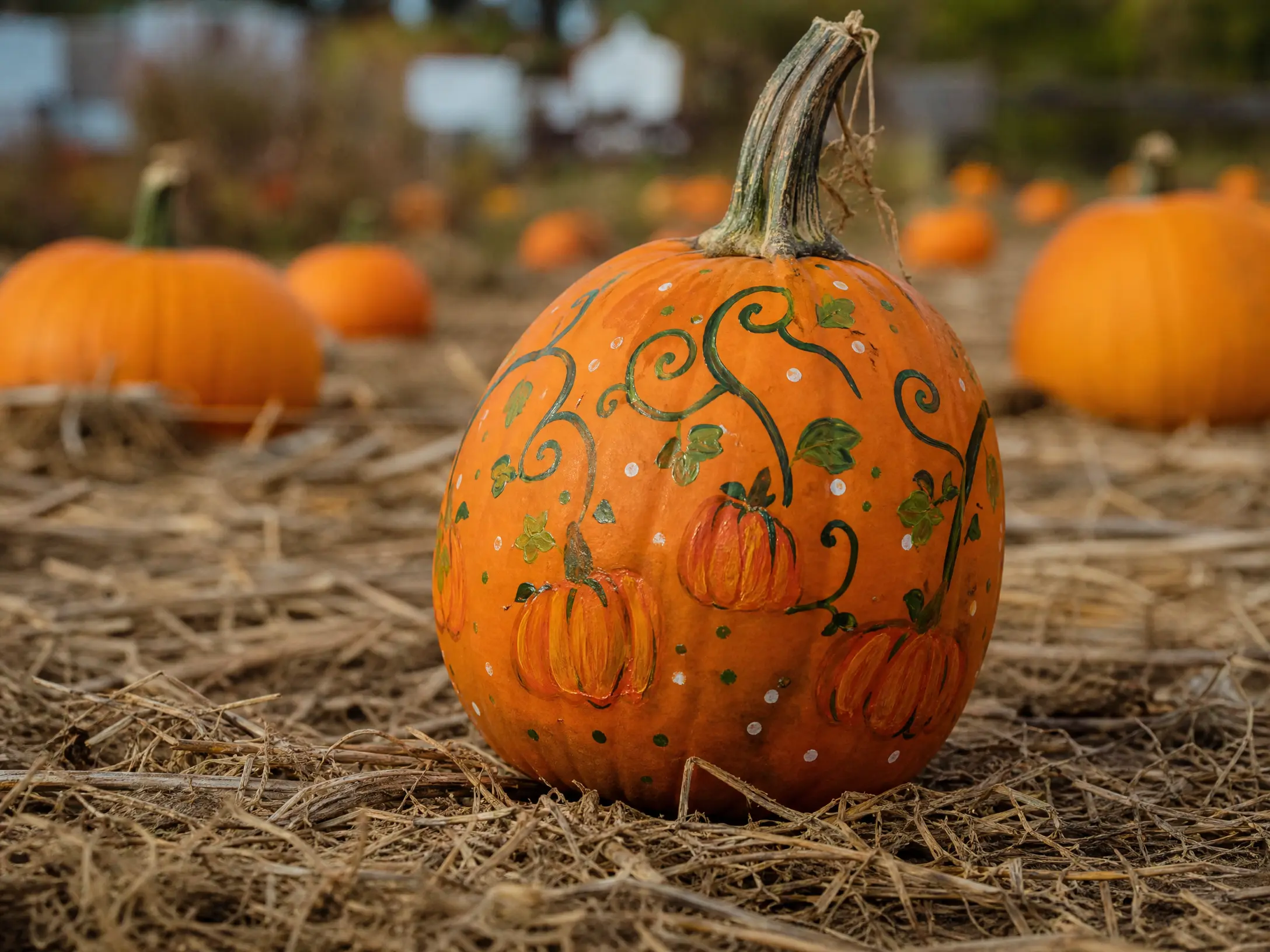
Paint a simple pumpkin patch scene on one large craft pumpkin. Add green vines, small pumpkins, leaves, and a little sun or cloud.
Mini activity: Let children count the pumpkins in the scene and draw one more pumpkin on paper.
16. Paint-Splatter Pumpkin
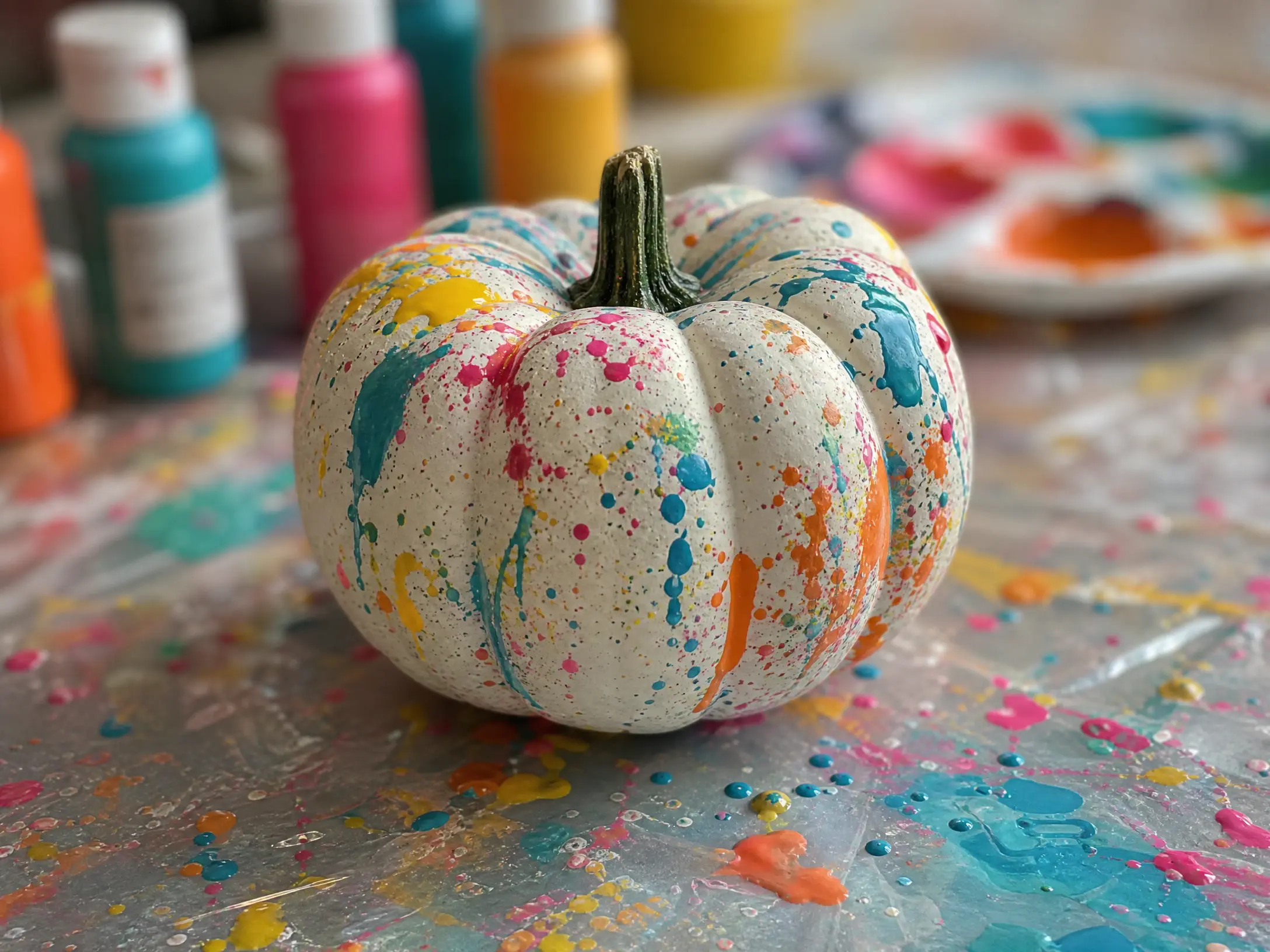
Place the pumpkin inside a box or on a protected mat. Load a stiff brush with washable paint and tap it gently to make colorful splatters.
Mini activity: Ask children to predict which color will show up most clearly on a white pumpkin before they begin.
17. Friendly Bat Pumpkin
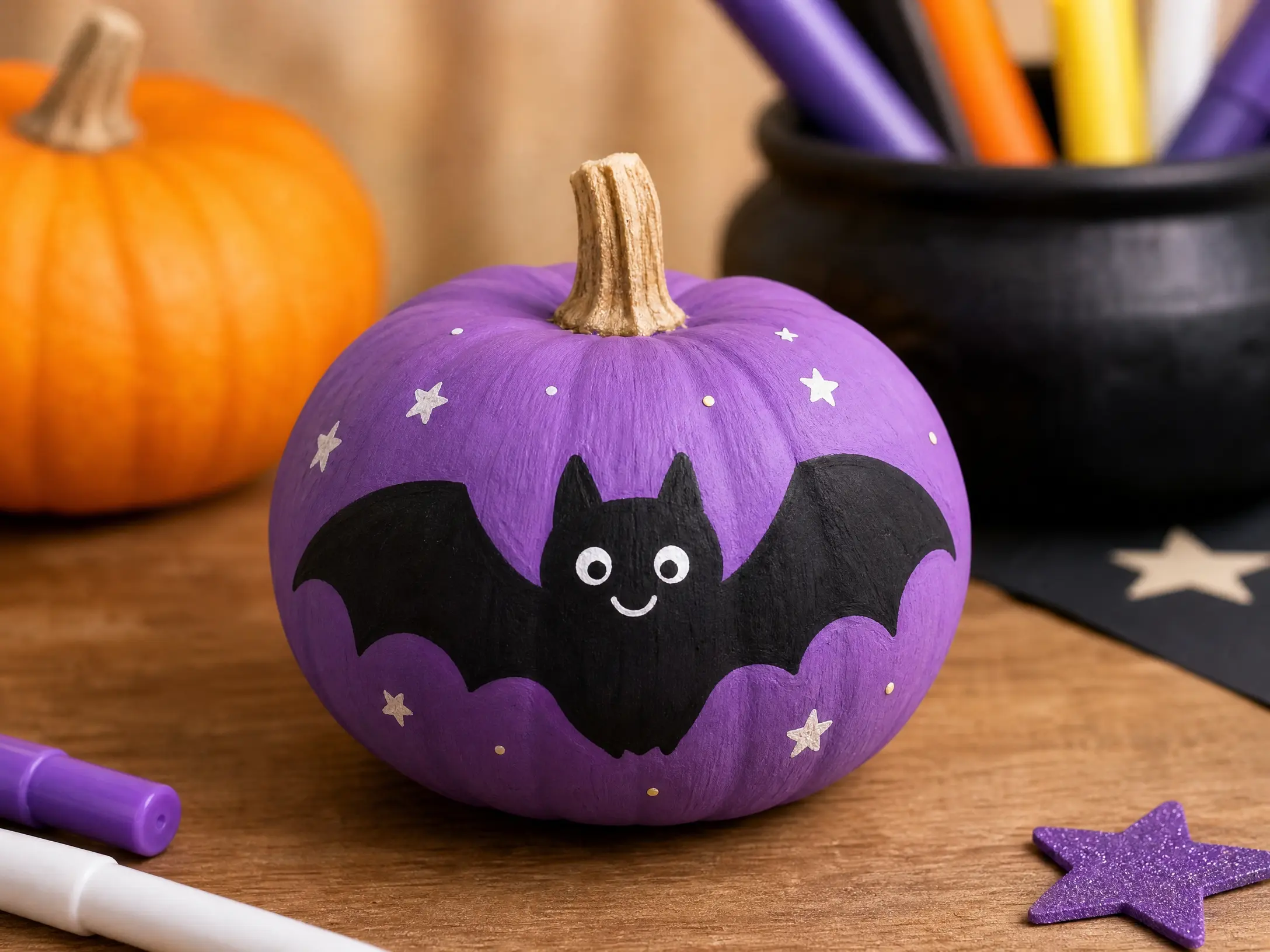
Paint a purple or orange pumpkin with a simple bat silhouette, then add stars or a moon. Older children can sketch the bat lightly in pencil before painting.
Mini activity: Read a nonfiction book about bats and share one true fact beside the finished craft.
18. Patchwork-Pattern Pumpkin
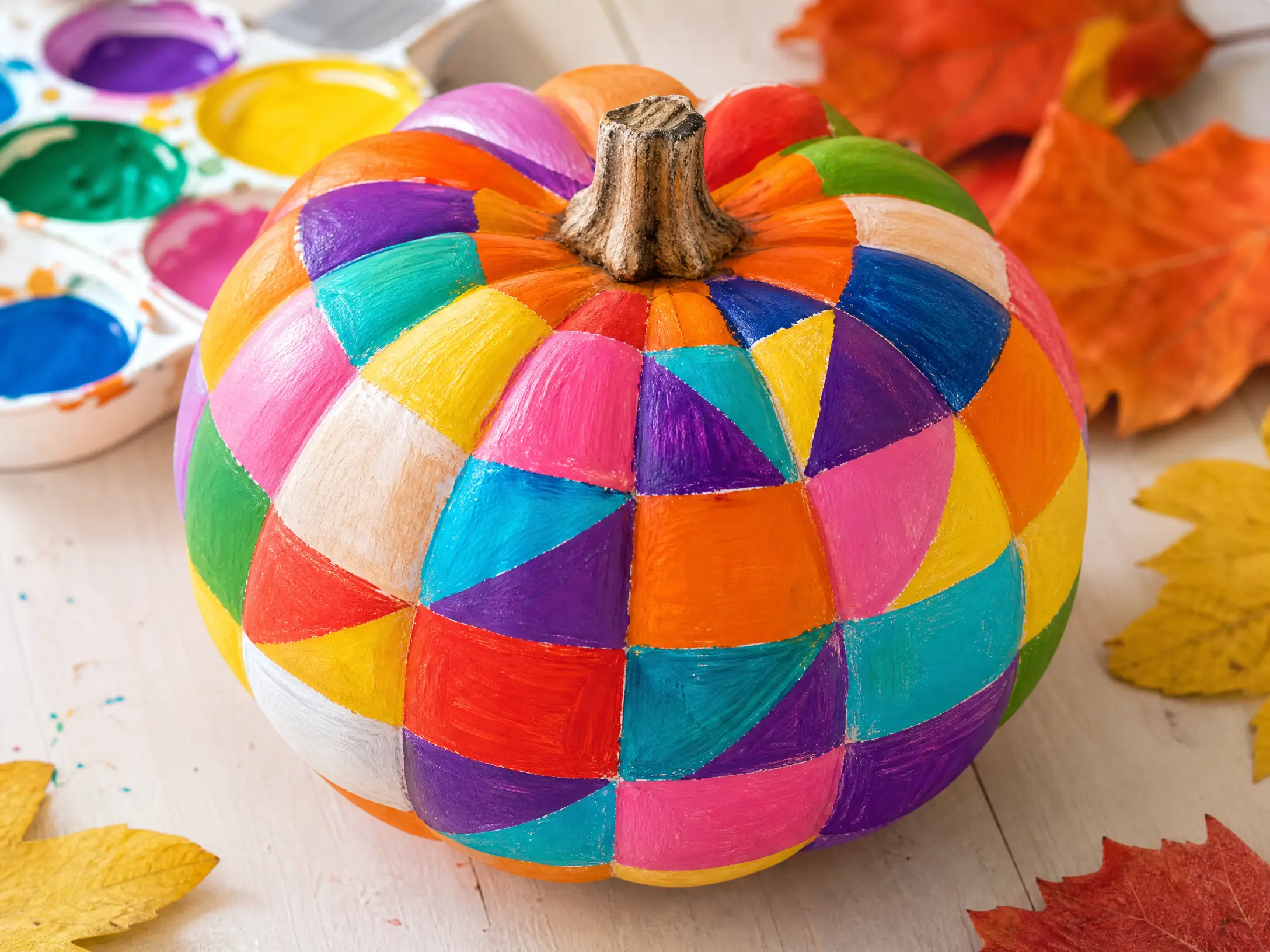
Divide the pumpkin into sections with lines, then fill each section with a different color or pattern. Stripes, checks, dots, and zigzags all work well together.
Mini activity: Invite children to create a repeating pattern that appears at least twice.
19. Thankful-Heart Pumpkin
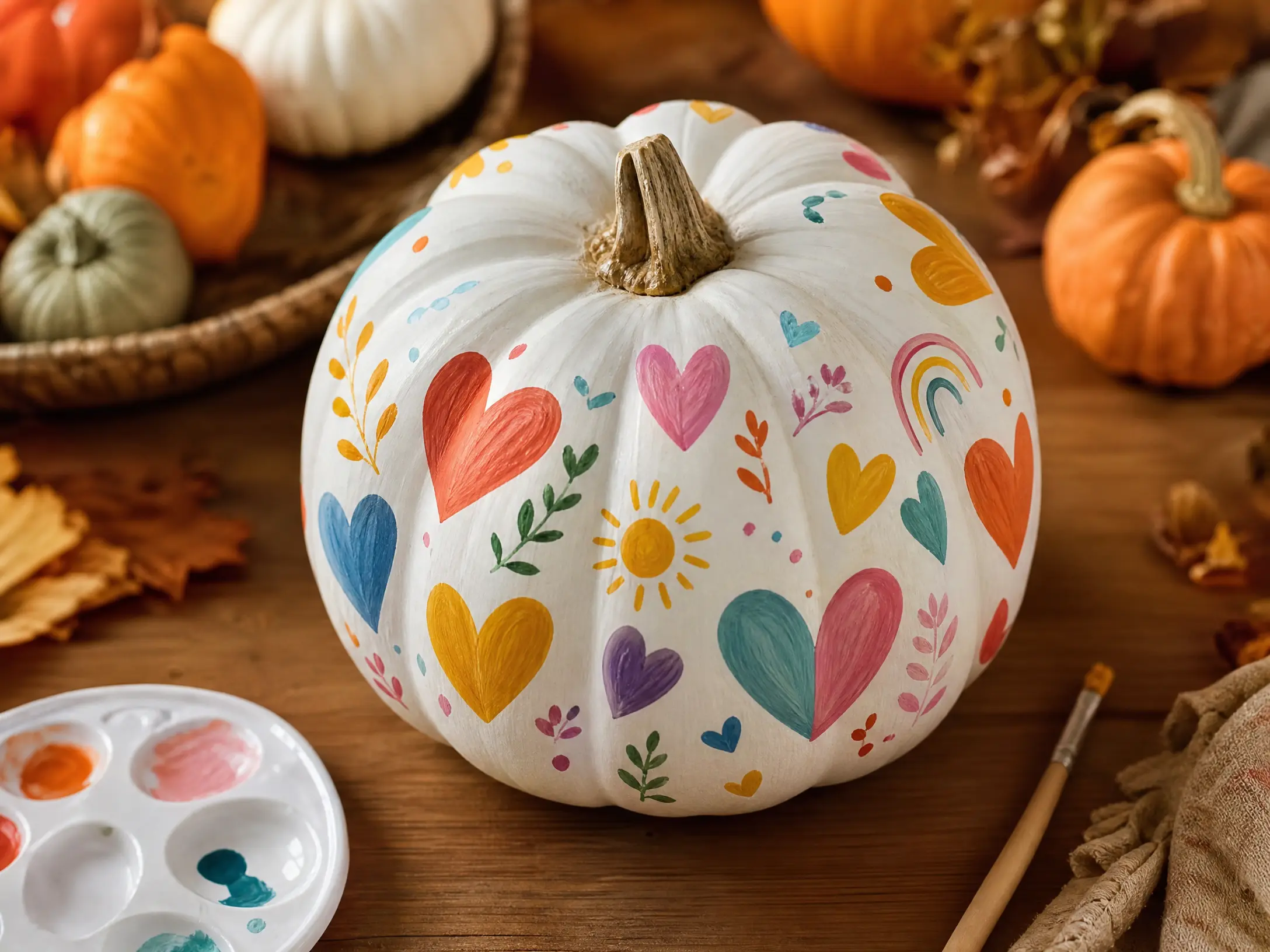
Paint colorful hearts around a white or orange pumpkin. Children can add tiny pictures of people, pets, foods, places, or activities they appreciate.
Mini activity: Ask the child to tell you about one heart and write their words on a small label.
20. Woodland Fox Pumpkin
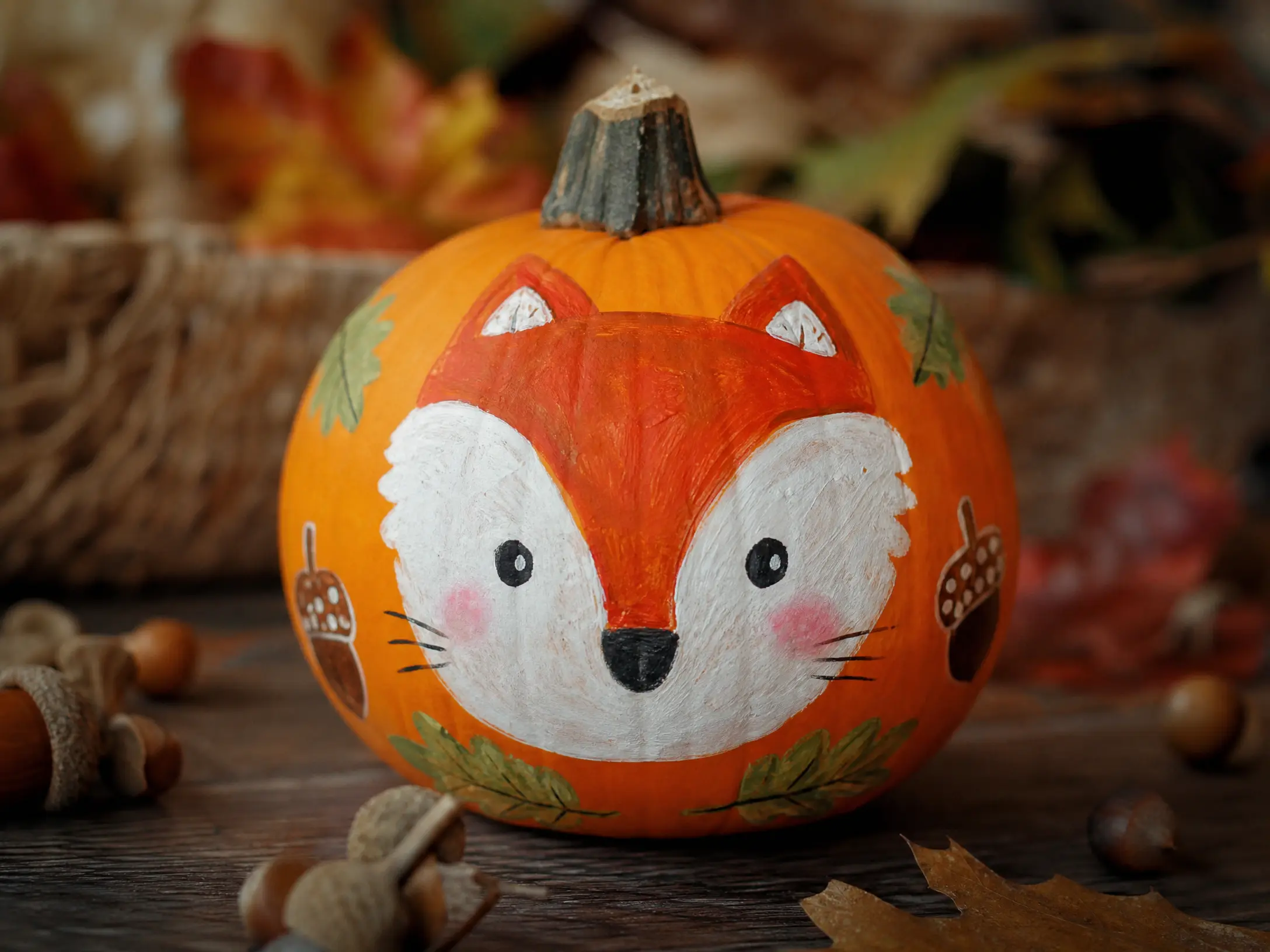
Turn an orange pumpkin into a friendly fox with white cheeks, a black nose, and pointed ears painted on paper or cardstock. Add leaves and acorns around the base for an autumn woodland look.
Mini activity: Pair the craft with a story about a fox and ask children to describe the setting using three fall words.
Easy Ways to Use These Painted Pumpkins
At home
Set up a small painting station after school or on a rainy weekend. Work on one pumpkin at a time so children can focus on choosing colors and trying techniques without feeling rushed.
In the classroom
Use the ideas as an open-ended art center. Place a few example cards on the table, but avoid asking every child to copy the same finished product. For another hands-on seasonal resource, link to Oh Simply Mom’s free Halloween activity sheets for kids.
For homeschool
Connect pumpkin painting with science, math, or writing. Children can compare pumpkin sizes, observe the stem and ridges, count painted shapes, or write a short description of their design. The butterfly activities for preschool article offers another example of combining crafts with early science and language.
For quiet time
Choose one low-mess idea such as polka dots, rainbow arches, or watercolor washes. Put down a washable mat, offer a limited color palette, and allow the child to work at their own pace.
As decorations or gifts
Display painted pumpkins on a porch, classroom shelf, or seasonal table. Craft pumpkins make especially useful keepsakes because they can be stored and reused. Small pumpkins can also become place cards or cheerful gifts for grandparents and teachers.
Variations by Age
Toddlers: Use large craft pumpkins, washable paint, and thick brushes. Offer one or two colors at a time and focus on exploring the marks rather than completing a picture. Keep small parts away from children who still put objects in their mouths.
Preschoolers: Encourage color names, counting, simple faces, dots, and lines. Let children dictate stories about their pumpkins while an adult writes the words down.
Kindergarteners: Add patterns, labels, simple comparisons, and short sentences. Invite children to plan a design on paper before they paint.
Older kids: Encourage more detailed scenes, blended colors, symmetry, or a pumpkin character with a written backstory. Older children can also help prepare the table and organize supplies.
Tips for Painting and Preparing Pumpkins
•Test the paint on a small area before beginning the full design.
•Wipe dusty pumpkins clean and let them dry before painting.
•Use a base coat when the design needs a bright, even background.
•Let one layer dry before adding faces, patterns, or small details.
•Put scrap paper under the pumpkin so paint does not reach the table.
•Choose washable, child-appropriate supplies and supervise the activity.
•Keep paintbrushes out of mouths and wash hands after cleanup.
•If using real pumpkins, display them in a cool, dry place and check them regularly.
•Avoid adding small glued decorations for children who may mouth objects.
•Let children choose their own colors and accept designs that look different from the example.
Frequently Asked Questions
What kind of paint is best for painting pumpkins with kids?
Washable tempera paint is a practical choice for many children’s craft projects. For a more durable finish on craft pumpkins, older children may use acrylic paint with adult supervision. Always read the label, follow the manufacturer’s age guidance, and protect clothing and surfaces.
Can toddlers paint pumpkins?
Yes, with close adult supervision and age-appropriate, washable supplies. Offer large pumpkins, thick-handled brushes, and a simple design such as dots or broad stripes. Avoid small loose decorations and do not allow children to put paint or brushes in their mouths.
Do pumpkins need a base coat before painting?
Not always. A base coat helps bright colors stand out and can make a white, rainbow, or watercolor-style design easier. For simple dots, lines, and faces, children can often paint directly onto a clean pumpkin.
How do you keep painted pumpkins from smearing?
Let each layer dry fully before adding the next layer. Keep finished pumpkins in a dry location where they will not be bumped. An adult can apply a suitable clear sealer to a craft pumpkin if the product instructions allow it.
Can kids paint real pumpkins?
Yes. Clean and dry the pumpkin first, and choose a firm pumpkin without soft spots. Real pumpkins may eventually soften, so treat the finished piece as a seasonal decoration rather than a permanent keepsake.
What are easy pumpkin painting ideas for preschoolers?
Polka dots, rainbow stripes, confetti marks, happy faces, and leaf prints are simple choices for preschoolers. They offer clear starting points while leaving room for children to make their own decisions.
How can I use these ideas in a classroom?
Set out a few pumpkins, washable paint, brushes, and a protected work surface. Use the ideas as invitations rather than required models. Children can work in small groups, at an art center, or as an early-finisher activity.
Related Ideas from Oh Simply Mom
If your family enjoys seasonal crafts and child-led activities, explore these related resources:
•Free Halloween activity sheets for kids for puzzles, coloring, drawing prompts, and craft-style pages.
•10 fun butterfly activities for preschool for more hands-on art and early-learning ideas.
•All About Me poster for kids for a drawing, writing, and self-expression printable that works well at home or in the classroom.
Save This Idea on Pinterest
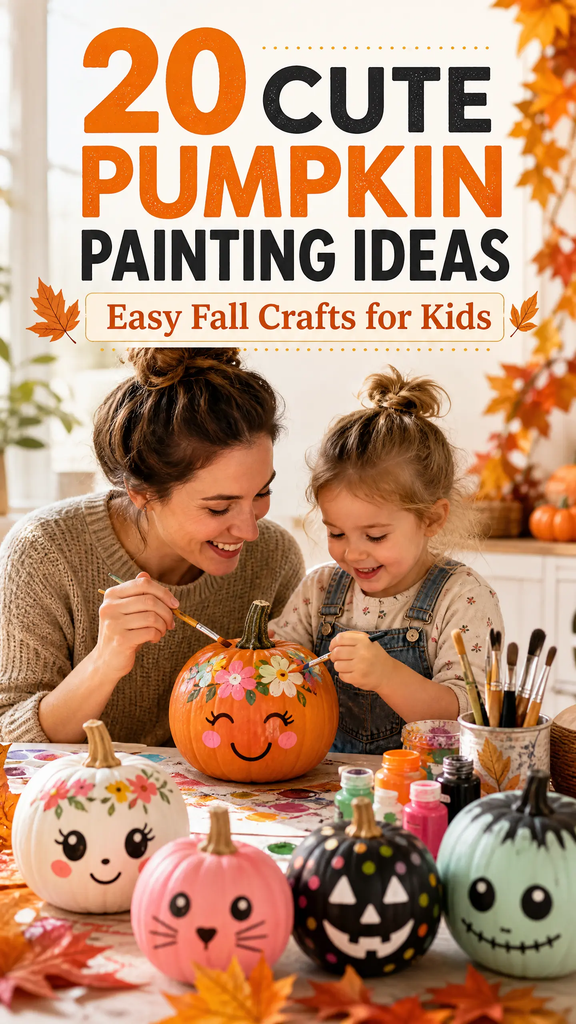
Save this pumpkin painting ideas for kids article so you can return to it for a fall craft afternoon, Halloween classroom activity, or easy preschool art invitation. A useful Pinterest title is 20 Cute Pumpkin Painting Ideas for Kids, with a description such as: “Try easy painted pumpkin ideas for preschoolers, classrooms, and family fall crafts, including rainbow pumpkins, ghosts, monsters, sunflowers, and more.”
Final Thoughts
These cute pumpkin painting ideas for kids make it easy to turn a simple fall afternoon into creative, hands-on fun. Choose one design, set out a few washable supplies, and let children decide how their pumpkins should look. Some children will carefully plan every detail, while others will enjoy making dots, splatters, and colorful marks. Both approaches are valuable. Save this collection for October, Halloween parties, classroom art centers, or any day when your family wants a screen-free activity with a cheerful seasonal result.
References
[3] Choosing Safe Art & Craft Supplies for Children — HealthyChildren.org