Allergy-Friendly Halloween Treats: 15 Safe and Delicious Options for Kids
Halloween can be exciting for children with food allergies when adults plan ahead and make the food situation clear. These allergy-friendly Halloween treats include fruit, vegetables, rice crackers, seed-based spreads, homemade snacks, and simple party ideas that can be adapted to a child’s specific needs. The most important step is not choosing a trendy recipe label. It is reading every ingredient label, preventing cross-contact, and following the child’s emergency plan and medical guidance. Use these ideas for an after-school snack, family party, classroom celebration, or Halloween gathering. Keep foods separated, label ingredients clearly, and let children enjoy the celebration without having to guess whether a treat is safe.
Important: “Allergy-friendly” does not mean safe for every child. Always check the full ingredient list, manufacturing information, and the child’s individual allergy plan before serving food.
Quick Overview
| Treat or idea | Common adaptations | Suggested age | Time |
| Banana ghosts | Naturally simple; verify decorations | 2–8 | 10 minutes |
| Pumpkin fruit cups | Fruit-only option | 3–9 | 15 minutes |
| Allergy-aware snack cups | Separate ingredients | 3–12 | 15 minutes |
| Seed-butter apple monsters | Nut-free only when verified | 4–10 | 15 minutes |
| Vegetable monster plates | Dairy-free option available | 3–10 | 15 minutes |
| Rice-cracker spiders | Check seasoning and facility labels | 4–10 | 15 minutes |
| Dairy-free yogurt parfaits | Use a verified alternative | 4–10 | 15 minutes |
| Homemade oat bites | Adapt only with confirmed ingredients | 6–12 | 20 minutes |
| Fruit-and-vegetable board | Keep sections separated | 3–12 | 20 minutes |
| Allergy-aware popcorn cups | Check kernels and seasonings | 5–12 | 10 minutes |
Start with the Child’s Allergy Plan
Before choosing a recipe, identify the specific allergen or allergens that must be avoided. Common food allergens include milk, eggs, peanuts, tree nuts, wheat, soy, sesame, fish, shellfish, and others. A child may also need to avoid an ingredient because of a medical diet or previous reaction.
Read the entire label every time you buy an ingredient. Formulas and manufacturing processes can change. The FDA explains that packaged foods in the United States must identify major food allergens when they are used as ingredients, while advisory statements about possible cross-contact require careful interpretation.
If a child has a prescribed emergency medication or action plan, keep it available according to the family’s or school’s instructions. Recipe ideas cannot replace medical advice or an emergency plan.
Cross-Contact Checklist
Cross-contact happens when an allergen is accidentally transferred to a food that was not meant to contain it. The Food Allergy Research & Education organization recommends practical steps such as reading labels, cleaning utensils and surfaces, and keeping allergen-containing foods separate.
Before preparing allergy-aware treats:
•Wash hands with soap and water.
•Clean counters, cutting boards, bowls, knives, and serving trays.
•Use clean utensils rather than reusing a knife from another spread.
•Keep ingredients in their original packages until labels are checked.
•Prepare the allergy-aware food before foods containing the allergen.
•Use separate serving spoons and plates.
•Do not assume that removing a topping makes the remaining food safe.
•Label each dish with its ingredients and preparation notes.
•Ask the child’s caregiver before serving a homemade item.
For a Halloween party, it is often safer to offer one clearly identified option that has been prepared carefully than to place an unlabeled mixed tray on a shared table.
Supplies and Ingredients
Depending on the child’s needs, gather:
•Fresh fruit and vegetables.
•Plain or verified allergy-safe yogurt.
•Seed butter, such as sunflower-seed butter, if appropriate.
•Rice crackers or whole-grain crackers with a label that fits the child’s plan.
•Hummus or another verified dip.
•Dairy-free or allergen-appropriate cheese alternative, if desired.
•Plain popcorn or a verified packaged alternative.
•Oats, dried fruit, and pumpkin seeds only when appropriate and safely labeled.
•Food-safe cookie cutters.
•Separate plates, bowls, utensils, and storage containers.
•Ingredient labels or small cards for party food.
Do not use a substitute simply because it is commonly described as “free from” an allergen. Confirm the product’s ingredient list, advisory statement, and suitability for the child.
15 Allergy-Friendly Halloween Treats
1. Banana Ghosts
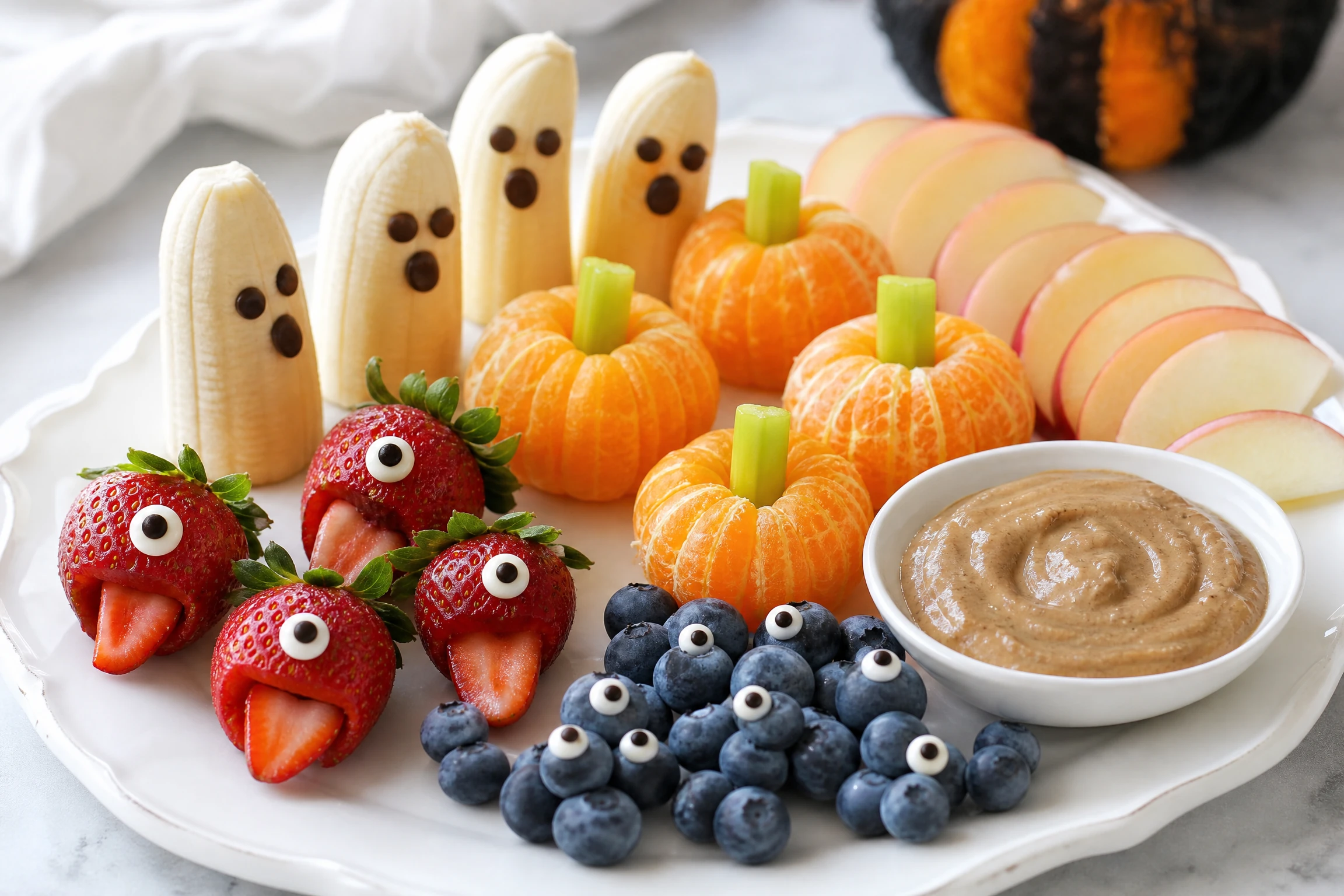
Cut bananas in half and place them upright on a clean plate. Add tiny pieces of a verified safe fruit for the eyes and mouth. If you use chocolate, sprinkles, or candy decorations, check the label first because these ingredients may contain or come into contact with common allergens.
Kid helper job: Children can arrange the ghosts and give each one a different expression.
2. Pumpkin Fruit Cups
An adult can cut and hollow oranges, then children can fill the cups with berries, melon, orange segments, or other confirmed safe fruit. This naturally colorful option does not need frosting, candy, or packaged decorations.
Kid helper job: Let children choose three colors of fruit for each pumpkin cup.
3. Individually Portioned Snack Cups
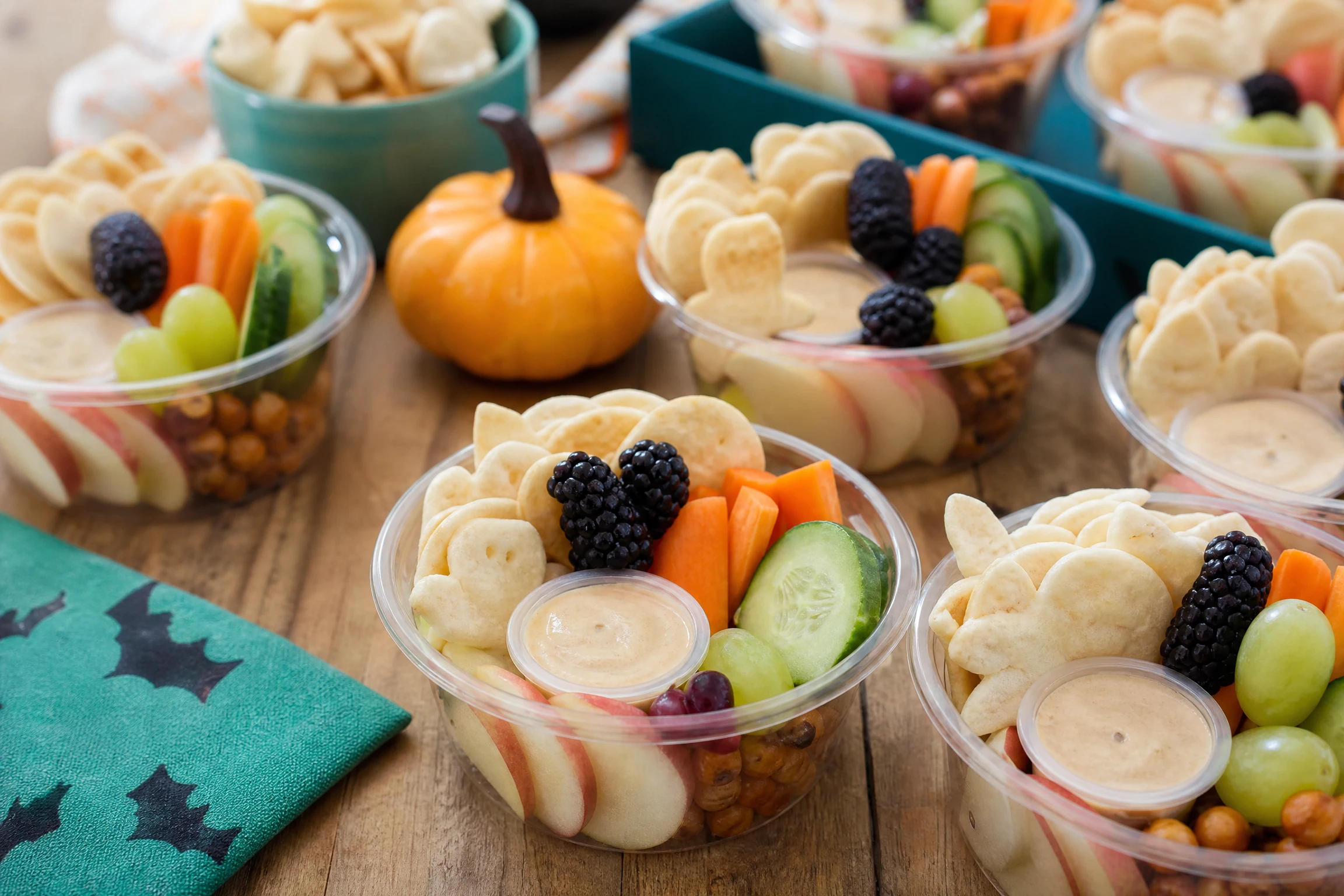
Small cups make it easier to keep ingredients separated. Fill them with a combination that fits the child’s allergy plan, such as cucumber, carrots, fruit, verified rice crackers, or a separate dip cup. Individual portions can also reduce shared-utensil mistakes at a party.
Kid helper job: Children can build a pattern with the colors while an adult checks each ingredient.
4. Seed-Butter Apple Monsters
Slice apples into wedges and add a thin layer of verified sunflower-seed butter or another approved spread. Use a strawberry slice or soft fruit as the tongue. Only use seed butter after confirming that it is appropriate for the child and prepared without unsafe cross-contact.
Kid helper job: Children can create friendly or silly monster mouths.
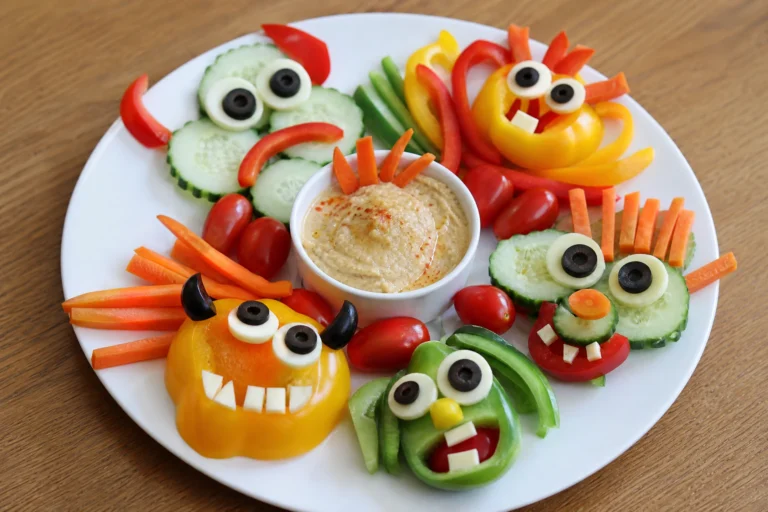
5. Vegetable Monster Plates
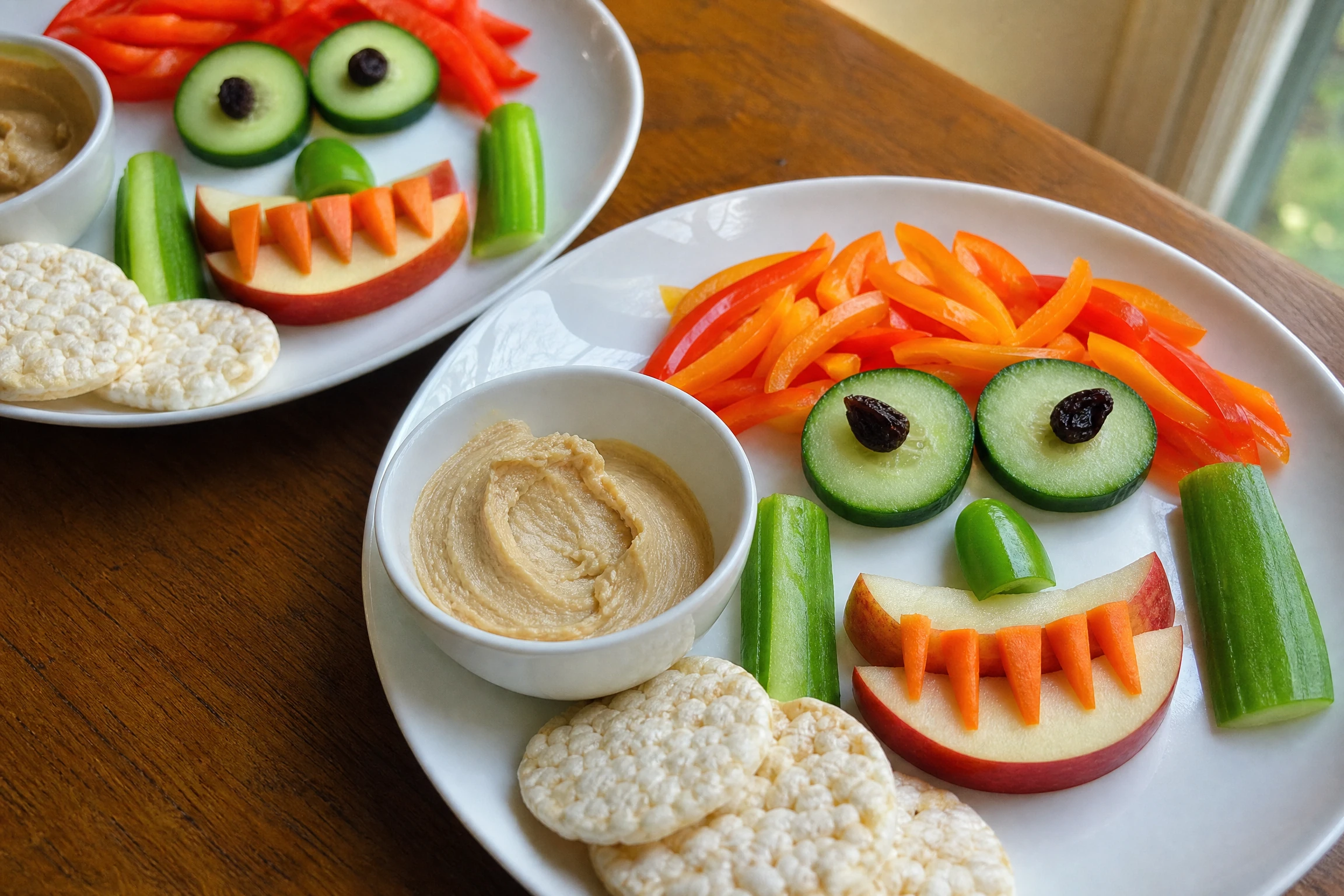
Arrange cucumber rounds, pepper strips, carrot sticks, tomato pieces, and other vegetables into a face. Serve a verified dip in a separate bowl. This lets children choose which vegetables they want without forcing every ingredient into one mixed dish.
Kid helper job: Let children choose the monster’s eyes, hair, and mouth.
6. Rice-Cracker Spiders
Use verified rice crackers as the spider body and add pretzel pieces only if they fit the child’s allergy plan. Another option is to use strips of cucumber or pepper as legs. Avoid loose candy eyes unless their ingredients and manufacturing information have been checked.
Kid helper job: Count the legs and make each spider different.
7. Dairy-Free Yogurt Parfaits
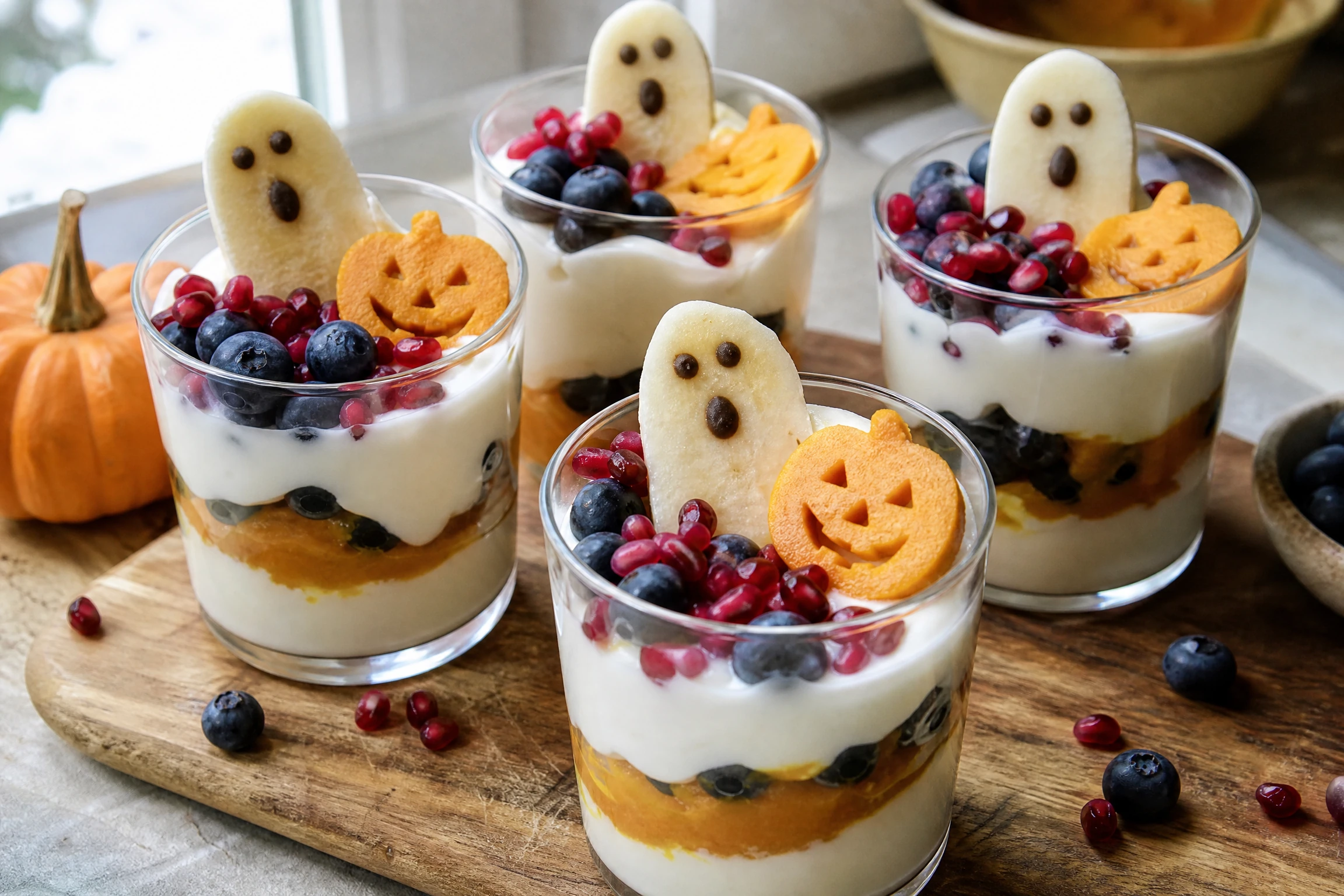
Layer a verified dairy-free yogurt alternative with berries, banana, pumpkin puree, or safe oats. Use clear cups so children can see the layers. If coconut, soy, oat, or another base is a concern, choose an option that matches the child’s individual plan instead of assuming that every dairy-free product is suitable.
Kid helper job: Children can make a color pattern with the fruit layers.
8. Homemade Oat Bites
Combine verified oats with mashed banana, cinnamon, dried fruit, and an approved spread. Chill the mixture and form it into small bites. Every ingredient must be checked, including the oats and any spread, because cross-contact statements differ by brand.
Kid helper job: Children can roll the mixture with clean hands while an adult manages the ingredient check.
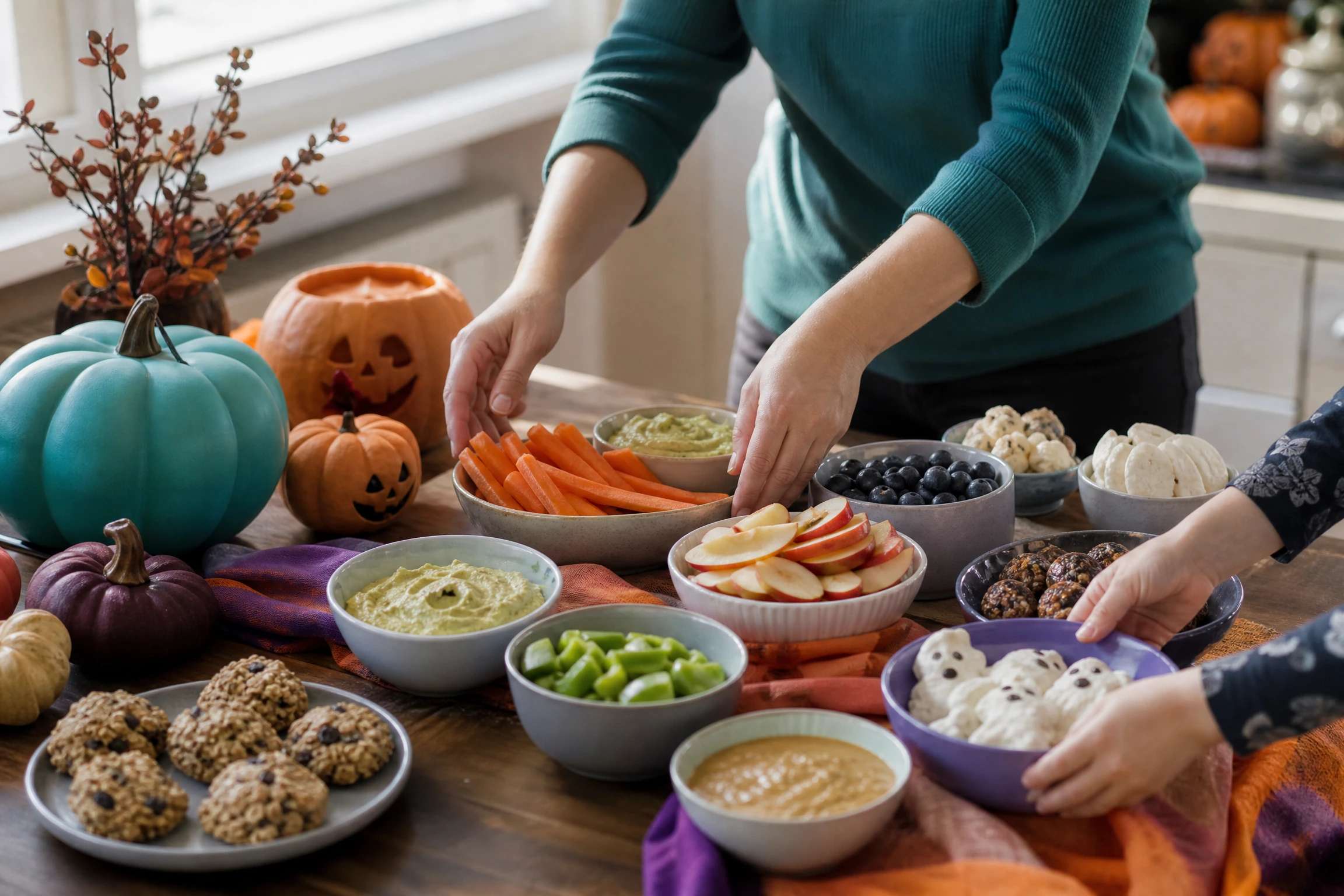
9. Fruit-and-Vegetable Board
Arrange fruit and vegetables in separate sections on a clean tray. Add a verified dip in a bowl and provide a separate utensil. You can create a pumpkin shape, monster face, or color rainbow without mixing foods together.
Kid helper job: Ask children to sort foods by color, shape, or crunchiness.
10. Allergy-Aware Popcorn Cups
Use plain popcorn only if it is appropriate for the child’s age and allergy plan. Check the popcorn, oil, seasoning, and cup decorations. For younger children, ask a healthcare professional about choking risks and choose a safer alternative if needed.
Kid helper job: Children can decorate the outside of cups with markers, then an adult fills them after the decorations dry.
11. Pumpkin Hummus Plates
Spread verified hummus into a pumpkin shape and add vegetables for a face. If sesame is an allergen, traditional hummus may not be appropriate because it often contains tahini. Use a verified sesame-free dip or another approved alternative instead.
Kid helper job: Children can place the eyes and mouth while an adult confirms the dip ingredients.
12. Fresh-Fruit Cookie-Cutter Shapes
Use a cookie cutter to make shapes from melon, soft pear, or another fruit that is safe for the child. Place the shapes on a clean plate and serve them with a verified dip if desired.
Kid helper job: Children can arrange bats, moons, pumpkins, or stars into a scene.
13. Simple Roasted Pumpkin Seeds
Pumpkin seeds can be a festive snack for older children when they are appropriate for the child’s age and allergy plan. Check for seed allergies, choking concerns, seasoning ingredients, and cross-contact statements. Adults should handle roasting and allow the seeds to cool fully.
Kid helper job: Children can help measure the cooled seeds into small portions.
14. Allergy-Aware Treat Board
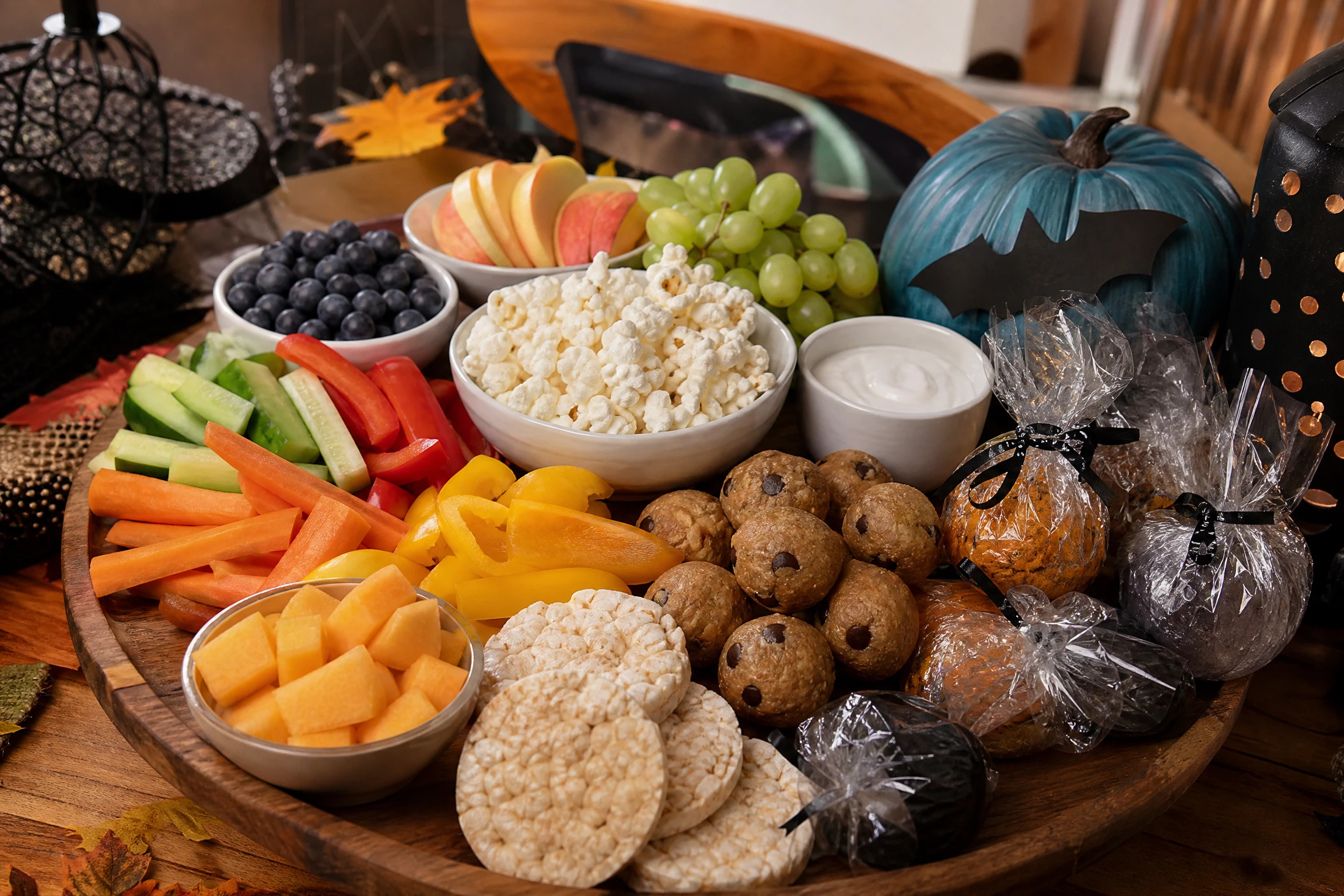
Create separate sections for fruit, vegetables, crackers, dip, and any packaged treat that has been individually confirmed safe. Keep wrapped items in their original packaging when possible so caregivers can inspect the label.
Kid helper job: Children can help place signs such as “fruit,” “vegetables,” or “check label before eating.”
15. Teal Pumpkin Welcome Table
If your family participates in a teal pumpkin tradition, offer clearly separated non-food items or treats for children who cannot safely eat the available food. Ideas include stickers, pencils, glow bracelets, small craft supplies, or temporary tattoos that are appropriate for the child’s age.
Kid helper job: Children can decorate a sign or organize the non-food choices into a small basket.
How to Serve Allergy-Aware Halloween Treats
At home
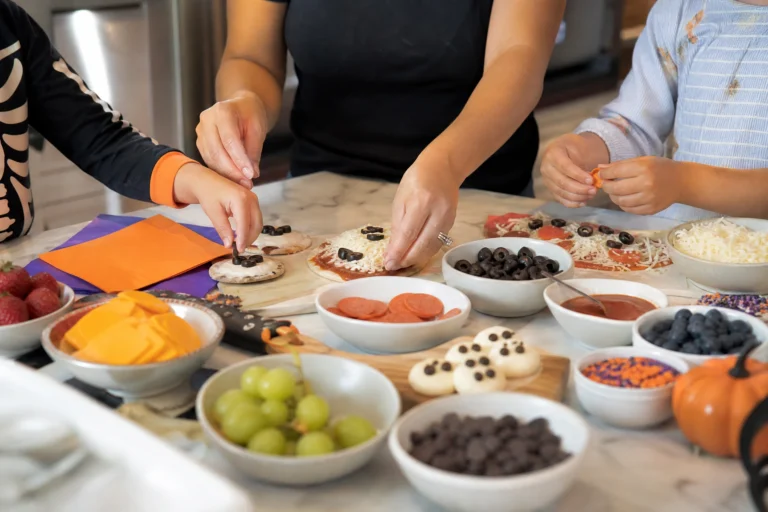
Prepare the allergy-aware food first, clean the work area, and store it in a labeled container. Keep other Halloween candy and baked goods separate. Let the child ask questions and participate in the preparation when it is safe.
At a classroom party
Contact the teacher or school before bringing food. Ask about classroom rules, ingredient restrictions, and whether homemade foods are allowed. Individually packaged foods may make label checking easier, but the child’s caregiver should still inspect them.
At a family gathering
Ask guests not to bring unlabeled homemade food for the child. Use separate serving utensils and identify which dishes are intended for the child with allergies. Keep the child’s safe food in a clearly marked area.
During trick-or-treating
Give the child a safe meal or snack before leaving. Follow the FDA’s Halloween food-safety advice for parents, including checking collected treats at home and reviewing labels before anything is eaten.
For more recipe ideas that children can help prepare, visit Creative and Fun Halloween Treats for Kids: 10 Easy Recipes. Pair the snack with 25 Easy Halloween Crafts for Kids or Halloween coloring pages for a low-pressure party activity.
Variations by Age
Toddlers
Choose soft, simple foods and avoid small hard pieces. Offer one ingredient at a time if that helps you identify what is safe and familiar. Supervise eating closely.
Preschoolers
Let children wash produce with help, arrange fruit, and decorate plates. Keep food labels and allergy decisions with an adult.
Kindergarteners
Invite children to sort foods, count pieces, and follow a simple preparation sequence. Explain that different people need different safe foods.
Older kids
Let children read labels with an adult, prepare a shopping list, organize separate serving utensils, and help explain the safety plan to younger siblings or guests.
Practical Allergy-Safety Tips
•Ask the child or caregiver about the exact allergens before planning.
•Read every label, even for foods bought previously.
•Check both ingredients and advisory statements.
•Do not rely on removing an allergen after preparation.
•Clean surfaces and use fresh utensils.
•Prepare safe food before foods containing allergens.
•Keep safe and unsafe foods in separate containers.
•Label homemade foods with every ingredient.
•Avoid shared bowls and serving spoons.
•Follow the child’s emergency plan exactly.
•Ask a caregiver before serving food at a party or classroom event.
Frequently Asked Questions
What are allergy-friendly Halloween treats?
They are Halloween foods prepared with the child’s specific allergies in mind, using confirmed ingredients and careful preparation. No recipe is automatically safe for every child, so labels and cross-contact controls matter.
What are easy nut-free Halloween treats?
Fruit ghosts, pumpkin fruit cups, vegetable plates, fresh-fruit shapes, and individually portioned snacks can be adapted for a nut-free celebration. Confirm that all packaged ingredients and preparation surfaces are also nut-free for the child’s needs.
How can I prevent cross-contact?
Wash hands and surfaces, use clean utensils, prepare the safe food first, keep ingredients separate, and do not share serving tools. FARE’s cross-contact guidance provides additional practical information.
Can I use “allergy-free” products?
Treat “allergy-free” as a description that still requires verification. Read the complete ingredient list, check advisory statements, and confirm that the product fits the child’s specific medical plan.
What should I bring to a classroom Halloween party?
Ask the teacher and caregiver first. A clearly labeled, individually portioned food or a non-food item may be more practical than a large homemade tray. Follow the school’s allergy policy.
Are homemade Halloween treats safe for children with allergies?
They may be safe when the ingredients and preparation are carefully confirmed, but a caregiver should make the final decision. Do not serve a homemade treat to a child with a food allergy without knowing the full ingredients and preparation conditions.
Related Halloween Ideas
For recipes that kids can help make, visit Creative and Fun Halloween Treats for Kids: 10 Easy Recipes. For a hands-on activity, try 25 Easy Halloween Crafts for Kids. For a quiet option, use Halloween Coloring Pages, or browse 15 Simple Crafts for Kids and 31 Simple October Activities for Kids.
Save This Allergy-Friendly Halloween Idea on Pinterest
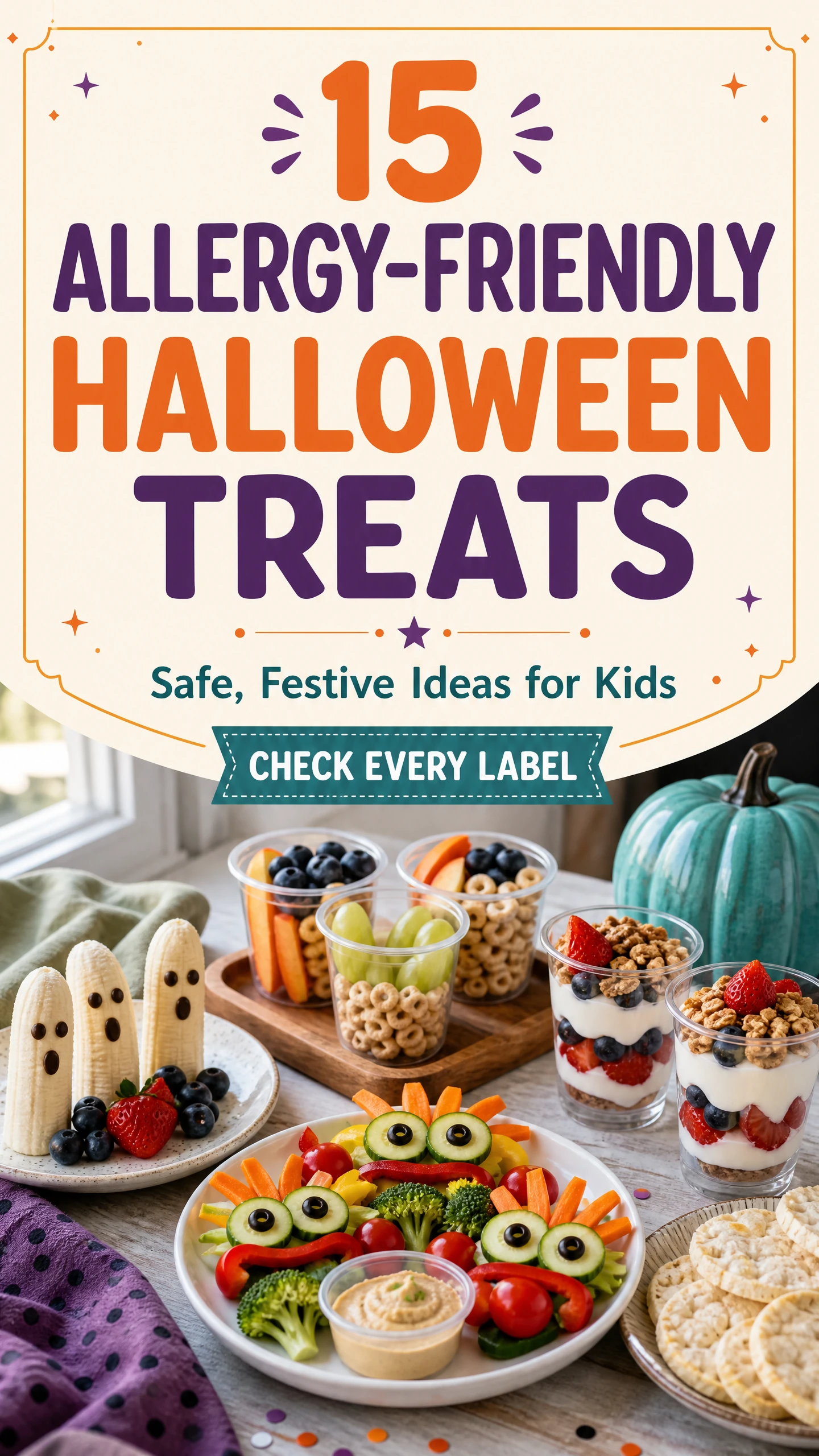
Pin title: 15 Allergy-Friendly Halloween Treats: Safe, Festive Ideas for Kids Pin description: Save these allergy-friendly Halloween treats for kids, including fruit ghosts, separated snack cups, vegetable monster plates, yogurt parfaits, rice crackers, and practical food-safety tips for family and classroom celebrations.
Save this allergy-friendly Halloween treats idea on Pinterest so you can return to these ideas before a Halloween party, classroom celebration, or family gathering.
Final Thoughts
An allergy-aware Halloween starts with listening to the child and caregiver, checking every label, and preventing cross-contact. Fresh fruit, vegetables, verified dips, rice crackers, and separated snack cups can still feel festive when children are invited to choose colors, shapes, and designs. Keep the safety plan visible, label food clearly, and offer non-food choices when appropriate. With thoughtful preparation, every child can take part in the fun without having to guess whether a treat is safe.
References
[1] FDA: Food Allergies and Food Allergen Labeling
[2] Food Allergy Research & Education: Avoiding Cross-Contact